


Lingcod (Ophiodon elongatus) is a greenling-family ambush predator that lives on rocky structure from Baja California to Alaska. When the season is open, it is one of the more dependable ways to put fillets in the box. It is also heavily regulated, and the rules change by jurisdiction and sometimes in-season. This guide covers how to identify the fish, where it lives, how to catch it, and how the rules are built.
According to the NOAA Fisheries lingcod profile, the Northern Pacific coast stock is not overfished and not subject to overfishing.
Overview
Lingcod belong to the greenling family (Hexagrammidae). Despite the name, they are neither a cod nor a ling. Kelp greenling and cabezon share the same reefs.
Lingcod Identification: A Quick Reference
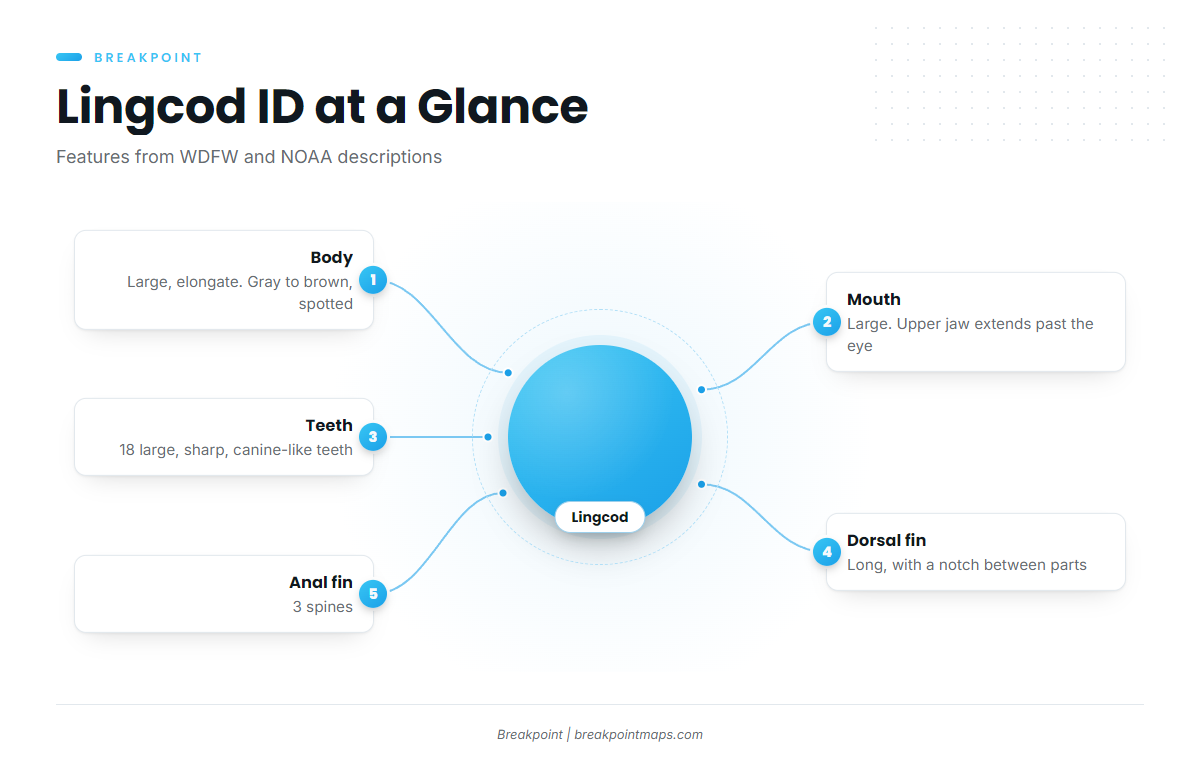
The WDFW lingcod species page describes the fish this way:
- Body: Large and elongate. Gray to brown, greenish or bluish, with darker and lighter spotting.
- Mouth: Large. The upper jaw extends rearward past the eye.
- Teeth: Large and canine-like. NOAA counts 18 large, sharp teeth.
- Dorsal fin: Long, with the spiny and soft-rayed parts nearly separated by a notch.
- Anal fin: 3 spines.
Cabezon and kelp greenling share the same reefs. If you are unsure of an identification, compare the fish against your state agency’s species page before you keep it.
Size, Growth and Lifespan
Lingcod grow quickly. NOAA gives a maximum of about 5 ft and 80 lb, with a lifespan of more than 20 years. Males mature at about 2 years and nearly 20 in. Females mature at 3 years and 30 in.
Typical size varies by region. ODFW reports that lingcod caught in Oregon average between 2 and 3 feet. Females grow larger and live longer than males, so most of the biggest lingcod are mature females.
Behavior: An Ambush Predator in the Rocks
ADF&G biologists describe lingcod as voracious predators that will eat almost anything, including other lingcod. They hold in the rocks on the bottom and eat whatever swims by. Because they sit in structure and current brings the food, structure plus current tells you where to look.
Nest Guarding in Winter
After spawning, females leave. Males stay and guard the egg nests in reef crevices until the eggs hatch, which takes 5 to 11 weeks. If a nest is left unguarded, rockfish, sea stars, sculpins, kelp greenling and cod generally wipe it out within 48 hours.
How it differs here: timing. Winter nest guarding is why several jurisdictions close or restrict lingcod fishing over the spawning months. See Regulations below.
Blue Flesh and Table Quality
Some lingcod have blue or green flesh. The raw flesh has a blue-green tint and turns snow white once cooked. Lingcod yields large, firm white fillets.
Habitat & Range
Lingcod range from Baja California to Alaska. NOAA manages two stocks, the Northern Pacific coast stock and the Southern Pacific coast stock. Look for these features:
- Rocky reefs and pinnacles: Complex hard bottom that holds bait.
- Ledges and rock piles: Edges where fish can sit out of the current and ambush.
- Kelp edges and jetties: Shallower structure that draws lingcod in season.
- Current seams: Places where moving water pushes food past the rocks.
Structure That Holds Fish
Common practice is to find the structure first, then drift over it with the lure near the bottom. On the sounder, anglers look for dense marks tight to hard bottom.
Depth Range
Lingcod live on the bottom, mostly in rocky areas. WDFW gives a depth range of 10 to 100 m (32 to 328 ft) and has recorded fish at 427 m (1,400 ft). ADF&G reports that lingcod typically inhabit nearshore rocky reefs from 30 to 330 feet.
How it differs here: depth rules. In parts of the PNW, regulatory depth lines shape where you can legally fish more than biology does. See Regulations below.
Regional Variation
Fishing the Oregon coast, Washington, British Columbia and Southeast Alaska all follow the same basic logic of structure plus current. Remote BC waters such as Haida Gwaii and the North Coast are well regarded among anglers.
Tactics
This section covers getting a bait into the rocks and back out again. In short: heavy weight, good structure and steady contact with the bottom. Gear numbers below are typical starting points.
Starter Tackle Setup
Most PNW anglers run something close to this:
| Component | Common Choice | Why |
|---|---|---|
| Rod | 6 to 7.5 ft medium-heavy to heavy conventional | Lifting fish off rock |
| Reel | Conventional (levelwind or star drag) | Cranking power on the lift |
| Line | 40 to 60 lb braid | Low stretch, feels bottom in current |
| Leader | A heavier leader is common | Abrasion on rock |
| Hooks | 3/0 to 8/0 | Big mouths |
| Jigs | Metal or leadhead jigs sized to depth and current (see next table) | Get down and stay down |
| Swimbaits | About 6 in, dark back and light belly | Profile mimics baitfish |
| Bait | Live greenling or sanddab where legal | Draws the biggest fish |
A medium-weight conventional salmon or halibut setup is usable to start.
Matching Jig Weight to Depth and Current
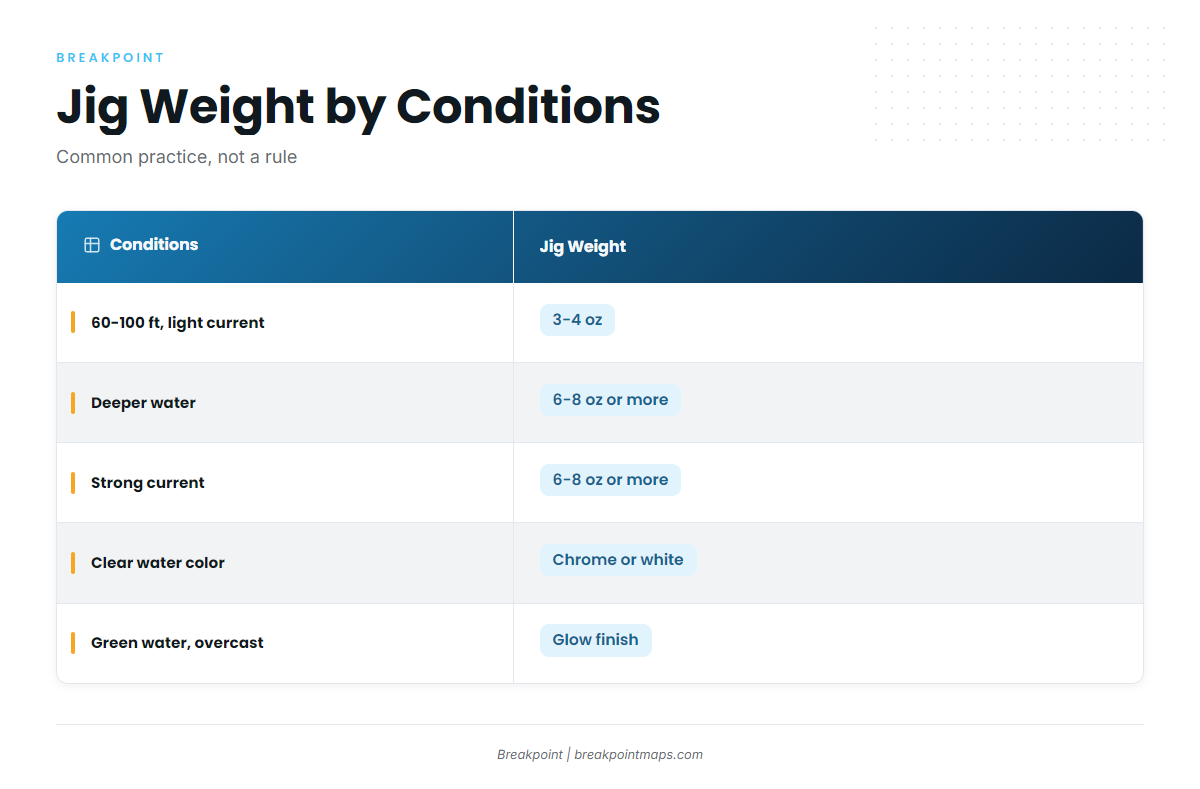
Current pushes your line off vertical, and more weight keeps you in contact with the bottom. Add weight until you feel the rocks.
| Conditions | Typical Jig Weight |
|---|---|
| 60 to 100 ft, light current | 3 to 4 oz |
| Deeper water or strong current | 6 to 8 oz or heavier |
Chrome and white are common in clear water. Glow finishes are common in green water or on overcast days.
How it differs here: current. Colder, current-heavy PNW water, especially inside waters and around pinnacles, usually calls for heavier jigs than calmer southern water.
Working the Drift and the Tide
Boat positioning matters on complex structure. Lift and drop the rod tip to feel bottom and keep your bait in the zone.
On big tides, many anglers fish the reef perimeters, because pinnacles snag gear when current rips. Slack tide and gentle current make vertical presentations easier.
Live Bait
Live greenling or sanddab is widely considered the most effective offering for big fish, but it is more work to use. Check whether live bait and the bait species itself are legal and retainable where you fish.
The Hitchhiker Ling
Many of the largest lingcod grab a hooked rockfish or greenling on the way up. When that happens, crank slowly and steadily without jerking, and have the net ready. Lingcod also often clamp down on the bait without being hooked, so a solid hook set matters.
Handling and Release
Mind the teeth: NOAA counts 18. Use a net, gloves and long pliers, and keep fingers away from the mouth.
Releasing large females helps the stock, since females do not mature until about 30 in.
Rockfish caught alongside lingcod do suffer barotrauma from the pressure change. In Washington, WDFW’s descending device requirement applies to all recreational vessels targeting bottomfish and halibut in all Washington marine areas. The device must be on board and rigged for immediate use. WDFW’s rockfish page says fish returned to depth within two minutes have a much better chance of survival. Other states and BC have their own rules, so check with the agency.
Frequently Asked Questions
Is lingcod a cod?
No. Lingcod (Ophiodon elongatus) belongs to the greenling family, Hexagrammidae, and is neither a cod nor a ling. Kelp greenling is a relative that shares the same reefs.
Why is some lingcod meat blue?
Some lingcod have blue or green flesh. The raw flesh has a blue-green tint and turns snow white once cooked. The fillets are large, firm and white.
How big do lingcod get?
NOAA Fisheries gives a maximum of about 5 ft and 80 lb, with a lifespan of more than 20 years. Typical size varies by region. Females mature at about 30 in, so many of the largest fish are breeding females.
What jig weight should I use for lingcod?
Common practice is 3 to 4 oz in 60 to 100 ft with light current, and 6 to 8 oz or more for deeper water or strong current. Add weight until you keep contact with the bottom.
When is lingcod season?
It depends on the jurisdiction and the year. Many areas restrict winter fishing to protect nest-guarding males. Check WDFW, ODFW, CDFW, DFO or ADF&G before each trip.
Do I need a descending device?
In Washington, yes. WDFW requires an operable device on board and rigged for immediate use on all recreational vessels targeting bottomfish and halibut in all Washington marine areas. Other jurisdictions set their own rules, so check with the agency. The devices help released rockfish survive barotrauma.
Conclusion
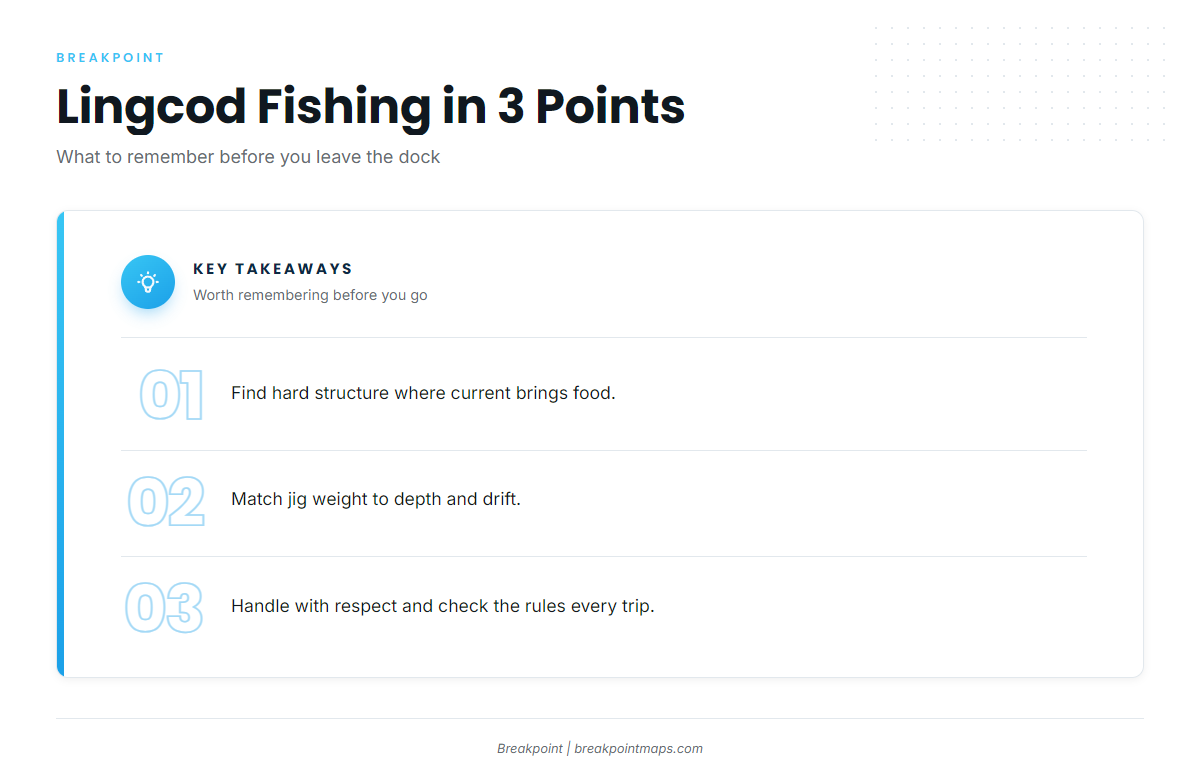
Find hard structure where current brings food, match weight to depth and drift, handle fish carefully, and check the rules every trip.
Breakpoint’s hotspots and Fish Intel surface reef, pinnacle and ledge structure along with fish-activity signals, so you can shortlist where to look before you leave the dock. They point you to water worth checking and do not replace your sounder or the regs. Chart layers are not for navigation. We can promise a better decision about where to look, never fish.