


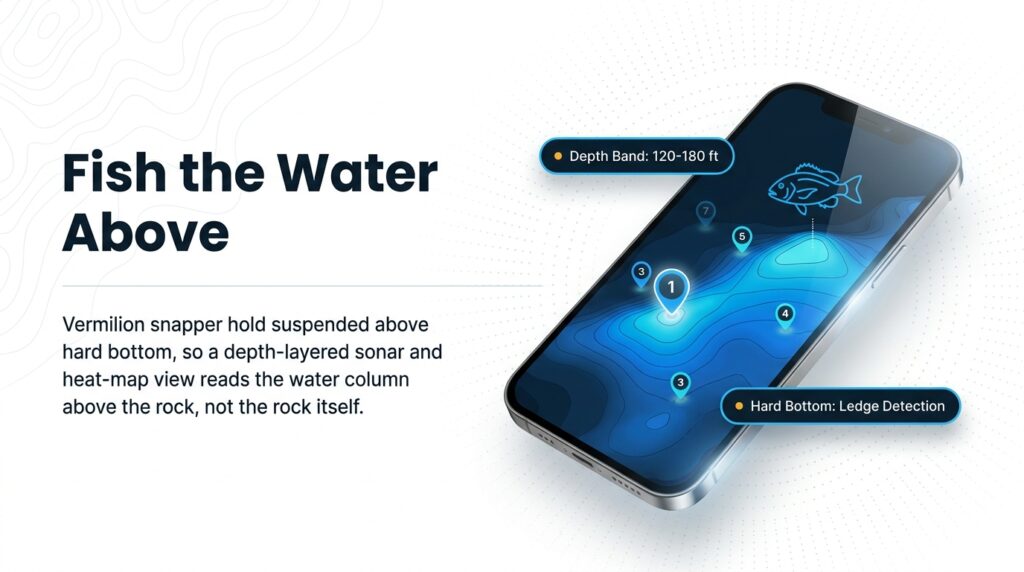
Red snapper and vermilion snapper have separate rules, so check the current season and limits for each before you go.
The vermilion snapper (Rhomboplites aurorubens), also called beeliner or B-liner, is a small, schooling reef snapper of the western Atlantic. It ranges from Cape Hatteras to Brazil, including the Gulf of Mexico, and holds above hard bottom near the shelf edge. It is prized as mild, flaky table fare.
This guide covers how to tell the fish from red snapper, where it lives, how to rig for a fish that feeds off the bottom, and what the rules are.
Quick Facts
- Scientific name: Rhomboplites aurorubens
- Common names: vermilion snapper, beeliner, B-liner
- Range: Cape Hatteras to southeastern Brazil, including Bermuda, the West Indies and the Gulf of Mexico
- Depth: 66 to 984 ft (20 to 300 m) full range. Adults are most often near the shelf edge over rock, gravel or sand.
- Maturity: all mature by 2 years and 7.9 in total length
- Typical size: a small snapper, well under trophy size for most fish. For records, check IGFA’s current listing.
- Table quality: anglers widely report mild, white, flaky meat
- Stock status (U.S.): Gulf and South Atlantic stocks are not overfished and not subject to overfishing, according to NOAA Fisheries
- Regulations: see below.
Overview: Identification and Behavior
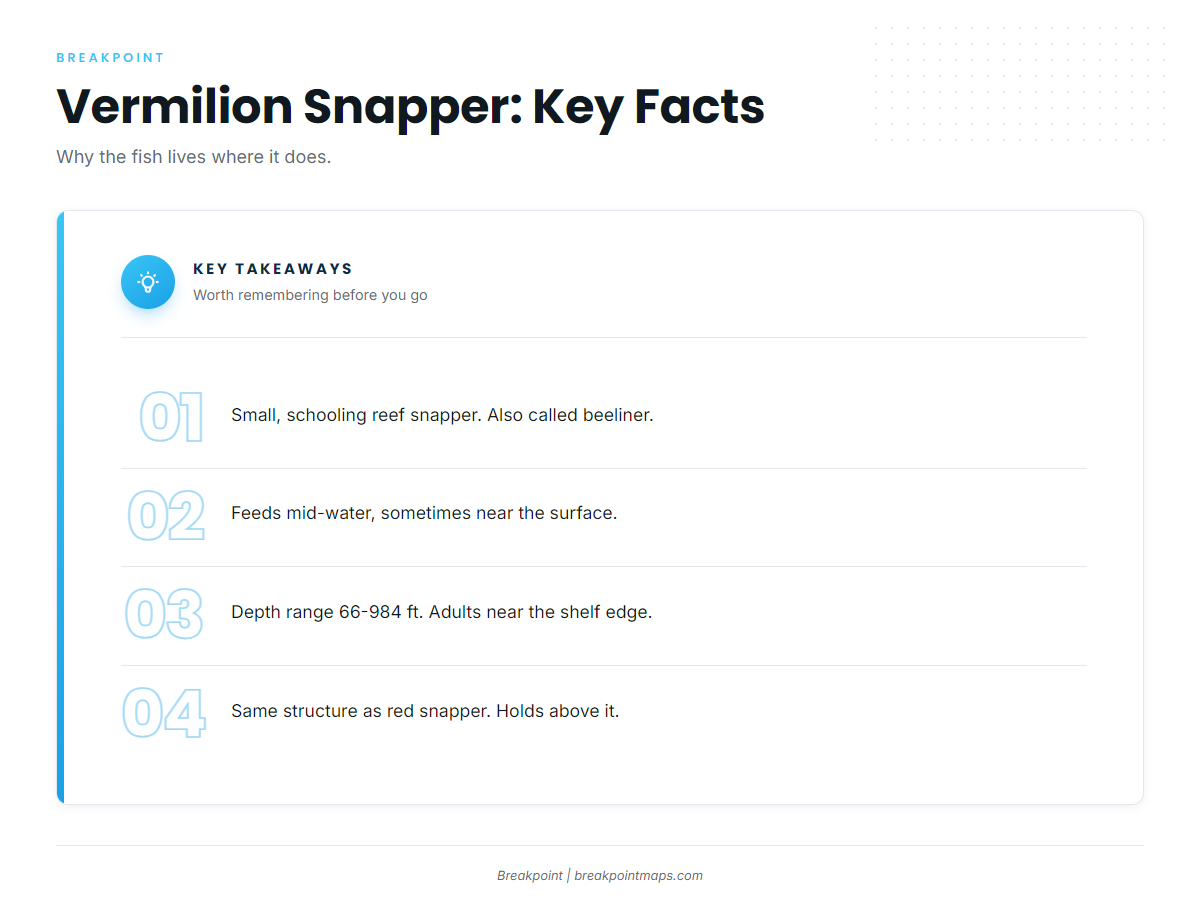
Correct identification has legal consequences. The vermilion snapper has a streamlined body, vermilion or reddish above and pale to silvery white below. Narrow yellow-gold streaks run below the lateral line, some horizontal and some diagonal.
The fish feeds midway in the water column and sometimes comes to the surface. That habit accounts for the upturned look of the mouth and eye, the tactics later in this guide and the marks you see on sonar.
How to Identify a Vermilion Snapper
The South Atlantic Council species page lists these markers:
- Coloration: vermilion or reddish above, pale to silvery white below.
- Streaks: narrow yellow-gold lines below the lateral line.
- Dorsal fin: rosy, with a yellow margin.
- Tail: red, with a faint black margin.
- Teeth: no large canine teeth.
- Face: the mouth and eye orientation makes the fish look upward.
The upward look fits a fish that feeds high above the bottom. The mouth is also small, which is why anglers use small hooks, according to North Carolina’s species profile.
Vermilion Snapper vs. Red Snapper
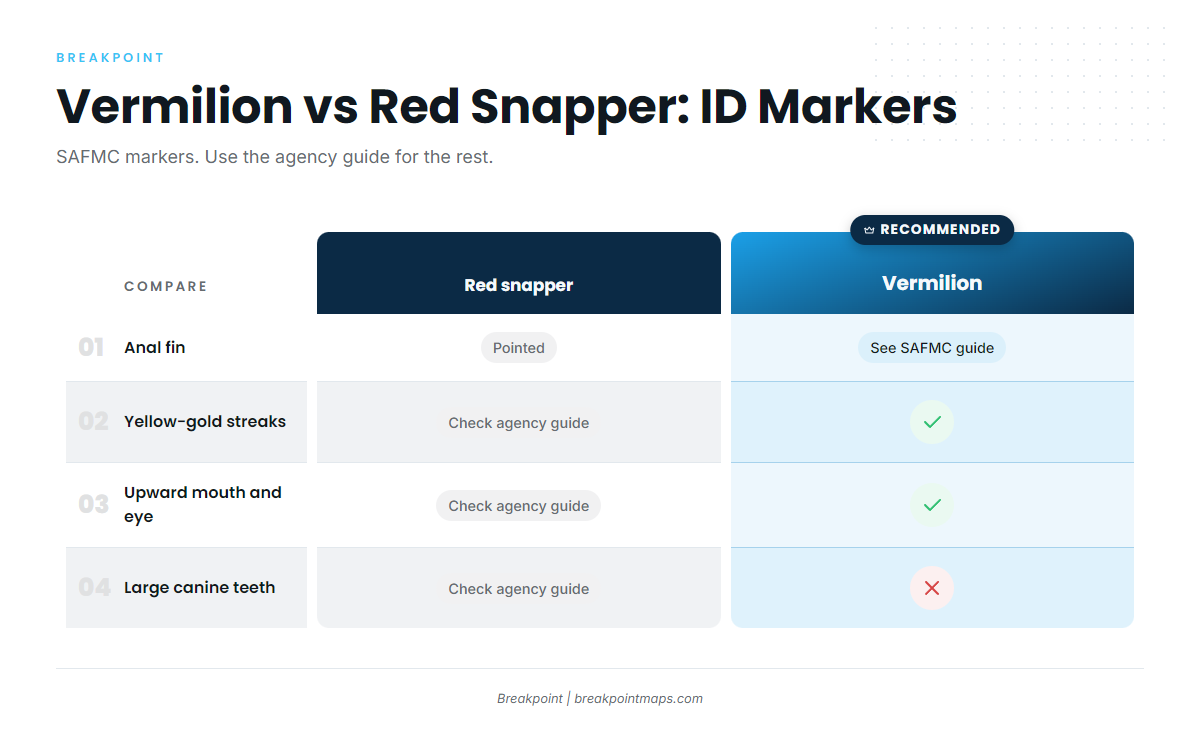
The two species share body structure but carry different rules, and a misidentified fish can be a violation. Learn the markers before you fill a cooler.
| Marker | Vermilion snapper | Red snapper |
|---|---|---|
| Body and color | Streamlined, vermilion above, pale to silvery white below | Compare against agency ID guide |
| Lateral streaks | Narrow yellow-gold streaks below the lateral line | Compare against agency ID guide |
| Tail | Red with a faint black margin | Compare against agency ID guide |
| Canine teeth | No large canines | Compare against agency ID guide |
| Mouth and eye | Oriented upward | Compare against agency ID guide |
| Anal fin | Not pointed | Pointed |
Vermilion are reportedly sometimes sold as reds. The South Atlantic Council gives the red snapper’s pointed anal fin as a marker, and it is the best one to check first.
Other Lookalikes
Lane snapper, red porgy, tomtate and blackfin snapper turn up on the same bottom and can be confused with vermilion. When in doubt, compare against the FWC or South Atlantic Council species profile before you keep the fish.
Schooling, Feeding and Life History
According to NOAA Fisheries, vermilion snapper eat fish, shrimp, crabs, worms and other bottom invertebrates, plus squids and plankton. They school over structure and feed higher in the water column than red snapper do, though in the same neighborhood.
Life history, per the South Atlantic Council:
- The fish grow slowly.
- Most are mature by age 1, and all are mature by age 2.
- Spawning is multiple, from April through late September, with a peak in June to August.
Habitat & Range
The vermilion snapper lives in the tropical western Atlantic from Cape Hatteras to southeastern Brazil, including Bermuda, the West Indies and the Gulf of Mexico. The Gulf Council describes the same range: North Carolina south through the Gulf, the Bahamas and the Caribbean to southern Brazil. NOAA Fisheries now uses Gulf of America.
Vermilion Snapper Depth
The South Atlantic Council gives the occurrence range as 59 to 400 ft (18 to 122 m), with most fish under 250 ft (76 m). Adults are most common near the shelf edge over rock, gravel or sand, and juveniles sit shallower.
Local depth bands vary by region, so they belong on regional pages. Depth matters for two reasons: it tells you where to look, and it drives the release rules covered under Regulations.
Structure: Hard Bottom, Ledges, Reefs and Wrecks
Look for hard bottom, ledges, rock, artificial reefs, wrecks and rubble. Vermilion use the same structure as red snapper but sit suspended above the structure rather than tight to it.
Gulf of Mexico vs. South Atlantic
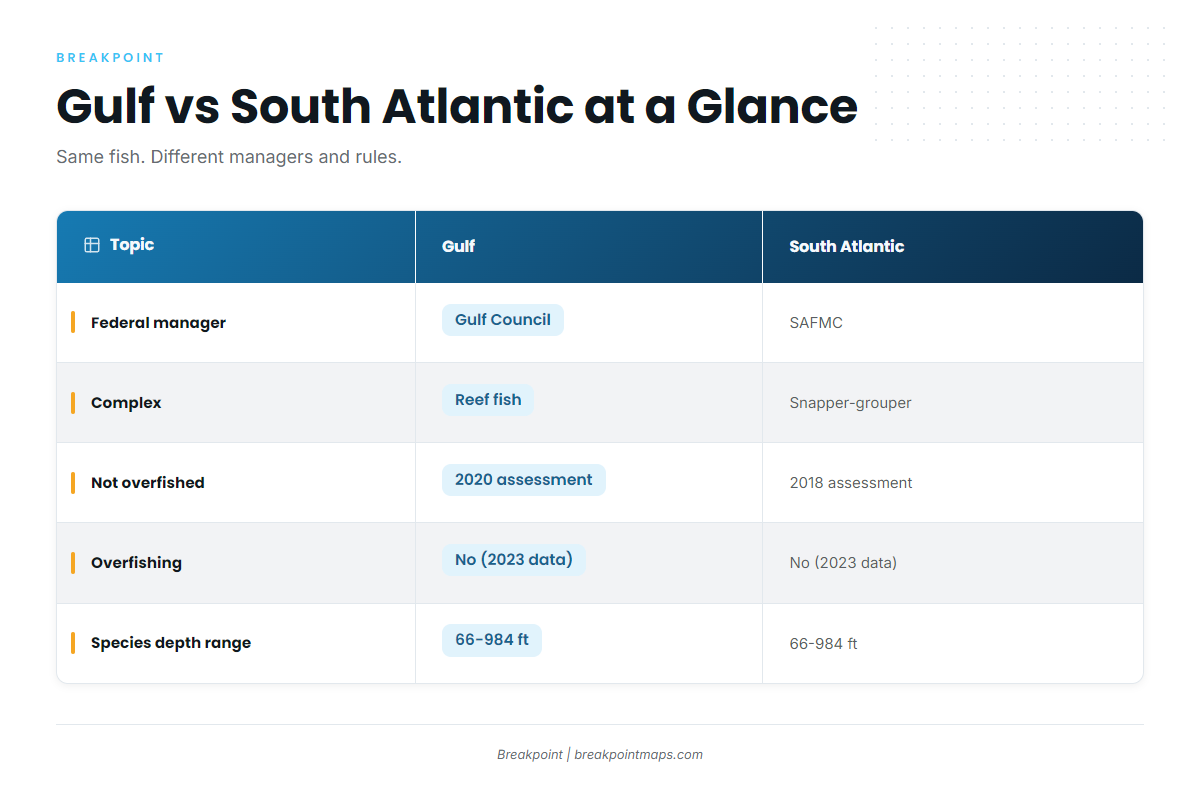
The fish is the same in both regions, but the managers, rules and local bottom differ.
| Topic | Gulf of Mexico | South Atlantic |
|---|---|---|
| Federal manager | Gulf Council (reef fish) | SAFMC (snapper-grouper complex) |
| Stock status | Not overfished (2020), not subject to overfishing based on 2023 catch data | Not overfished (2018), not subject to overfishing based on 2023 catch data |
| Depth notes | Same 66 to 984 ft species range. Local bands vary; see regional pages. | Same 66 to 984 ft species range. Local bands vary; see regional pages. |
| Rules | Gulf Council | SAFMC |
Stock status comes from the NOAA Fisheries vermilion snapper profile, which lists 5 stocks in total. The St. Croix stock has not been assessed, so its status is unknown.
Tactics
The tactics here follow from one fact: the fish holds above structure and feeds in mid-water with a small mouth. These are common field practices.
Finding Beeliners on Sonar
Run structure in the right depth band, use bottom lock or zoom, and look for marks suspended above the rock rather than tight to it. Find the structure, confirm the depth, then read the water above it. Sonar shows marks, not species, so confirm with the first fish up.
Vermilion Snapper Rig
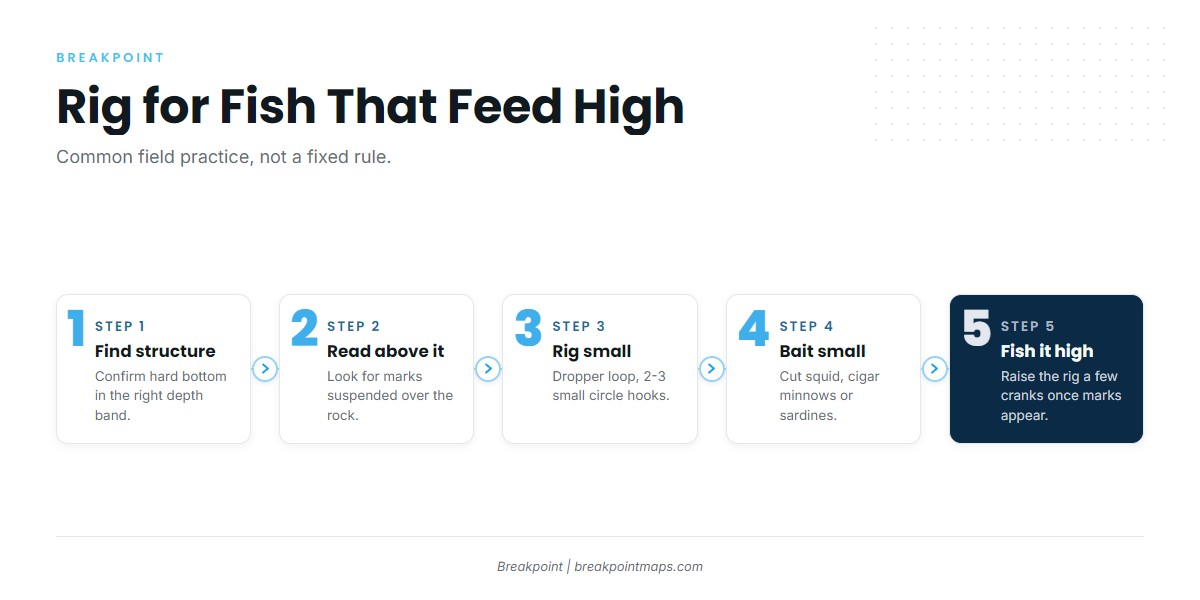
A small mouth calls for small hooks, and feeding off the bottom calls for stacked hooks spread above the sinker. A typical setup:
- Multi-hook dropper loop or "chicken rig" with 2 to 3 droppers.
- Small circle hooks, roughly triggerfish size or smaller.
- Tackle in roughly the 15 to 30 lb class. Fifteen-pound line works, and heavier tackle helps in deeper water or around predators.
- A sinker only as heavy as needed to hold bottom in the current and depth. A common range is 4 to 8 oz.
- A light leader, so fish feeding high are not spooked.
Fish the hooks up off the bottom. Once you locate fish, consider raising the rig a few cranks.
Bait
Cut squid, cigar minnows, sardines and small cut bait all work. Cut them small to match the mouth. NOAA’s diet list, which includes squids and small fish, supports the choice. Bigger baits do not necessarily draw bigger vermilion.
Chum
Chum is common practice for pulling schooling fish up off the bottom and away from small bottom fish. Check local chumming rules before you use it.
Anchoring vs. Drifting
Anchoring holds the boat on a small piece of structure and lets chum work. Drifting covers scattered bottom and saves time. Let current, structure size and whether the marks are tight or scattered decide.
If You Already Fish Beeliners
If you fish vermilion in one region and are moving to another:
- To target bigger fish, don’t just upsize bait. Try fishing higher in the column and working the edges of a school.
- Fish often stack at different heights over the same rock.
- Moving between regions changes the rules and bottom types, not the fish. Check the Regulations section.
- The hooks you use for vermilion catch other species too. Know those species’ rules.
Bycatch and Predators
Amberjack, barracuda and sharks often take hooked snapper. The same rigs also catch red snapper, porgies, triggerfish and undersized fish. Anything out of season or undersized must be released correctly. See Release and Barotrauma below.
Fish Care and Table Quality
Anglers report mild, white, flaky meat, and many rate it alongside red snapper. Ice fish promptly.
Frequently Asked Questions
Are beeliners good to eat?
Yes. Anglers widely describe the meat as mild, white and flaky, and many rate it alongside red snapper. Ice fish promptly to keep the flesh firm.
How do you tell vermilion snapper from red snapper?
Vermilion have an upward-looking mouth and eye, yellow-gold streaks below the lateral line and no large canines. The South Atlantic Council notes that red snapper has a pointed anal fin. See the ID table above.
What depth are vermilion snapper found in?
The South Atlantic Council gives 59 to 400 ft (18 to 122 m), with most fish under 250 ft (76 m). Adults are most common near the shelf edge over rock, gravel or sand. Local depth bands vary, so check regional pages.
What is the best bait for vermilion snapper?
Small pieces of cut squid, cigar minnows or sardines on small circle hooks. North Carolina’s species profile ties the small hooks to the fish’s small mouth, and NOAA’s diet list includes squids and small fish.
What is the vermilion snapper size and bag limit?
Limits differ between state and federal waters and between the Gulf and the Atlantic. Check the Gulf Council, SAFMC and your state agency.
Do I need a descending device?
In South Atlantic federal waters, yes, per SAFMC. It must be readily available and attached to at least 16 oz of weight and at least 60 ft of line. In the Gulf, check the Gulf Council for current descending device and venting tool rules.
Why is it called a beeliner?
The origin of the nickname is uncertain. The fish is also called B-liner.
Closing: Where to Look Next
Vermilion hold high over hard bottom in the right depth band. Breakpoint’s hotspots and Fish Intel help you narrow where that bottom is before you run. They improve the decision about where to look but do not promise fish. The data can’t see every rock, and chart layers are not for navigation. Your sonar makes the final call.