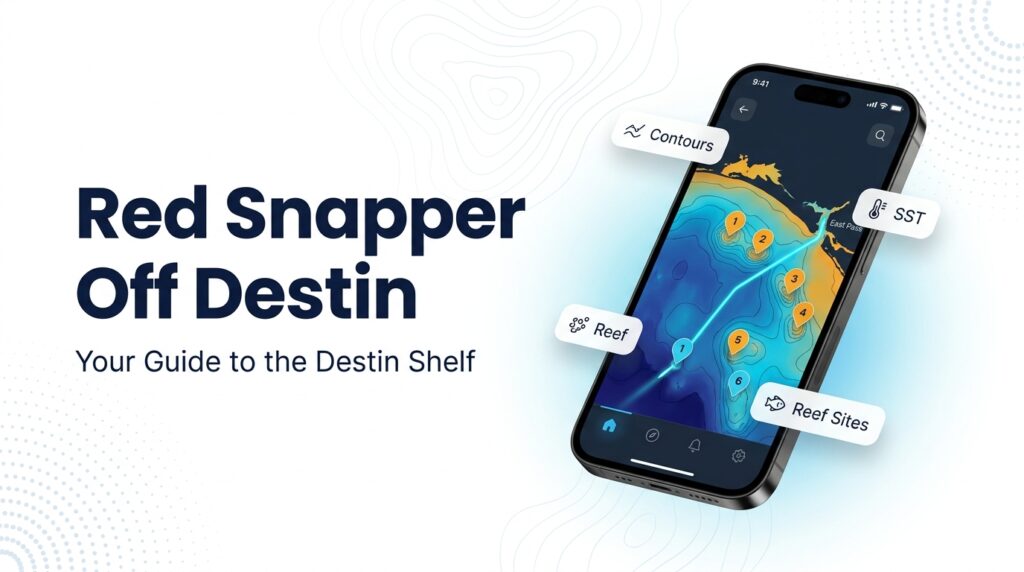
Destin has one inlet, East Pass, and the run from the harbor to reef-fishing depth is short compared with much of the Florida Gulf coast. That geography shapes red snapper fishing here. Biology, life history and general rigging are covered in our red snapper species guide; this page covers what changes when you fish out of Destin.
Check the season before anything else. Private and for-hire seasons are set separately, and dates change every year. The Regulations section below lists where to confirm current dates and rules.
By the end you should know which depth band to work, where the public reef programs sit, what gear has to be on the boat, what paperwork you need, and what to check before you leave the dock. Nobody can say which reef is holding fish on a given day, but this should help you decide where to look.
Regional Differences
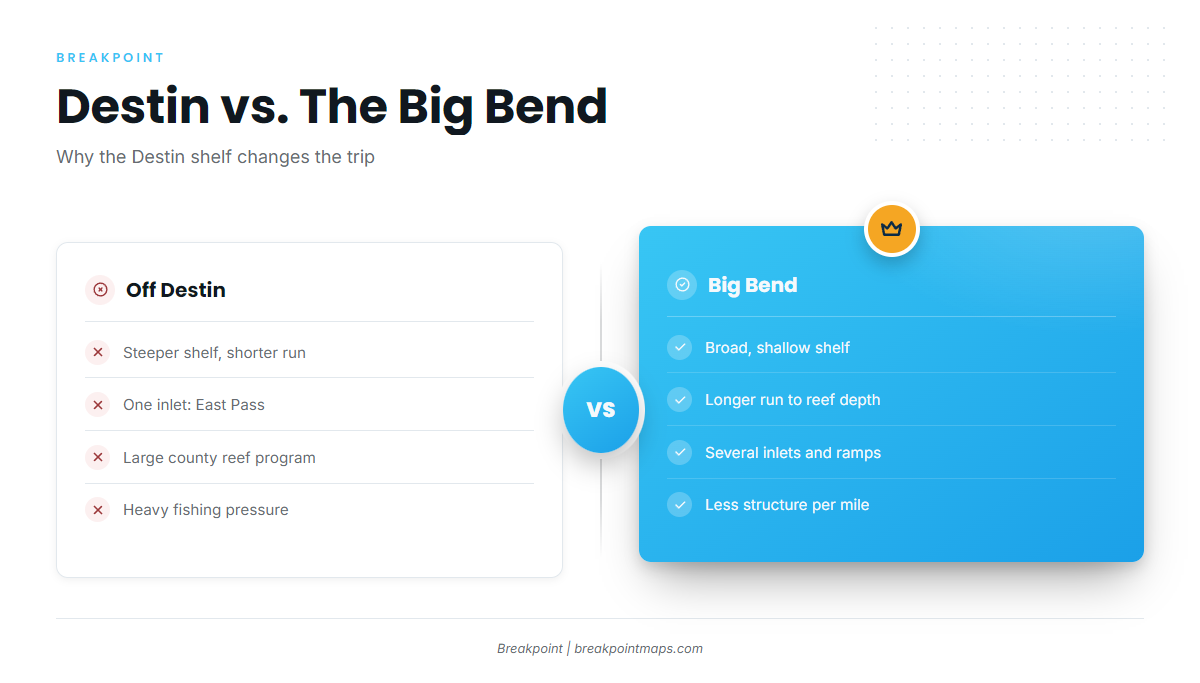
Destin sits between two very different parts of the Gulf, and the comparison explains most of what follows.
| Feature | Destin | Alabama reef zone (west) | Big Bend and West Florida Shelf (east) |
|---|---|---|---|
| Shelf profile | Steepens toward the shelf edge | Broad, gradual | Broad and shallow |
| Run to reef depth | Shorter | Varies by inlet | Longer |
| Access | One inlet, East Pass | Multiple passes and ramps | Many small ports, long runs |
| Structure | County artificial reefs plus natural ledges | Large permitted reef program | Mixed natural bottom |
| Pressure | Heavy, especially on published sites | Heavy | Lighter in many areas |
The shelf steepens off Destin compared with the Big Bend, so reef-fishing depths are a shorter run. A short run and a large charter fleet also mean published nearshore structure takes a lot of hooks. On a contour layer you can see the steps where the bottom drops toward the shelf edge, and many of your options begin there.
Management differs by region too. Florida manages the private-angler red snapper season in both Gulf state and federal waters, while NOAA Fisheries manages the federal for-hire fleet. The Gulf of Mexico Fishery Management Council sets federal Gulf reef fish rules. NOAA documents use the name “Gulf of America” for the same water; we say “Gulf” here.
In practice, the private boat next to you and the charter boat next to you may be operating under different seasons. Verify them again before you fish.
Habitat & Conditions at Destin, Florida
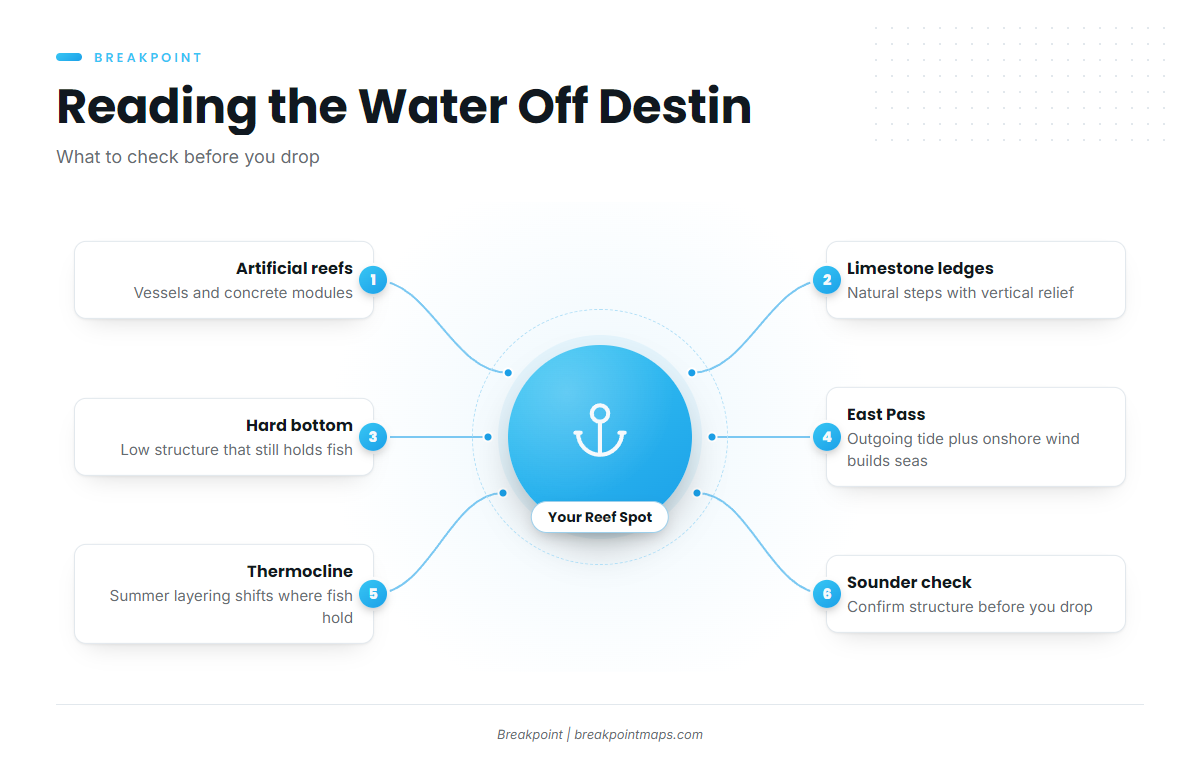
Red snapper are structure fish. Off Destin, structure comes from three sources, and the water around it changes with tide, wind and season.
What the Bottom Looks Like
Three types of bottom hold most of the fish you will target:
- Permitted Okaloosa County artificial reefs. Vessels, concrete modules and similar material placed under the county program.
- Natural limestone ledges. Relief that runs along the bottom and stacks bait on the current side.
- Hard bottom with vertical relief. Lower profile than a ledge, but often overlooked.
For deployment coordinates, start with the FWC Artificial Reef Program and Okaloosa County’s reef program. Both publish site information. Treat every number with care: published coordinates are deployment positions, and structure can shift, settle or be buried. Confirm on your sounder before you drop.
Pull depths for specific sites from the FWC and county reef listings and check them against your chart.
East Pass
East Pass is the only way out to the Gulf from Destin Harbor, and it deserves respect. An outgoing tide running against an onshore wind stands the seas up in the Pass, so time your exit and return with the tide and the forecast in mind.
Before you leave the dock, check two things:
- The National Weather Service marine forecast from the Mobile office for the Destin coastal zones.
- The nearest NDBC buoy observations, confirming the station ID and location before you rely on it.
Know your boat’s limit and your crew’s before you look at the buoy. Forecasts can be wrong, and conditions in the Pass on the day are what count.
Weather, Season and the Thermocline
Summer brings afternoon storms to the Panhandle. Start early, watch for cells building over the coast while you fish, and keep a wide margin on the run back through the Pass.
Summer stratification can change where fish hold and how they bite, and thermocline depth can’t be predicted for a given day. Watch your sounder for bait and marks, and watch the water temperature. If a spot goes quiet, the water column may have changed even though the fish haven’t left.
Seasonality here is set by the regulations rather than by any "prime month." The season dates decide when you fish. The Destin Fishing Rodeo runs in October and affects marina traffic and charter availability. Confirm the dates on the Rodeo’s official site if that matters for your trip.
Tactics for Destin, Florida
General rigging is covered in the species guide. Here is what changes off Destin.
Positioning
Set up up-current of the structure so baits fall into the zone where fish face the current. Red snapper sit on relief to get out of the flow and intercept bait that washes past.
Whether to anchor or drift depends on current and relief. On a small, tight piece of structure, a controlled drift can put you over it repeatedly without pinning you to one line. On a long ledge with steady current, anchoring up-current lets you work one stretch thoroughly.
Rigs and Bait
Standard bottom rigs do the work here. A Carolina or knocker rig gets bait to the bottom and keeps it there in current.
In Gulf federal waters, non-stainless circle hooks are required with natural bait for reef fish.
Common local baits include:
- Squid
- Cigar minnows
- Pinfish
- Cut fish
Catching live bait before the run offshore works for the same reason it works anywhere: fresh, lively bait draws strikes.
When Short Fish Swarm
Heavily fished nearshore reefs tend to hold a lot of undersized fish. If every drop gets picked apart before it reaches a keeper, you have a few options:
- Go to a larger bait.
- Move deeper.
- Move to less-published structure.
- Leave the pile instead of feeding it.
Leaving is the hardest of these and often the right call. On a contour layer you can see where a ledge steps down away from the published numbers. That is a place to look, not a promise of fish.
Sharks
Sharks can take hooked fish on busy reefs. If it starts happening, leave the spot; moving off is usually faster than trying to outfish it.
Release
Fish released from depth need help getting back down. Use a descending device on every fish you release. The biology of barotrauma is in the species guide, but in short, a fish that floats away at the surface has likely not survived.
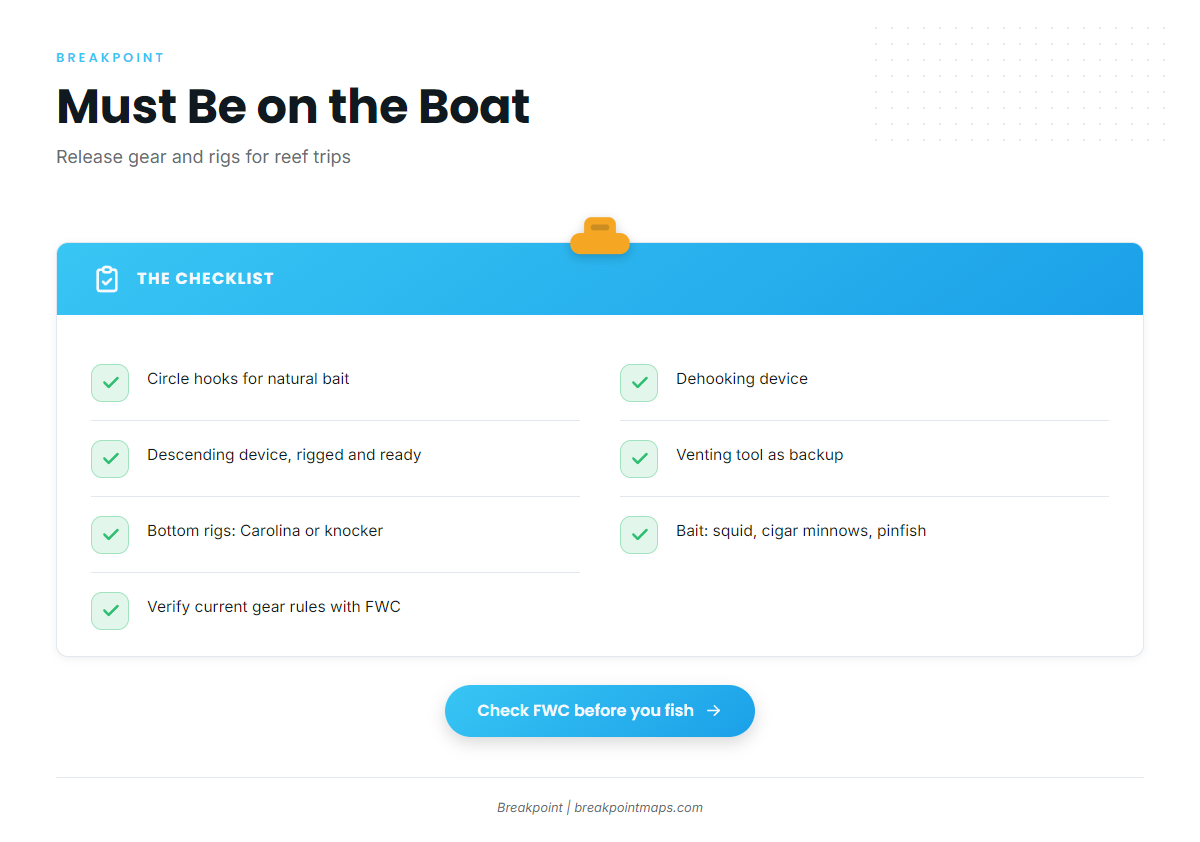
Must be on the boat:
- Circle hooks
- A dehooking device
- A descending device or venting tool, rigged and ready
Verify current gear requirements with FWC and the NOAA Fisheries DESCEND Act page.
Frequently Asked Questions
Is red snapper season open off Destin right now?
That depends on whether you fish private or for-hire, because the two seasons are set separately. Florida sets the private season and NOAA Fisheries sets the for-hire season. Confirm both on the agency pages the day you fish.
Do private anglers need the State Reef Fish Survey?
Yes, for reef fish from a private boat, in addition to a fishing license. Register through FWC, and check the FWC page for current cost and steps.
How far offshore do I need to go?
The shelf steepens off Destin, so reef-fishing depths are a shorter run than on much of the Florida Gulf coast. Measure it against your plotter and the reef listings.
What release gear is required?
In Gulf federal waters, non-stainless circle hooks are required with natural bait, and at least one dehooking device is required. Check NOAA Fisheries and FWC for current descending device rules.
Before You Run East Pass
Pick a depth band, confirm structure on your sounder, read the Pass and the forecast, carry the release gear, and check the rules on the date you fish. That covers the plan. It won’t guarantee fish, but it gets you to the water with a better idea of where to look.
Before you run East Pass, Breakpoint lets you check conditions and see where the Okaloosa County reef areas sit against the depth contours. Chart layers are not for navigation.