


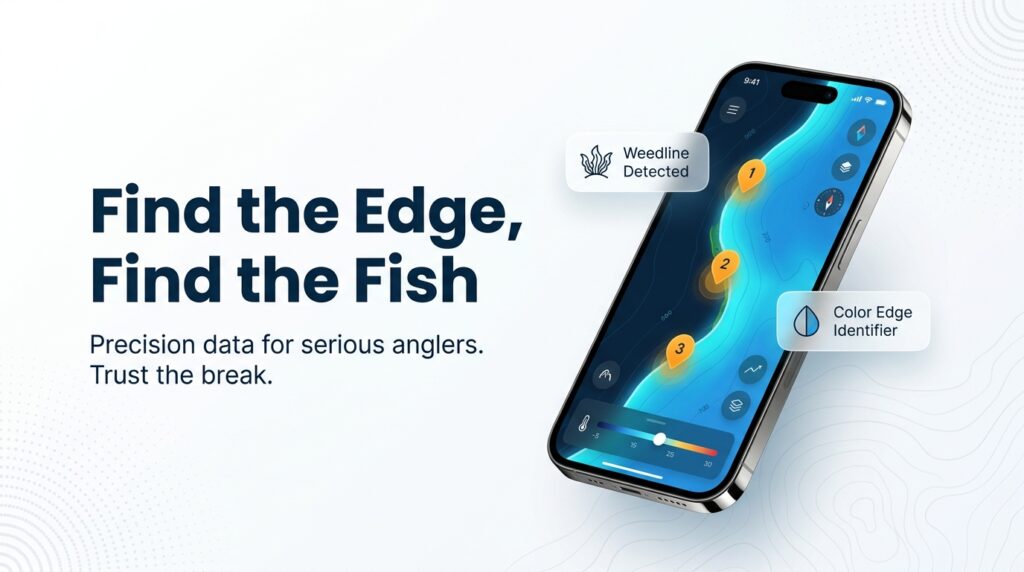
Mahi-mahi are fast, colorful, surface-feeding offshore fish, and often the first pelagic species a boat owner targets. They sit on edges and floating structure, and both can be found with the right data. This guide covers how to identify the fish, where they live across the Gulf, Southeast, Northeast and Pacific Southwest, baseline tactics, and how to check the rules. It draws on what the agencies and the water data say and notes where nothing is known yet. If you already chase mahi elsewhere, the regional sections show what changes.
Overview
Mahi-mahi (dolphinfish, Coryphaena hippurus) are warm-water, surface-oriented pelagic fish found worldwide in tropical and subtropical seas. They are also called "dolphin" and "dorado," and they have no relation to the marine mammal. "Dorado" is the common name in the Pacific and in Spanish-speaking regions; "dolphin" is the management name in the Atlantic and Gulf. Anglers prize them for a hard, acrobatic fight and excellent table quality.
Identification
Three things separate mahi-mahi from other offshore fish at a glance:
- Bull vs. cow: The bull has a steep, blunt forehead. The cow has a rounded head.
- Color: A blue-green back, gold flanks and small spots. The colors flash bright when the fish is hooked and fade quickly after.
- Size class: Schoolies are smaller fish that travel in groups. Gaffers are big enough that crews typically gaff them rather than swing them aboard.
Behavior
Mahi-mahi are schooling, aggressive feeders that stay near the surface and hold tight to floating structure. Atlantic mahi spawn under patches of floating sargassum. They grow fast and live short lives, which shapes how quickly a fishery can change from year to year.
To find them, look for an edge, then for weed along it, then for fish under the weed.
Habitat & Range
Mahi-mahi live in warm, clean, blue offshore water and hold around anything that floats. They concentrate where currents and temperature edges gather that floating structure.
What mahi look for
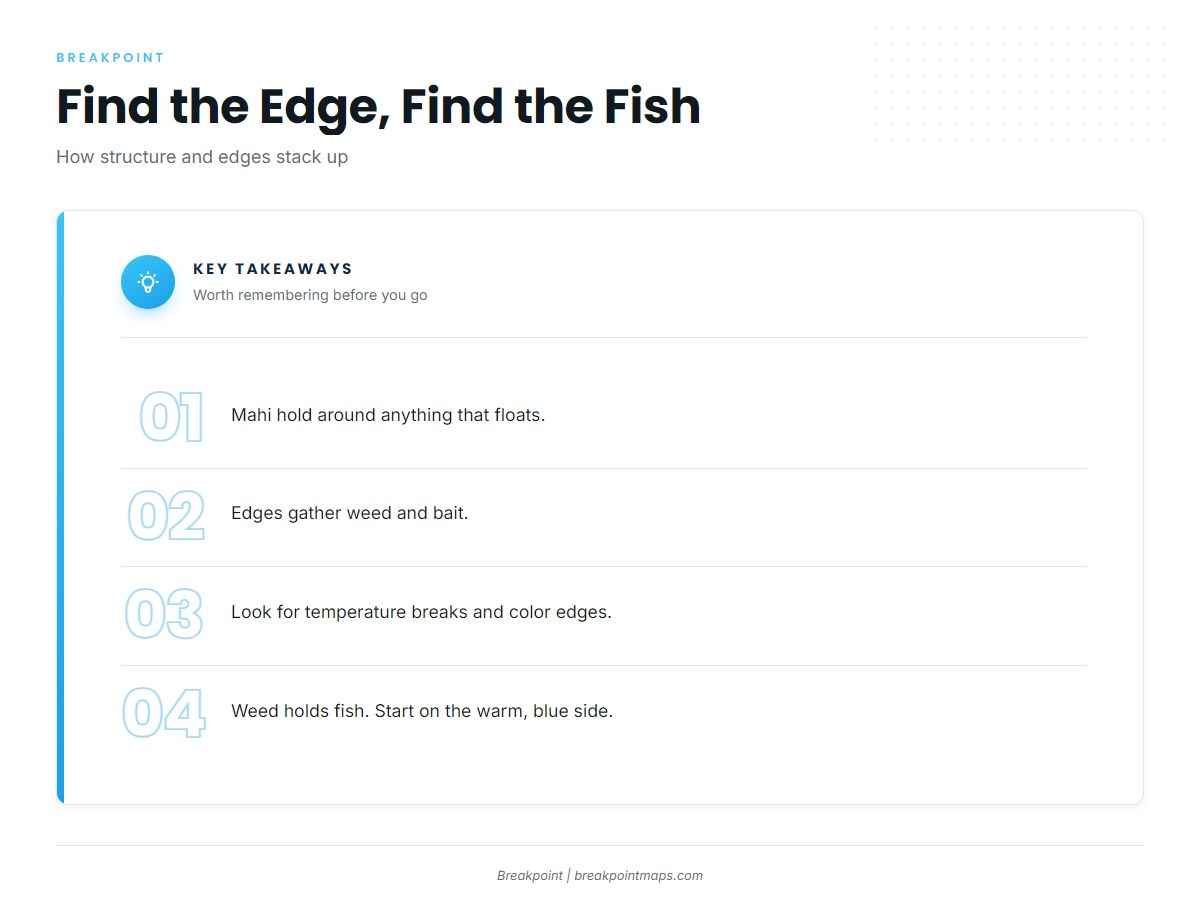
Structure comes first:
- Sargassum and weedlines
- Floating debris
- Fish aggregating devices (FADs)
- Pot buoys, often called "high flyers"
- Kelp paddies
- Oil rigs in the Gulf
Edges put structure in one place. Current seams, sea-surface temperature (SST) breaks and color breaks gather weed and bait, and weed holds fish. "Clean, blue" water is low-chlorophyll water, and clean, blue water against greener water marks an edge worth the run. Mahi prefer warm water. This guide prints no hard temperature range, because the ranges circulating online trace back to charter blogs rather than agency sources.
Regional comparison
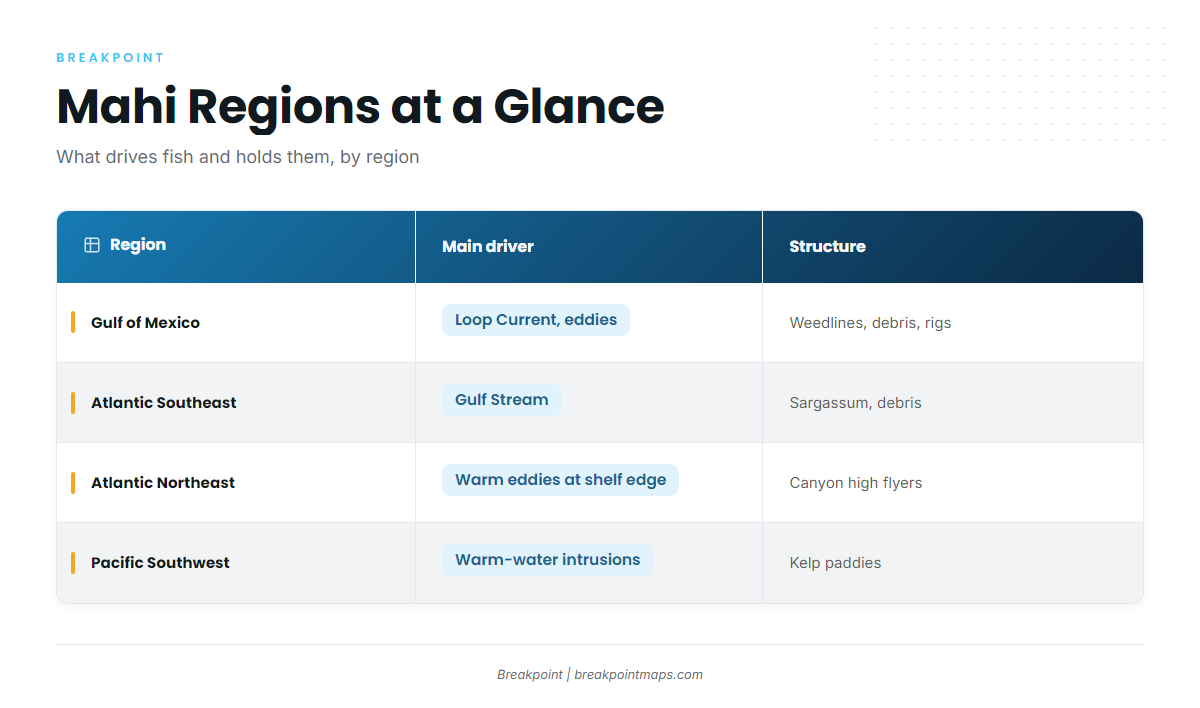
| Region | Main driver | Typical structure | General season | Deeper guide |
|---|---|---|---|---|
| Gulf of Mexico | Loop Current and eddies | Weedlines, debris, oil rigs | Warm months; varies with current position | Gulf guide |
| Atlantic Southeast | Gulf Stream | Sargassum weedlines, debris | Spring through fall; timing varies by latitude | Southeast guide |
| Atlantic Northeast | Warm Gulf Stream water and eddies pushing onto the shelf edge | Canyon-edge high flyers, debris | Late summer into fall, when warm water arrives | Northeast guide |
| Pacific Southwest | Warm-water intrusions; strongly year-dependent | Kelp paddies | Late summer and warm-water years | Pacific SW guide |
Swipe the table sideways to see every column.
Gulf of Mexico
The Loop Current and its eddies drive where warm blue water, weed and bait end up in the Gulf. Oil rigs add fixed structure that holds bait and fish. In the northern Gulf, anglers talk about a "bull run," when large bulls and cows ride currents toward the northern Gulf along weedlines and rips. That is local angler terminology, not a scientific term. Heavier tackle is common around rigs, since you often need to pull fish away from structure. Our Gulf of Mexico mahi guide goes deeper.
Atlantic Southeast
Gulf Stream proximity sets the length of your run, and sargassum weedlines are the classic structure. The season runs from spring through fall. The Stream sits closer to shore in parts of Florida than off the Carolinas, so the same fish can mean a short run in one place and a long one in another. Our Atlantic Southeast mahi guide covers the details.
Atlantic Northeast
Canyons and the late-summer arrival of warm water define the Northeast season. Mahi hold under lobster-pot high flyers, and runs are long, so weather windows and fuel range decide more trips than fish do. Our Atlantic Northeast mahi guide has more.
Pacific Southwest
Anglers here say "dorado," and kelp paddies are the key structure. Presence depends heavily on warm-water years, and in a cold year you may find none. Clearer water often means longer, lighter leaders, which is common practice. See our Pacific Southwest dorado guide for the regional picture.
What the data can’t see. Cloud cover blocks satellite SST passes. Weedlines move and break up overnight. A forecast is only a forecast, so use the map to decide where to start and your own eyes once you’re there.
Tactics
Most mahi are found by trolling along edges and structure. Once a school shows, you switch to pitch baits and casting to keep them near the boat.
- Find the edge. Line up temperature, color and current.
- Troll to search. Cover water along weedlines and structure.
- Hold the school. Keep a hooked fish in the water.
- Pitch and cast. Feed the school while it stays up.
- Land and handle. Match your gear and your handling to the fish.
1. Finding fish before you find weed
Three signals stack: an SST break, a chlorophyll or color edge (clean blue against green), and a current seam. Where they line up, weed and bait collect. A reasonable starting point is where a temperature break and a color edge run together, then look for weed on the warm, blue side. That is a search approach, not a guarantee.
On arrival, look for birds (frigatebirds working high over moving fish are a classic sign), scattered weed, debris and any change in water color. For more, see our guide to reading water color and chlorophyll edges.
On safety: a small boat running offshore needs a weather window, a known fuel range and a float plan. Chart and data layers are not for navigation.
2. Trolling to search
Troll ballyhoo and skirted lures along weedlines and edges. Run and gun: move between patches of weed and debris instead of dragging lures through empty water. Tackle shops commonly quote 6 to 9 knots; treat that as common practice and adjust to your baits and the sea state.
A common starting rig is a "dink" rig: roughly 6 feet of 60 lb mono, a 6/0 or 7/0 hook, and a ballyhoo with a small chin weight.
Starter gear
These are common setups, not requirements:
- Trolling: 6/0 to 7/0 hooks with 30 to 60 lb fluorocarbon or mono leaders.
- Casting and pitch baits: spinning gear with 20 to 30 lb braid, a 30 to 40 lb fluorocarbon leader and 1/0 to 3/0 hooks.
- Landing: a gaff for larger fish.
- Drag: a smooth drag matters more than fishing heavy.
- Regional tweaks: Gulf rig work calls for heavier tackle, and clear Pacific water calls for longer leaders.
3. Working a school
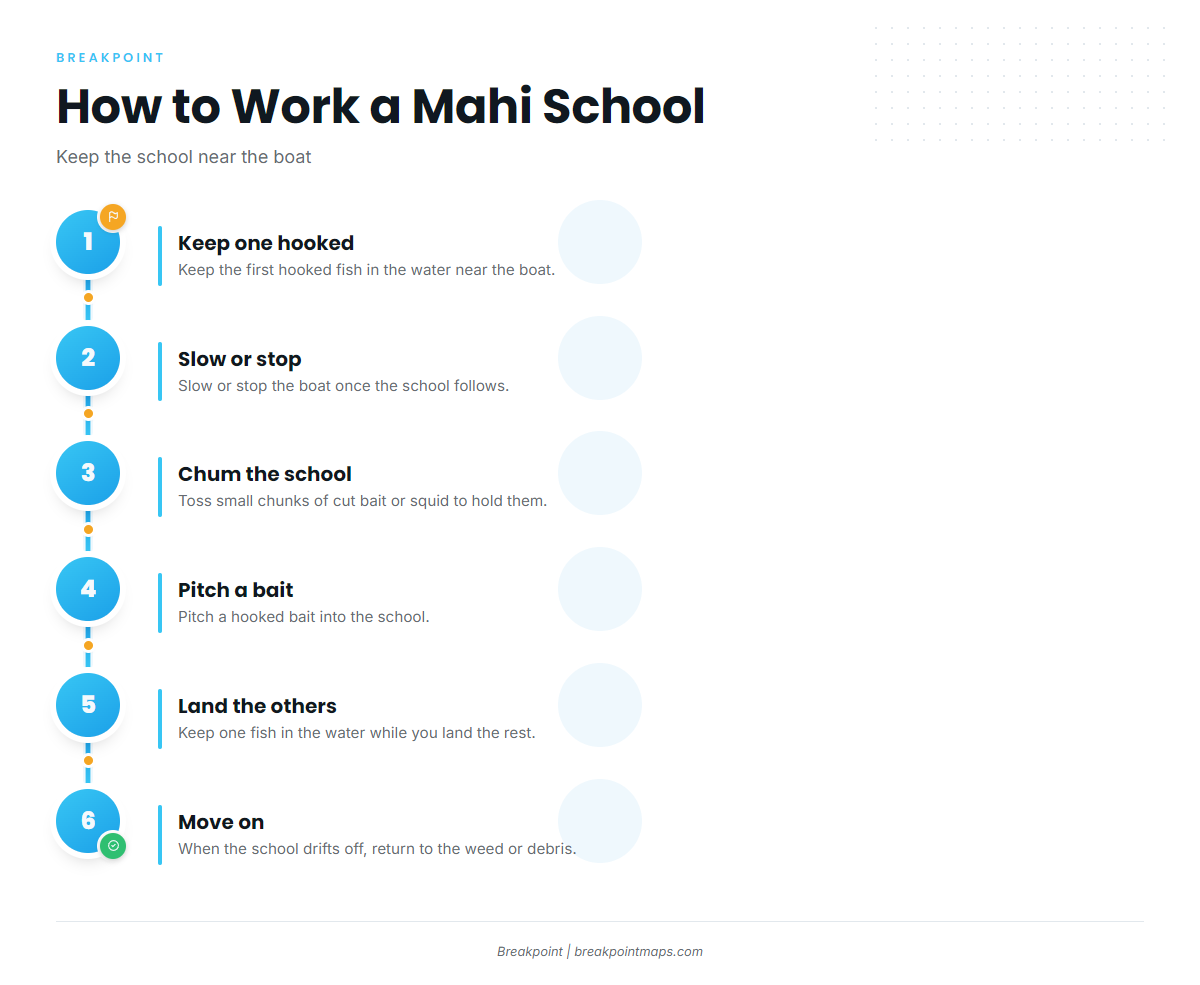
Once you find a school, follow this sequence:
- Keep the first hooked fish in the water near the boat.
- Slow or stop the boat once the school follows.
- Toss a few small chunks of cut bait or squid to hold the school.
- Pitch a hooked bait into the school.
- Keep one fish hooked in the water while you land the others.
- Move on when the school drifts off, and return to the weed or debris.
4. Pitch baits, casting and fly fishing
Cast lures or pitch baits to fish holding on weed. If you already chase mahi elsewhere, fly fishing follows the same logic: tease fish close with a hookless teaser or chum, then present the fly.
5. Landing and release
Gaff only fish you intend to keep. If you’re releasing a fish, minimize its time out of the water and use a dehooker. The bull and cow distinction matters for identification and your own harvest choices, and we make no conservation claims about it.
Handling and Eating
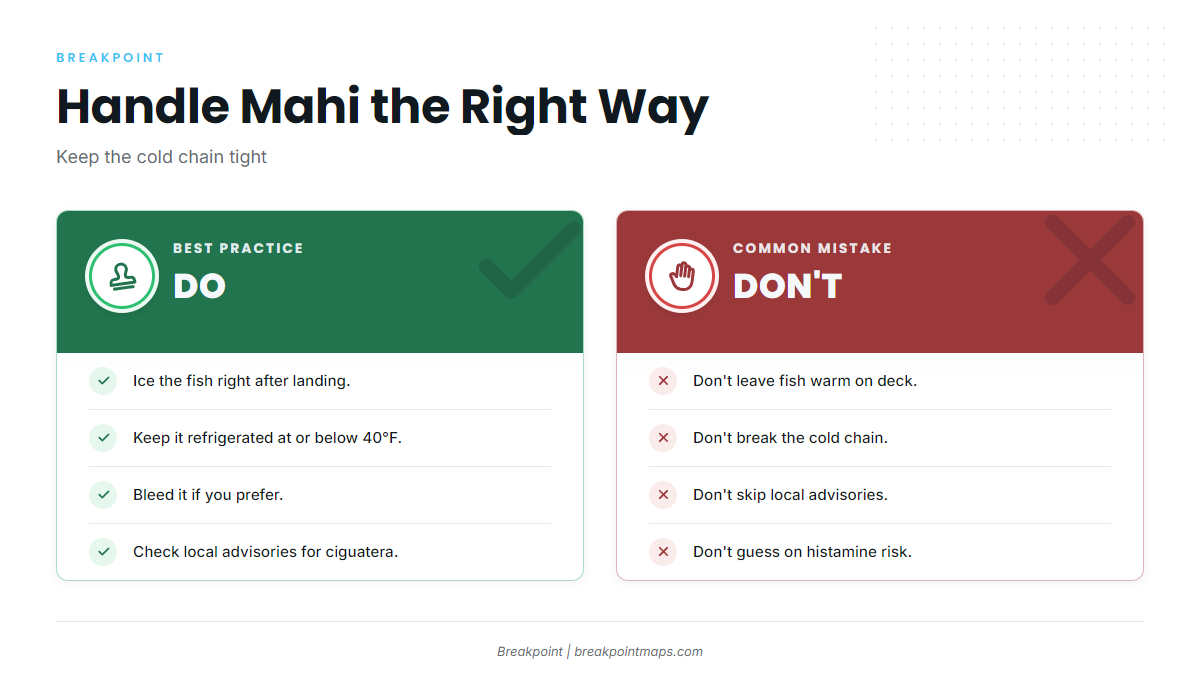
Ice the fish right after you land it, and bleed it if you prefer. Mahi-mahi are naturally high in histidine, and histamine can form from it at holding temperatures above about 40°F. Keep mahi properly refrigerated and hold the cold chain from boat to kitchen. For ciguatera, check local advisories.
Frequently Asked Questions
How far offshore are mahi?
It depends on where the warm current and weed sit. Where the Gulf Stream runs close to shore, you can find fish relatively near. Elsewhere the run is much longer.
What water temperature do mahi like?
Warm, clean offshore water. Temperature breaks help concentrate fish and the weed they hold under.
What’s the mahi bag limit?
It varies by federal versus state waters and by region. Use the Regulations table, then confirm with SAFMC, GMFMC, FWC, CDFW or your state agency before you fish.
Bull vs. cow: how do you tell them apart?
Look at the forehead. The bull has a steep, blunt forehead. The cow has a rounded head.
Are mahi overfished?
NOAA Fisheries lists the Atlantic stock population level and overfishing status as unknown, with management measures in place. Anglers do report smaller fish, but the cause isn’t established.
What’s the best trolling speed for mahi?
Tackle shops commonly quote 6 to 9 knots. Adjust to your baits and the sea state.
Closing
Find the edge, then the weed, then the fish, and check the rules before you leave the dock. The data now available makes it easier to decide where to look.
Breakpoint’s hotspots and Fish Intel views surface temperature and color edges and likely holding water for mahi-mahi, so you can decide where to start before you burn the fuel. Chart layers are not for navigation. For your next read, pick the regional guide that matches your water in the table above.