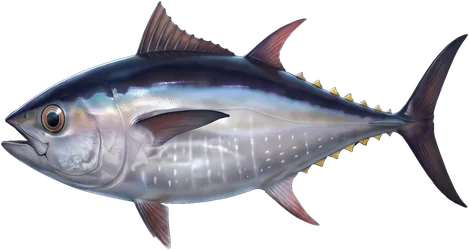




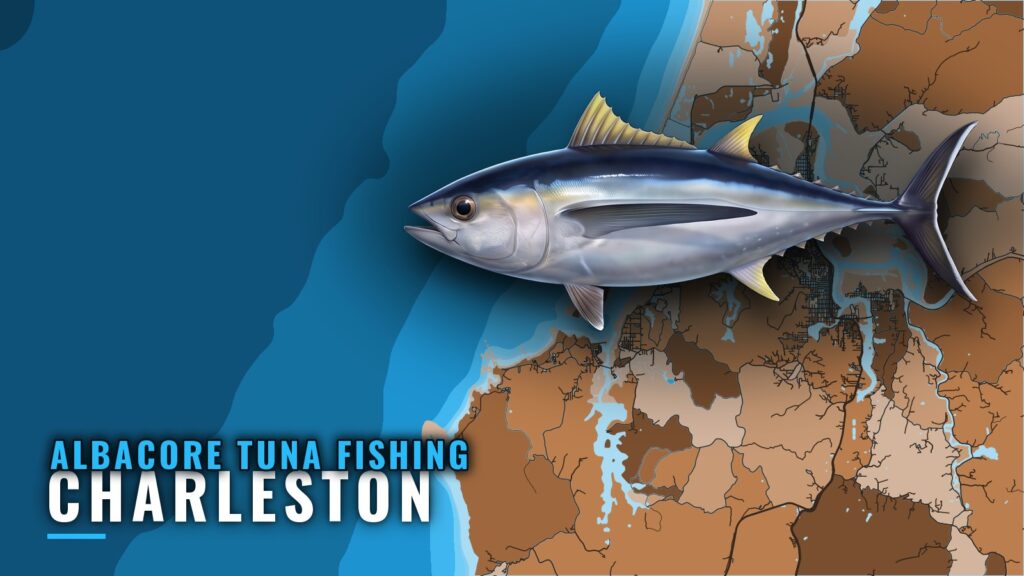
Albacore trips out of Charleston, Oregon, are Full Day runs, and every one of them starts and ends with a crossing of the Coos Bay bar. This page covers the crossing, the trip window, where to read conditions, who fishes albacore from Charleston, Oregon, and where the rules live. The goal is a better decision about where to look, built from numbers you check yourself.
When albacore are off Charleston
Timing comes from data, not a date on a calendar. Before you commit to a run, confirm two things: that the charters listing albacore are running the trip, and what the sea surface temperature and conditions data show for the day you plan to go.
Albacore follow water, so watch the numbers for several days before you trailer the boat or untie the lines. Our albacore tuna fishing guide covers the biology and the broader timing picture.
Running out of Charleston
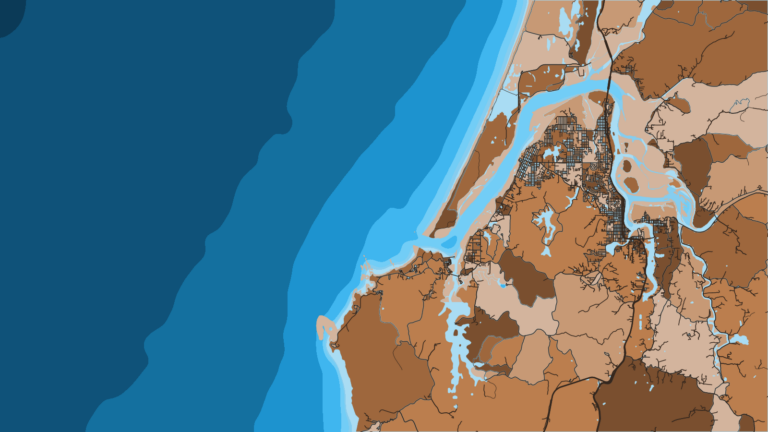
The Charleston Boat Basin sits on South Slough, inside the Coos Bay entrance jetties. Fishing albacore from here means crossing the bar first and planning the whole day around the way back in.
Crossing the Coos Bay bar
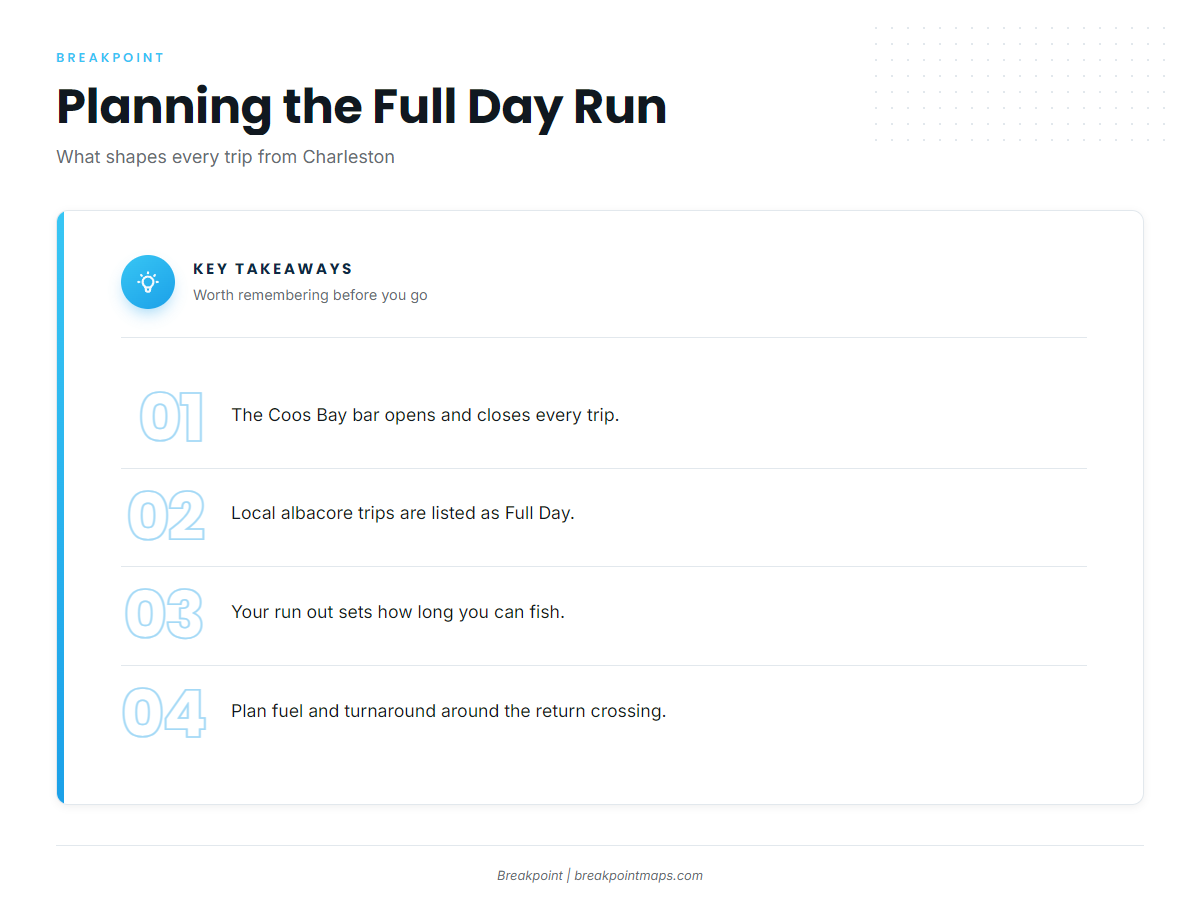
The bar is the defining feature of this port. You cross it twice, and the second crossing comes at the end of a long day, so plan around the return as much as the run out. Before you go, check wind, wave height and period, then read the official forecast and the Port of Coos Bay bar information.
A Full Day trip
Local albacore trips are listed as Full Day, and that window frames your fuel, your range and your turnaround. Two rules follow from it:
- How far you run sets how long you have to fish.
- Your turnaround has to leave time and fuel for the return crossing of the bar.
Set the turnaround point before you leave the dock, and hold to it.
Finding grounds and structure
Albacore are an open-water fish, and the water on the day decides where you look rather than any fixed spot. Read the OBS SST and Chart Contours layers alongside the CHAO3 readings to choose where to start. Chart layers are not for navigation.
For regional patterns and where the fleet tends to range, see our Pacific Northwest albacore patterns (see also the Pacific Northwest offshore fishing guide).
Reading CHAO3
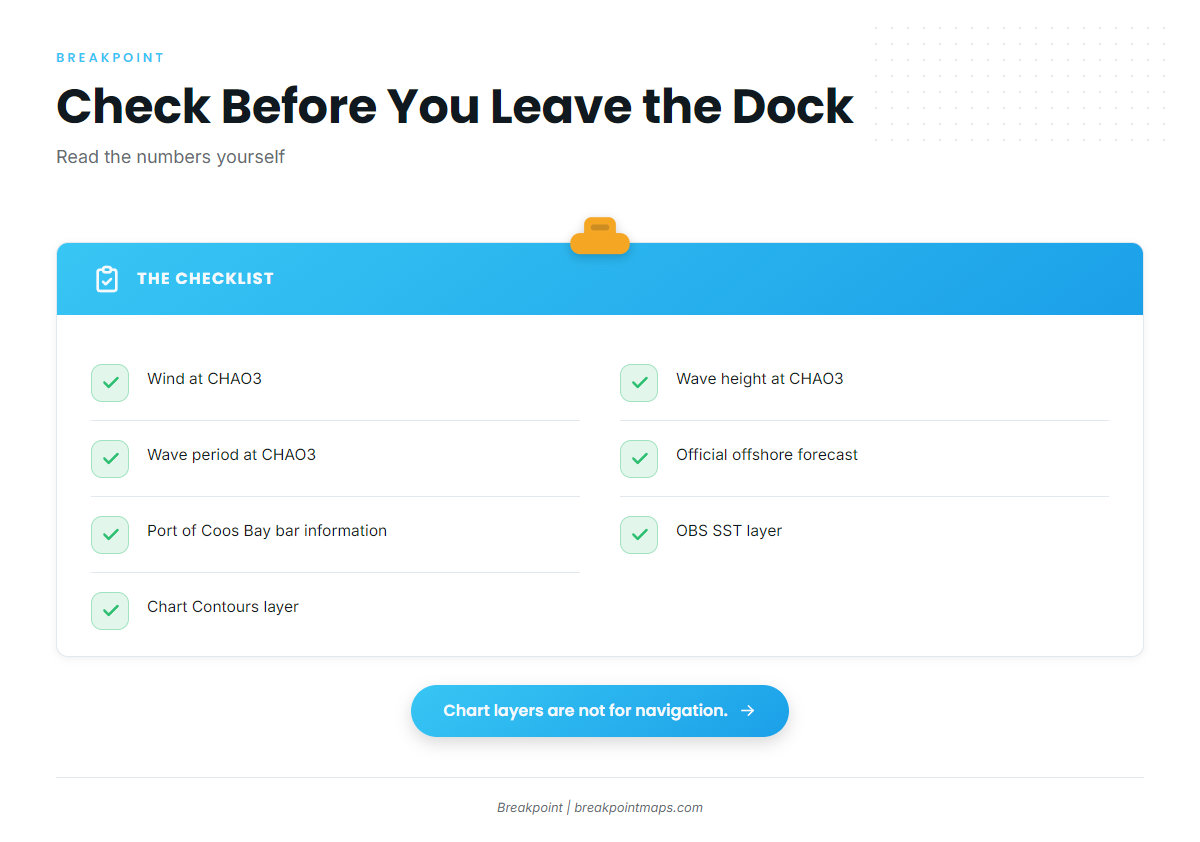
The nearest NOAA buoy is station CHAO3, Charleston, OR, at 43.351 N, 124.337 W, owned by NOAA’s National Ocean Service. Read wind, wave height and period as numbers before you leave the dock, and check the official forecast for the offshore picture.
A fixed station at the harbor reports conditions at the harbor, not at the offshore grounds. Use it for the crossing and the departure, and use the forecast and the water data for everything beyond.
How albacore are fished from this port
Albacore trips from Charleston run as Full Day offshore runs. For method depth and the broader picture, see our tuna fishing pages.
Charters that list albacore
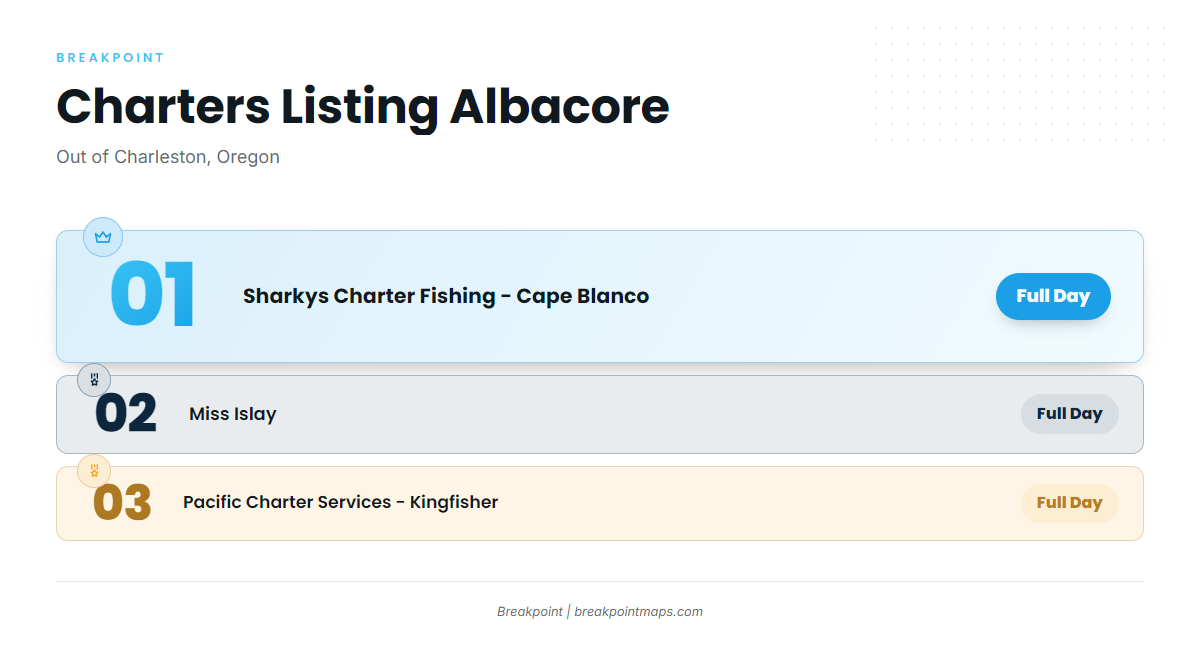
To see who fishes albacore out of this port, or whether boats are running, start with these three operators:
- Sharkys Charter Fishing – Cape Blanco (Capt. John Blanchard)
- Miss Islay (Capt. Chris Wesley)
- Pacific Charter Services – Kingfisher (Capt. Curt Shoults)
All three list their trips as Full Day.
FAQ: albacore tuna fishing out of Charleston
Which charters list albacore out of Charleston?
Sharkys Charter Fishing – Cape Blanco (Capt. John Blanchard), Miss Islay (Capt. Chris Wesley) and Pacific Charter Services – Kingfisher (Capt. Curt Shoults) all list albacore. The trips are listed as Full Day.
How long is a typical albacore trip from Charleston?
Trips are listed as Full Day. That window sets your fuel, your range and your turnaround, so decide your turnaround point before you leave the dock.
What is the nearest NOAA buoy to Charleston?
NOAA station CHAO3, Charleston, OR, at 43.351 N, 124.337 W, owned by NOAA’s National Ocean Service. It reports harbor conditions: wind, wave height and period.
What do you cross to get offshore from Charleston?
The Coos Bay bar, on the way out and on the way back. Check the wind, wave height and period numbers and the official forecast before you cross.
Where are the rules for albacore from Charleston?
State and federal managers set them. Oregon’s rules come from ODFW, and albacore is also managed federally. Start at our Oregon regulations page and check the official sources before fishing.