



About Islamorada
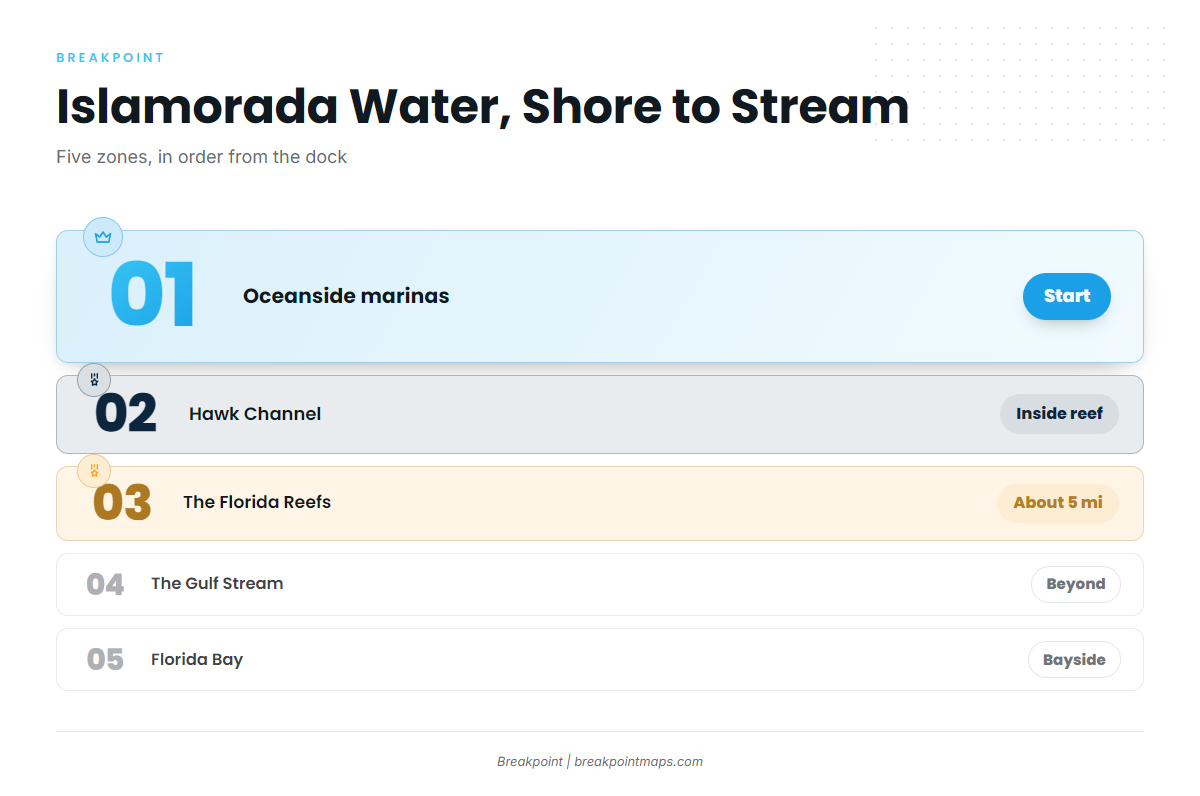
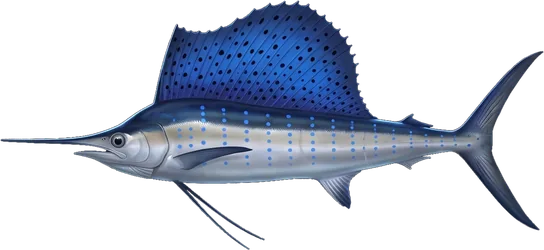
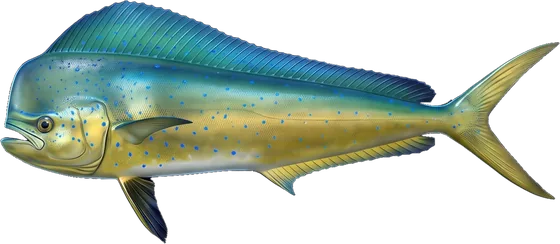
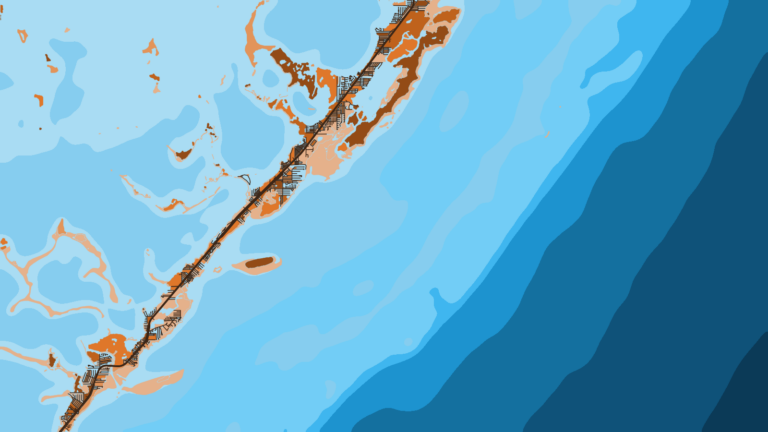
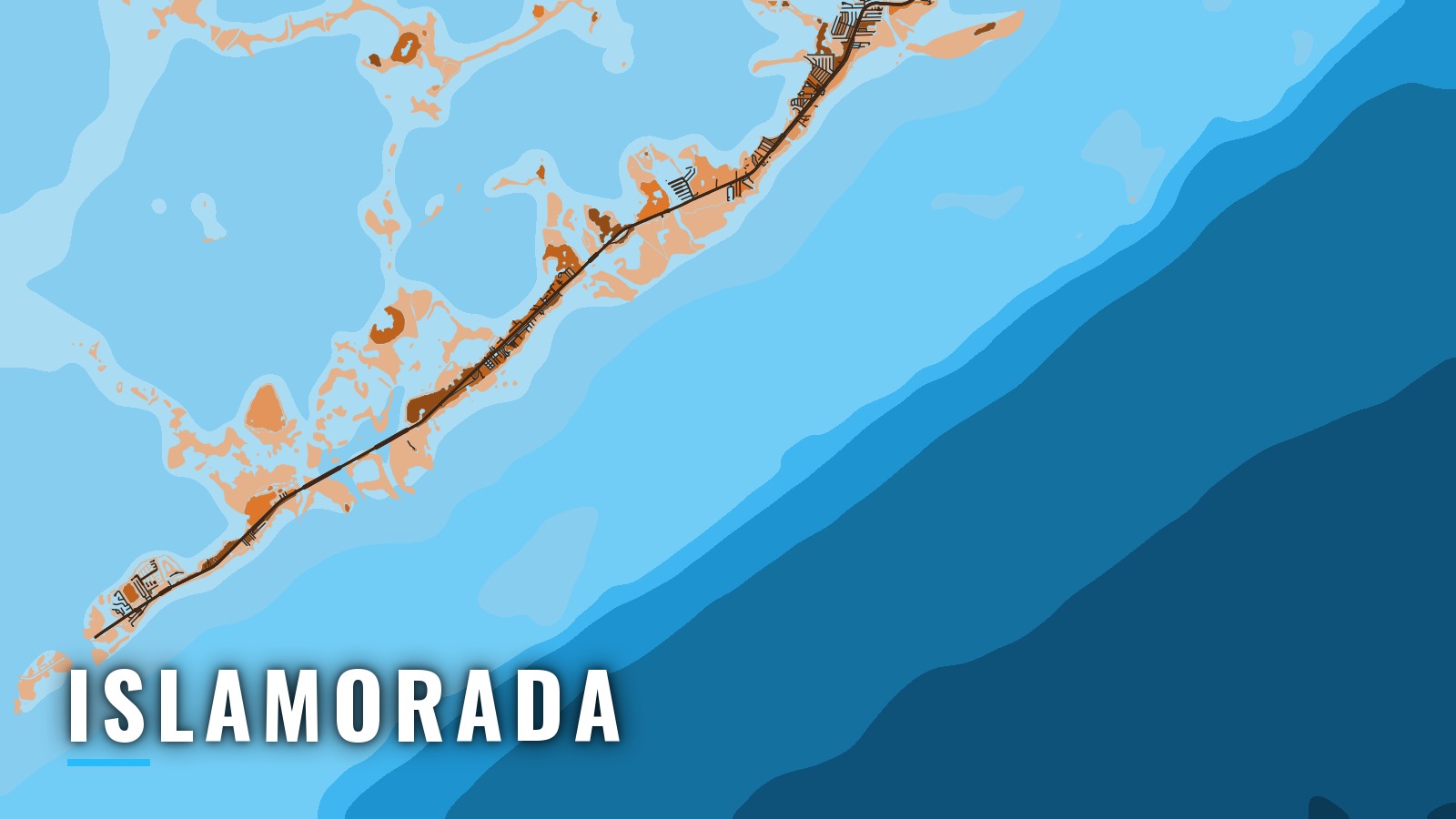
Islamorada spreads across Matecumbe, Plantation and Long Keys, with Florida Bay on one side and the Atlantic on the other. On the oceanside, marinas open onto Hawk Channel, which runs inside the Florida Reefs, about 5 miles off the line of keys. Beyond the reef line, the Gulf Stream flows through the Straits of Florida, and that is where the offshore fishing starts. Sailfish carry the winter, and mahi-mahi run from spring through summer.
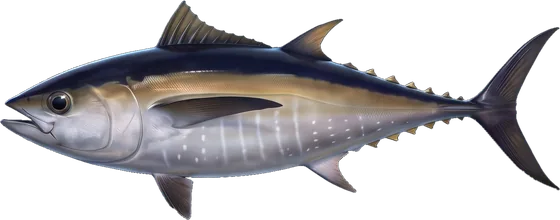
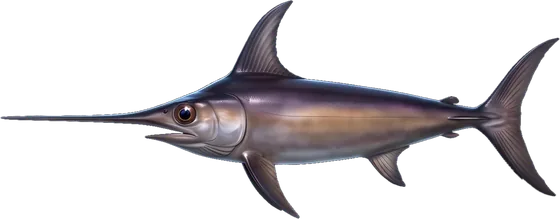
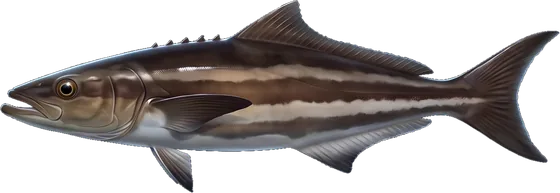
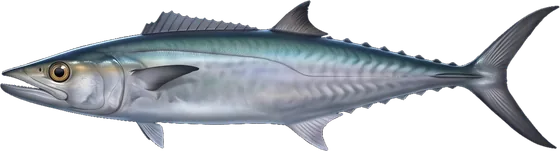
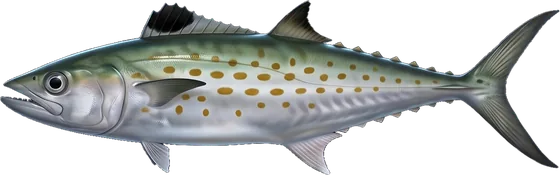
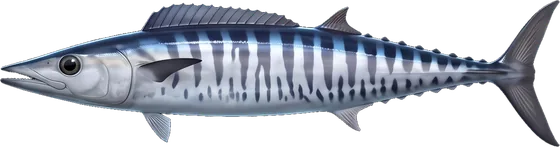
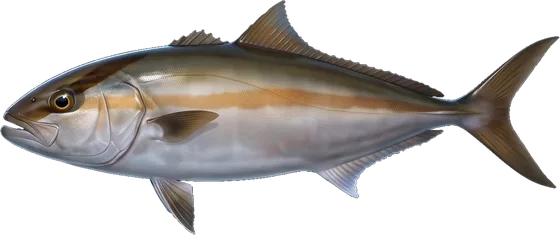
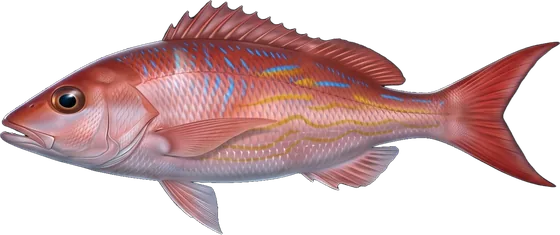
The species list is sailfish, mahi-mahi, blackfin tuna, wahoo, king mackerel, swordfish, amberjack, yellowtail and mutton snapper, and permit. Florida rules for each are on our Florida page. You need a Florida saltwater license. On a private vessel, keeping yellowtail snapper, mutton snapper or amberjack also requires the free FWC State Reef Fish Angler designation. Check the FWC page before you fish.
Access and navigation
Islamorada has a bayside public ramp and several oceanside marinas, and channels between the keys connect the two sides.
Ramps and marinas
- Founders ParkBayside ramp and marina on Plantation Key. Open daily 8 am to 6 pm. No dock poles at the ramp. Village fees and rules are on this page.
- Bud n’ Mary’s MarinaOceanside, fuel and transient slips.
- Whale Harbor MarinaOceanside at Whale Harbor Channel.
- Robbie’s MarinaAt Indian Key Fill.
More ramps are at Plantation Key, Harbor Lights at Holiday Isle, Indian Key Fill and Sea Bird Marina on Long Key. The FWC Florida Keys ramp guide lists them.
Approach behavior
The reefs sit about 5 miles off the keys. In smooth weather they might not be marked by breakers, and the water shoals abruptly on the outer edge and between the reefs. In clear weather, the lights and daybeacons make the reef line easy to follow. In thick weather, soundings are the better guide. U.S. Coast Pilot 4 covers the details.
Wind is the main variable. Easterlies and northeasterlies tend to persist, usually at 10 to 20 knots. From October through March, winds of 22 knots or more blow about 7 to 12 percent of the time. In a southerly, the openings near Alligator Reef Light can stack up, while Hawk Channel inside the reef tends to stay smoother. Cross currents can set in Hawk Channel near the openings between the keys, and tidal currents can run strong through them.
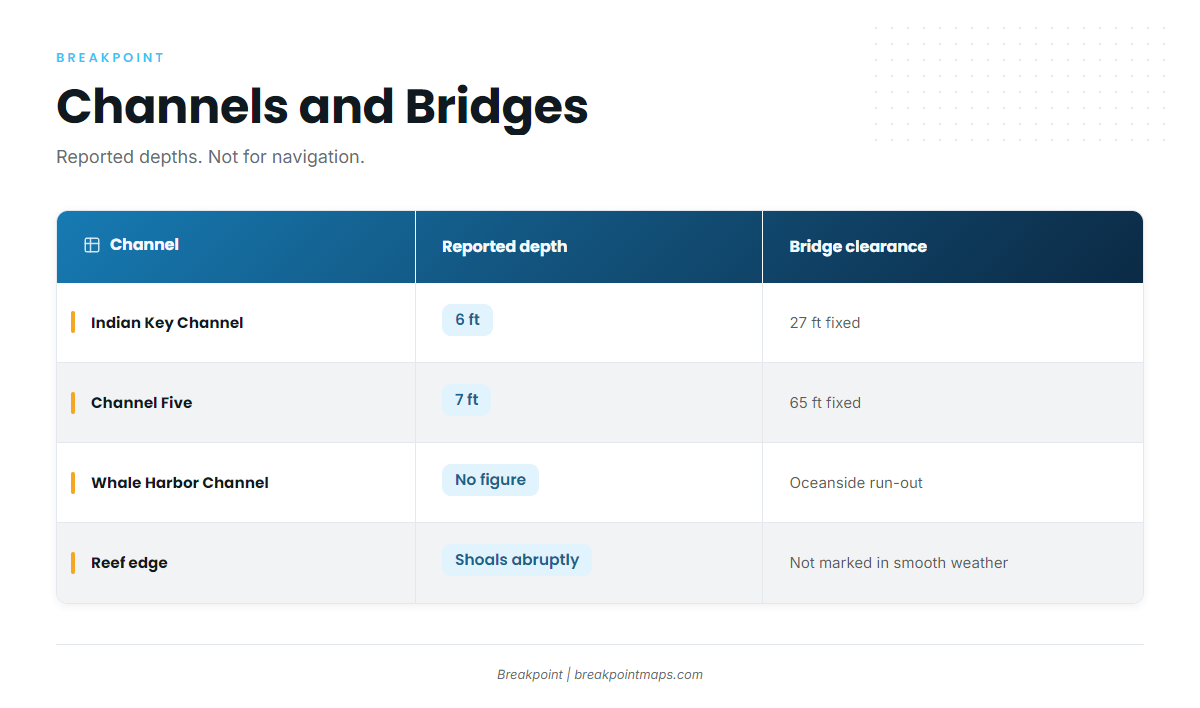
| Channel | Width and markers | Reported controlling depth | Bridge clearance | Notes |
|---|---|---|---|---|
| Indian Key Channel | About 200 yards, daybeacons | 6 feet | 27 feet, fixed | Tends to deepen with westerlies and fill with southeasterlies |
| Whale Harbor Channel | Oceanside run-out at Whale Harbor Marina | n/a | n/a | Read the water on arrival |
| Channel Five | About 8.4 miles west of Alligator Reef Light | 7 feet | 65 feet, fixed | A strong current can set through it at times |
Swipe the table sideways to see every column.
Alternative approach
If your boat does not clear 27 feet at Indian Key Channel, Channel Five has a fixed bridge with 65 feet of clearance. Its reported controlling depth is 7 feet, against 6 feet reported at Indian Key Channel. It sits about 8.4 miles west of Alligator Reef Light, and a strong current can set through it at times. Breakpoint chart layers are not for navigation, so run the official NOAA charts.
On arrival, look at the water and read the NWS Key West coastal waters forecast. If conditions look bigger than you want, switch approaches.
Fishing conditions
Offshore from Islamorada, the grounds run in a line. Alligator Reef sits along the reef line, the reef edge drops toward deeper water, the Islamorada Hump rises offshore, and the Gulf Stream edge lies beyond. The Gulf Stream edge drives the pelagic fishing across the region, and the Atlantic Southeast fishing guide covers it in more detail.
Fishing is prohibited in Sanctuary Preservation Areas of the Florida Keys National Marine Sanctuary. Check the zones in the Marine Sanctuary Explorer app before you drop a bait on the reef.
Our OBS SST and Chlorophyll layers show where the edge and color breaks sit on a given day, though cloud can block a satellite pass.
Winter
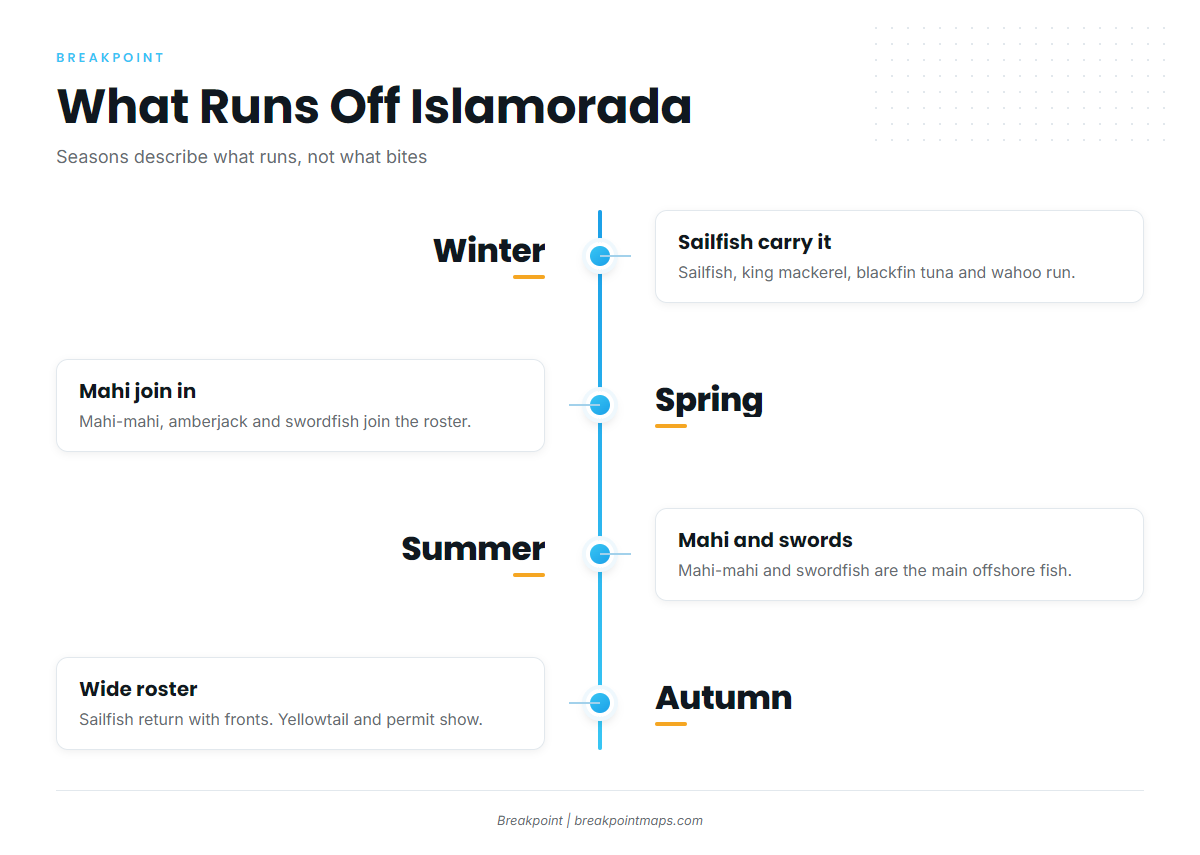
In winter, sailfish, king mackerel, blackfin tuna and wahoo run off Islamorada. Fronts bring north wind, and the winter sailfish push along the reef edge. Monroe County follows the Gulf king mackerel rule on the Atlantic side, so check Florida’s king mackerel rule chapter before you keep one.
Spring
In spring, sailfish, blackfin tuna and wahoo hold, and amberjack, swordfish and mahi-mahi join them. Daytime swordfish fishing works the deep drop off the reef. Amberjack falls under the Reef Fish Angler designation.
Summer
In summer, mahi-mahi and swordfish are the main offshore fish. The mahi-mahi in the Atlantic Southeast guide covers where they tend to hold. Check wind in knots and the official forecast before each run.
Autumn
In autumn, the species list is mahi-mahi, tuna, king mackerel, sailfish, wahoo, yellowtail and mutton snapper, swordfish and permit. Sailfish in the Atlantic Southeast return with fall fronts, and wahoo in the Atlantic Southeast stay active. Hurricane season can shape plans, so watch the forecast linked above.