



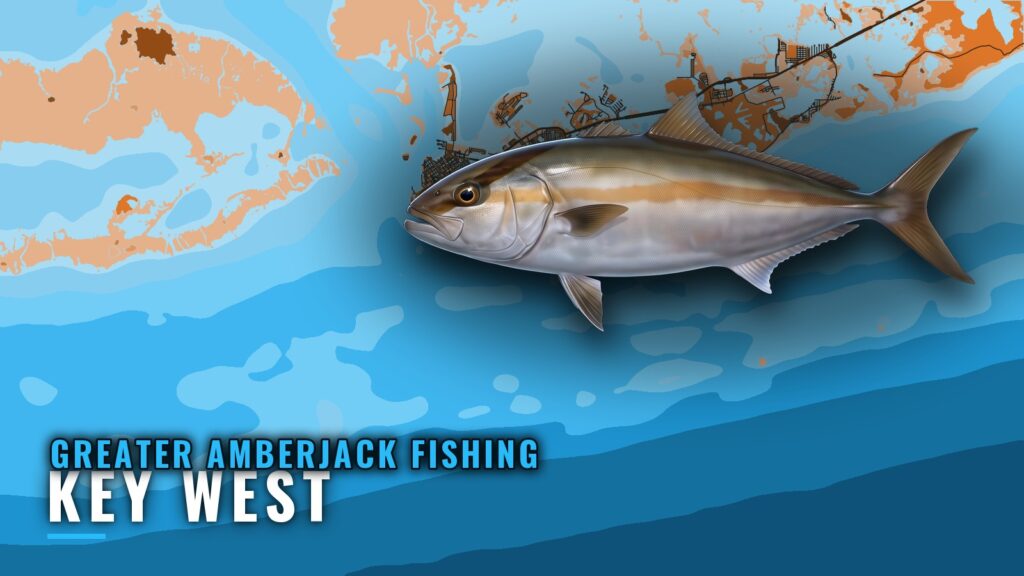
Greater amberjack are documented from Key West in a thin set of reports that name a few wrecks and reef grounds, one light-tackle method and one operator with a website. The Key West port guide covers the channels and the water around the island. What follows says what is and is not documented. The wider picture is in the greater amberjack fishing in the Atlantic Southeast and the Atlantic Southeast region guide.
When amberjack are around Key West
No month or season for greater amberjack at Key West is documented. The regional guides place amberjack on wrecks, rigs and reefs, but they do not tie a month to this port. The season also depends on which side of the Keys you fish, because the Gulf and Atlantic sides fall under different rules.
Where boats run from Key West
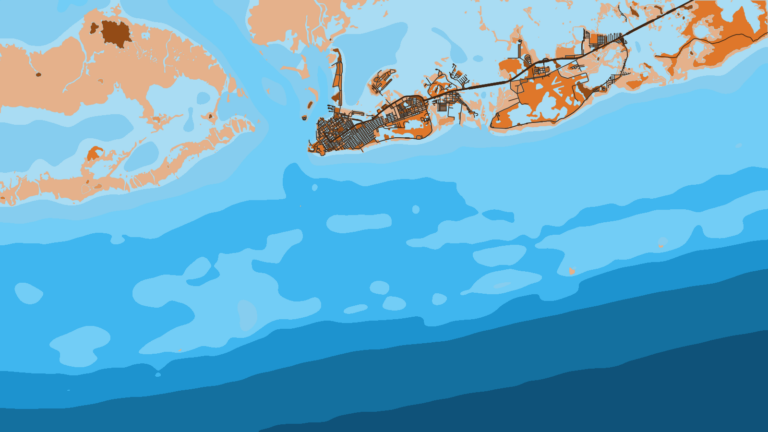
Boats leave through the Main Ship Channel toward the Straits of Florida and the Atlantic side, or through the Northwest Channel toward the Gulf side. The Northwest Channel is a medium-draft passage with intermittent shoaling and submerged jetties beside its Gulf end, which is shifting westward, so boats bound for Gulf-side wrecks should stay on the buoyed line. In the main channels west of Fort Taylor, the flood sets north at about 2 knots and the ebb sets south at about 3 knots, and wind changes both the timing and the strength of that current. Check conditions yourself, and plan the tide for the return if you are heading to a wreck.
Grounds and structure
The documented grounds are artificial reefs and sunken vessels off Key West, which operators describe as lying 100 to 200 feet deep. No distance from the port is documented for them. The named wrecks near the port are the Edward Luckenbach, the Sturtevant and the Bosilijka on the Gulf side, and the Vandenburg, the USS Curb and the Wilkes-Barre on the Atlantic side. Nothing ties greater amberjack to a named wreck, so treat them as structure that suits the species rather than confirmed marks.
How greater amberjack are fished out of Key West
The documented method is light tackle on shallow-water wrecks, with amberjack teased up on live blue runners so they charge the boat. The general approach is to mark the structure, idle over it and read the arches above it, then drop live bait such as blue runners, pinfish or cigar minnows to the depth of the marks. Use a fluorocarbon leader and a heavy drag, because a hooked fish runs hard back into the structure. Vertical jigging with heavy jigs is the other common method. Sharks take hooked fish on popular wrecks, so keep the fight short and move if they show up.
Who fishes greater amberjack from Key West
Delph Fishing, run by Capt. Ralph Delph, is the documented operator here, and it teases amberjack on light tackle over the shallow wrecks. Check its website for trip details. A second reef-and-wreck operator also lists amberjack among its targets, but no website is documented for it, so ask that boat directly. No tournament is documented.
Frequently asked questions
Is there a documented amberjack season at Key West?
No. Plan around the rules for the side of the Keys you fish rather than a pattern for the port.
How deep are the wrecks?
Operators describe the artificial reefs and sunken vessels off Key West as lying 100 to 200 feet deep. The wider depth range for the species is general and is not a depth for this port.
Where should I check conditions?
Read the National Weather Service marine forecast for Key West and the current on the day. Chart layers are not for navigation.