



Lingcod fishing out of Depoe Bay starts close. The first reefs begin at a bell buoy about half a mile from the harbor, and deep-water trips run 15 to 25 miles out. This page turns local charter practice at Depoe Bay into planning numbers for your own boat: when the fish are around, which structure holds them, how locals fish it, and who runs trips. Species biology lives in the lingcod guide. Region-wide coverage is in the wider Pacific Northwest guide.
When lingcod are around Depoe Bay
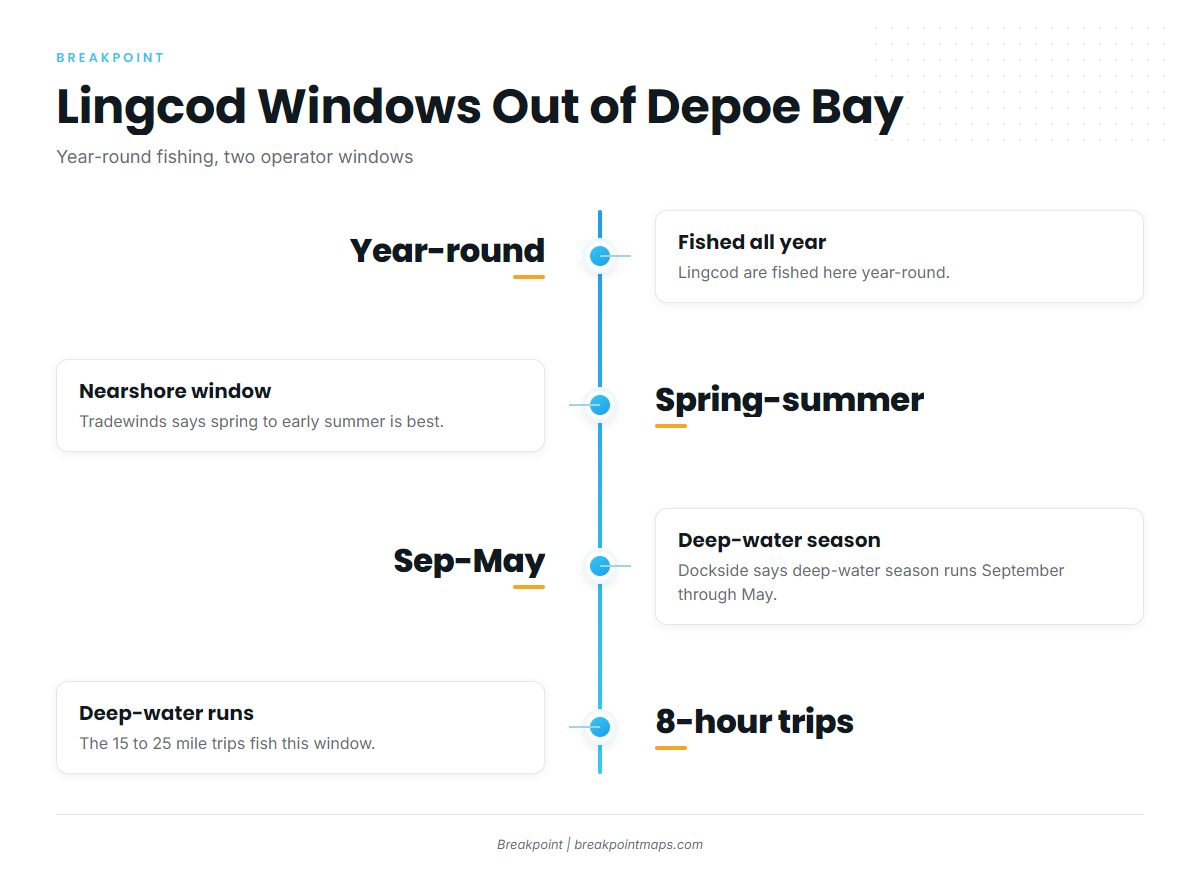
Lingcod are fished here year-round. The local operators describe two windows, and they overlap.
- Nearshore and general: Tradewinds says lingcod are best from spring to early summer.
- Deep water: Dockside says the deep-water season runs September through May.
Year-round fishing
Both operators run lingcod trips through the calendar, so you can plan a trip in any month and match depth and distance to the window below.
Spring to early summer
Tradewinds says lingcod are best from spring to early summer. For a trailer boat, this is the window for nearshore reef days.
The September through May deep-water season
Dockside says the deep-water season runs September through May. This is the window for the 8-hour, 15 to 25 mile trips covered below.
Where boats run
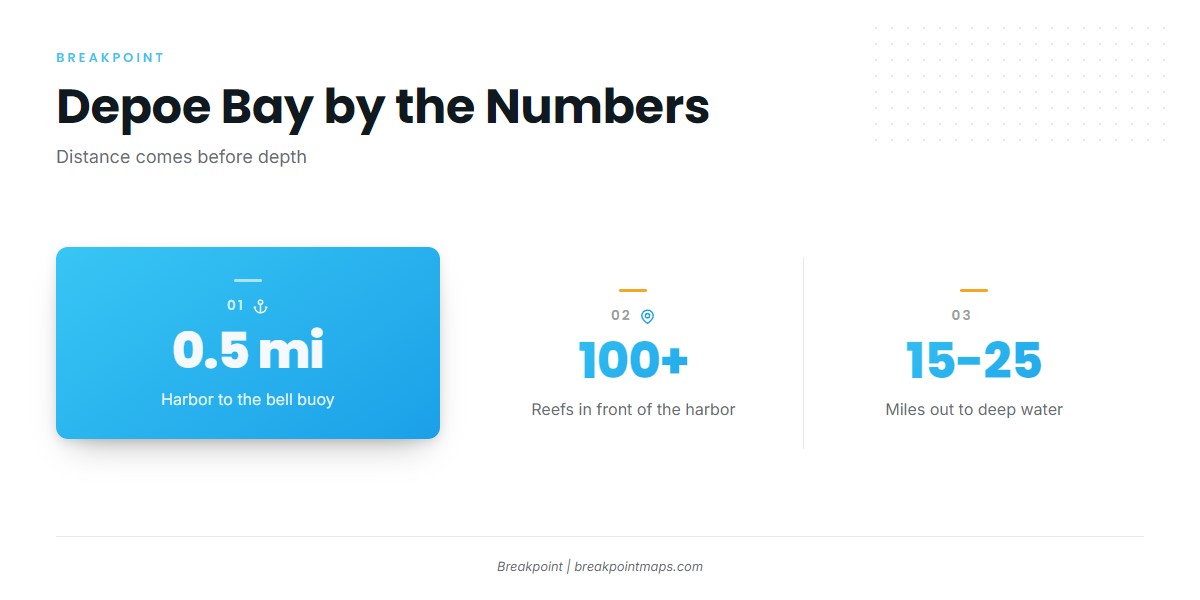
Distance sets the plan before depth does. Nearshore reefs are a short run, and deep water is a day trip.
| Run | Distance from harbor | What you are fishing |
|---|---|---|
| Bell Buoy | about 0.5 miles | where the reefs begin |
| Reefs in front of the harbor | inside the first stretch of coast | 100+ reefs, per Tradewinds |
| Deep water | 15 to 25 miles | 480 to 600 ft |
From the harbor to the bell buoy
The reefs begin at a bell buoy about half a mile from the harbor. That short run puts a trailer boat on structure.
100+ reefs in front of the harbor
Tradewinds says there are 100+ reefs. They sit in front of the harbor, so there is room to work several spots in one trip.
15 to 25 miles to deep water
Deep-water trips run 15 to 25 miles out. Check wind, wave height and period in the official NWS marine forecast before the run.
Grounds and structure that hold lingcod
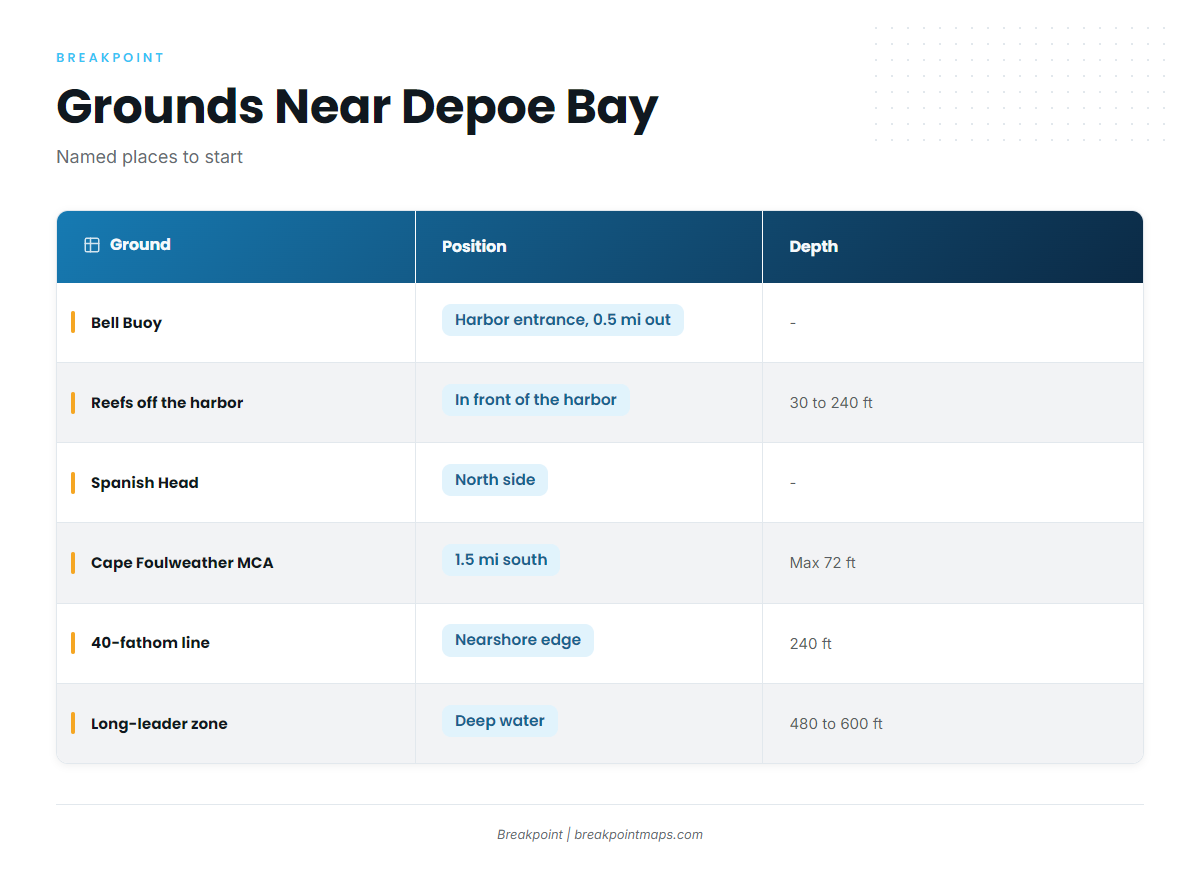
Start at the bell buoy and work outward. Depth is the dividing line between the two kinds of trip.
| Ground | Position | Depth |
|---|---|---|
| Bell Buoy | harbor entrance, about 0.5 miles out | not listed |
| Reefs in front of the harbor | in front of the harbor | 30 to 240 ft |
| Spanish Head | north side | not listed |
| Cape Foulweather Complex Marine Conservation Area | 1.5 miles south of Depoe Bay | max 72 ft |
| 40-fathom line | not listed | 240 ft |
| Long-leader zone | not listed | 480 to 600 ft |
Bell Buoy
The bell buoy marks the harbor entrance. It is where the reefs begin, about half a mile out.
Reefs in front of the harbor
Dockside’s 5-hour bottom trips fish these reefs at 30 to 240 ft. That is the depth band for a trailer boat that wants to stay near the harbor.
Spanish Head
Spanish Head sits on the north side. Boats then went to deeper water for lingcod.
Cape Foulweather Complex MCA
The Cape Foulweather Complex Marine Conservation Area lies 1.5 miles south of Depoe Bay. Its maximum depth is 72 ft.
The 40-fathom line and the long-leader zone
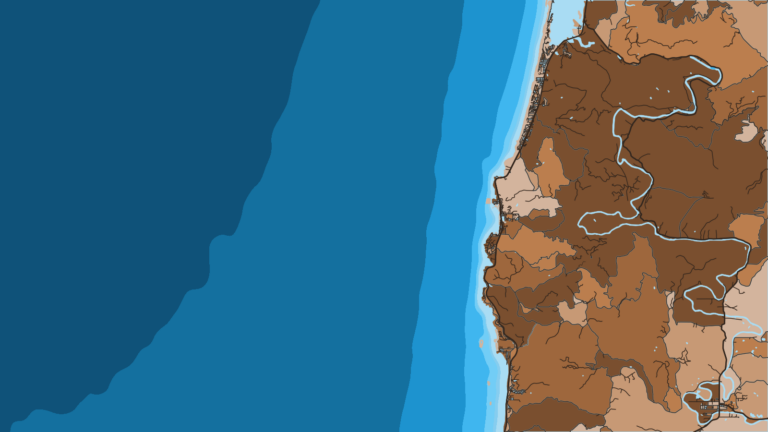
40 fathoms is 240 ft, the deep edge of the nearshore band. Long-leader and deep-water trips fish beyond it, at 80 to 100 fathoms (480 to 600 ft). Chart Contours shows where the 40-fathom line runs. Chart layers are not for navigation.
How lingcod are fished here
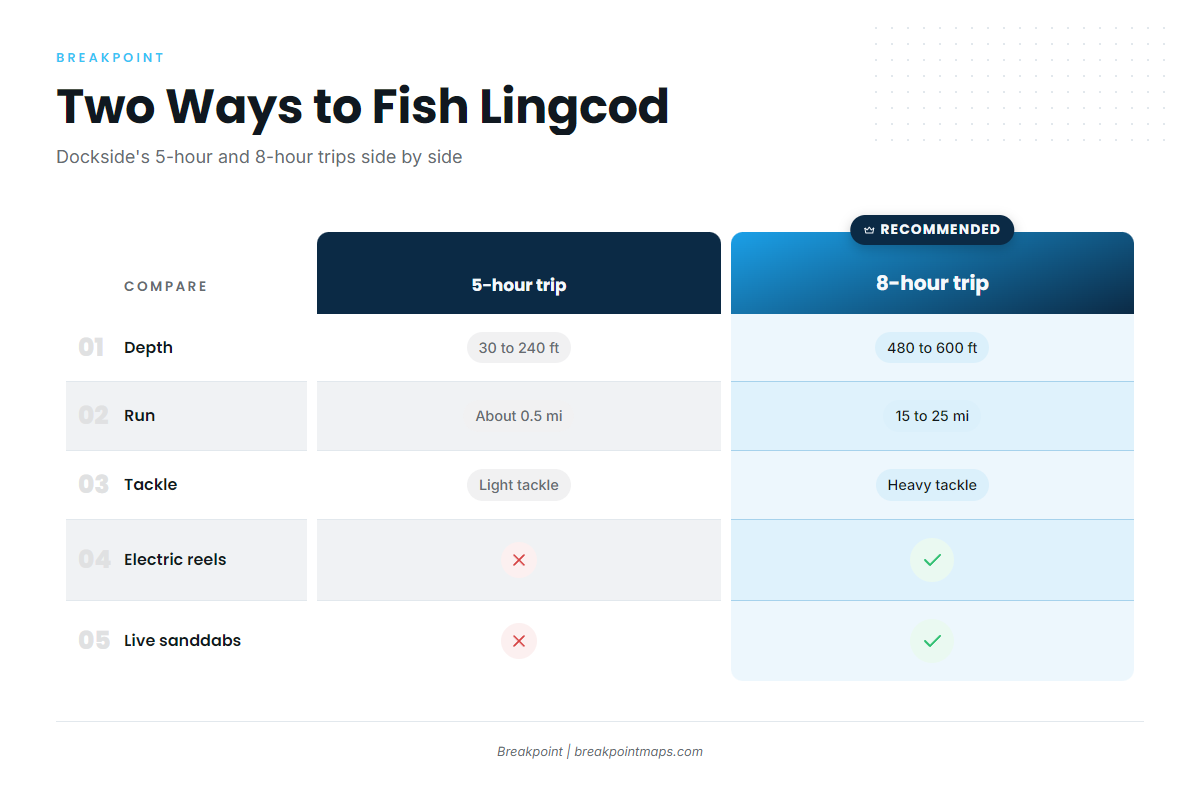
Two trip types set the local method: light tackle on the reefs, and live bait on electric reels in deep water.
| Trip | Depth | Run | Tackle | Bait |
|---|---|---|---|---|
| Dockside 5-hour | 30 to 240 ft | reefs from the bell buoy, about 0.5 miles | light tackle | not listed |
| Dockside 8-hour | 480 to 600 ft | 15 to 25 miles | heavy tackle, electric reels | live sanddabs caught on sand bottom |
Swipe the table sideways to see every column.
Light tackle on the nearshore reefs
Dockside runs 5-hour light-tackle bottom trips at 30 to 240 ft. This is the trip a trailer boat can copy.
Live sanddabs and electric reels
Dockside’s 8-hour live-bait trips first catch sanddabs on sand bottom, then fish deeper water with electric reels. For the general method, see the deep-drop technique guide.
Heavy tackle in deep water
Dockside’s deep-water trips use heavy tackle at 480 to 600 ft (80 to 100 fathoms). Gear for that depth is a different setup from the reef rod.
Who fishes for lingcod out of Depoe Bay
Two operators list lingcod trips out of Depoe Bay.
Tradewinds Charters
Tradewinds Charters in Depoe Bay lists lingcod, names spring to early summer as best, and counts 100+ reefs.
- Kadaho: Capt. Kaleb Thorson, 50′ Delta, 19-knot cruise.
- Kingfisher: listed as a boat on the operator’s fleet.
Dockside Charters
Dockside Charters bottom fishing trips run 5-hour light-tackle trips and 8-hour live-bait deep-water trips.
- Samson: James Pederson.
- Triumph: Leon Morrow, 6-passenger.
FAQ about lingcod fishing out of Depoe Bay
When is lingcod best out of Depoe Bay?
Lingcod are fished year-round. Tradewinds says they are best from spring to early summer. Dockside says the deep-water season runs September through May.
How far are the first reefs?
The reefs begin at a bell buoy about half a mile from the harbor. Tradewinds counts 100+ reefs.
How deep are the deep-water trips?
Dockside’s 8-hour trips fish 480 to 600 ft (80 to 100 fathoms). They run 15 to 25 miles out.
What bait is used on deep trips?
Live sanddabs. Dockside’s 8-hour trips catch them first on sand bottom, then fish deeper water on electric reels with heavy tackle.
Which charters target lingcod?
Tradewinds Charters (Kadaho, Kingfisher) and Dockside Charters (Samson, Triumph).
Where are the rules?
On the Oregon regulations page and, for trips beyond 40 fathoms, the federal groundfish rules. Check both before fishing.