



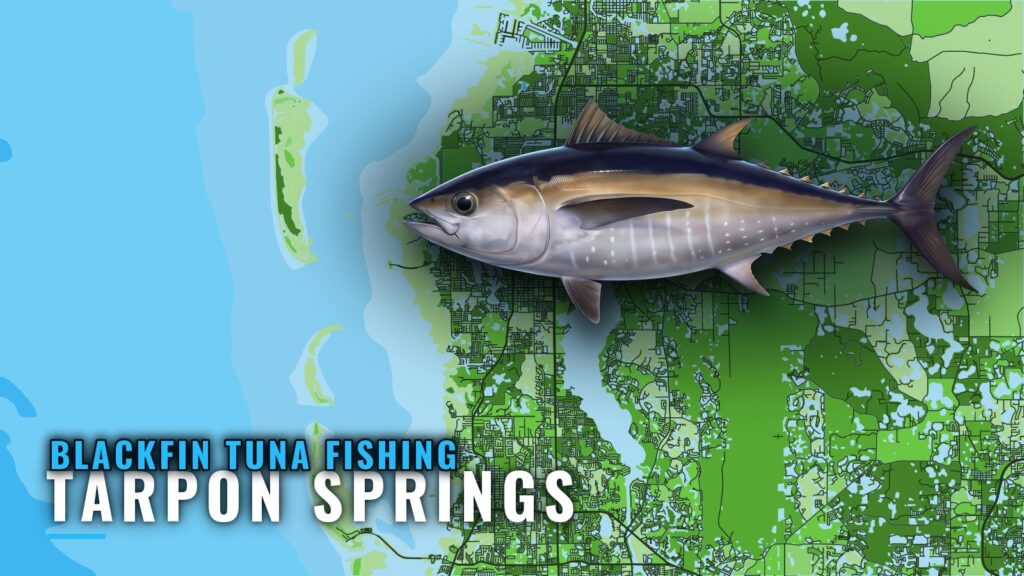
When blackfin are around Tarpon Springs
Blackfin tuna fishing out of Tarpon Springs is better in spring and fall, so plan the trailer trip around those two windows.
This page assumes you run your own boat and already know the local reefs. It covers the port-specific calls: how deep, which structure, and which method. Biology and general behavior are in our blackfin tuna species guide, and the Gulf-wide picture is in the Gulf of Mexico blackfin guide (see also the wider Gulf of Mexico guide).
The sections below cover the 100 ft band, the named structure, and when to troll and when to chum.
Where boats run and how deep
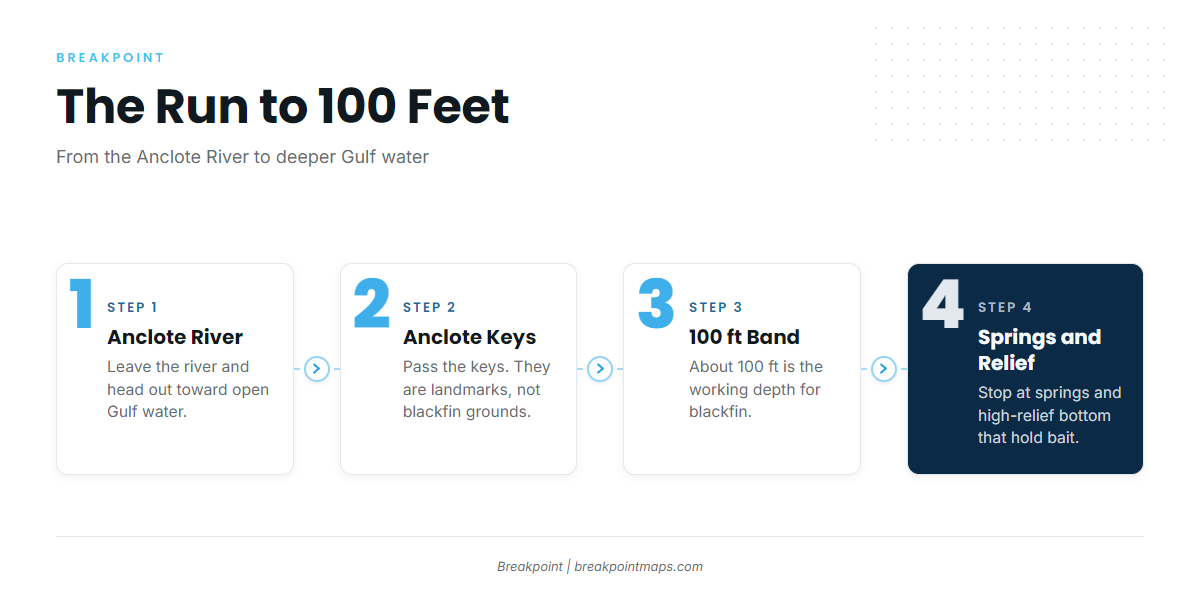
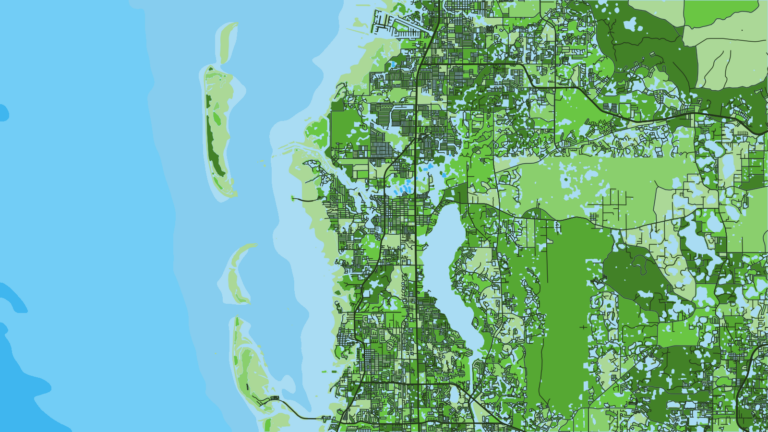
Boats leave the Anclote River, pass the Anclote Keys, and head for deeper Gulf water. The Tarpon Springs port page has the channel, launch and port details.
The run
Pasco shop roundups have boats reaching about 100 ft, so treat 100 ft as the working depth band for blackfin from this port.
Local reports describe fish in the deeper springs without naming one, and no coordinate is published. Springs and high-relief bottom hold bait, which makes them the places to stop and work.
The Anclote Keys, North Keys and the Honeymoon Island tarpon area are landmarks on the way out. They are not blackfin grounds.
No NOAA buoy is named for this run. Check the NWS marine forecast for wind, wave height and period before you leave, and read the numbers yourself.
Named reefs and structure
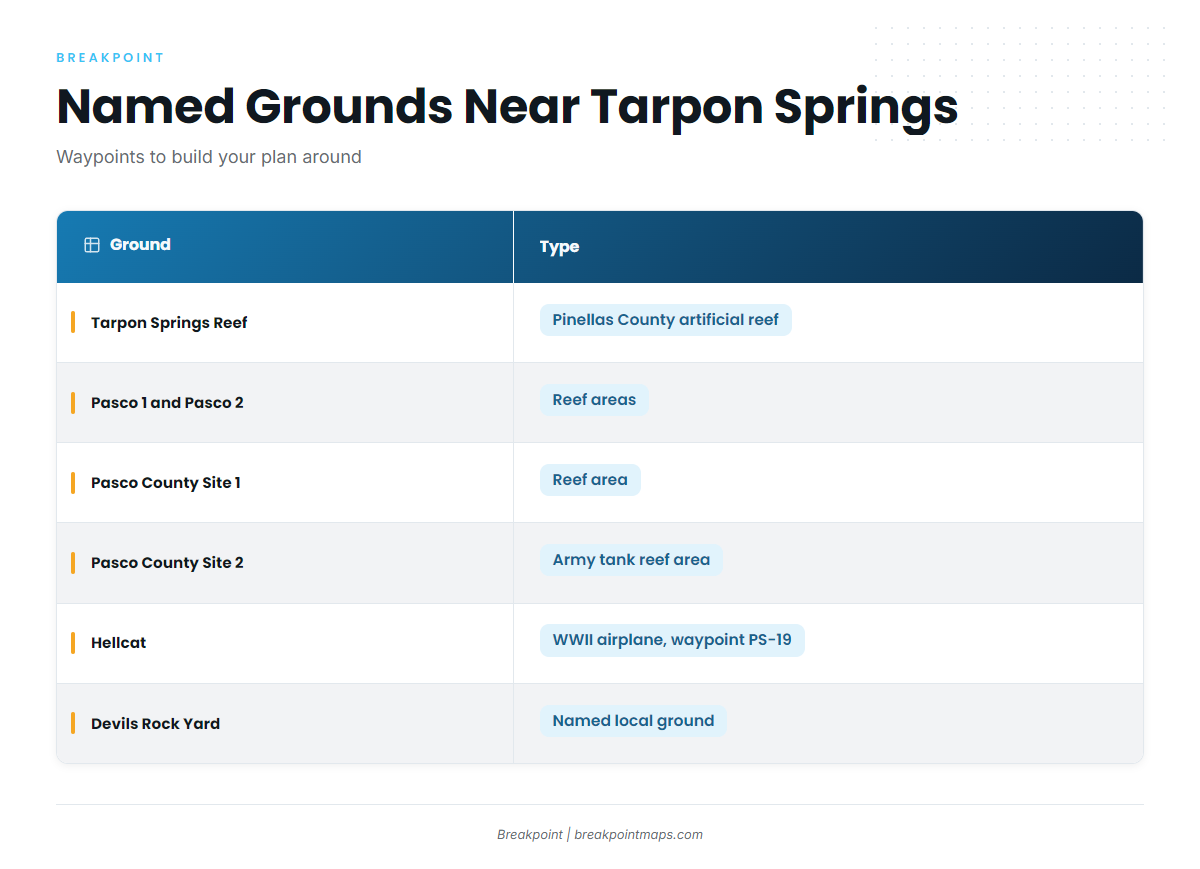
These are the named grounds near Tarpon Springs:
- Tarpon Springs Reef: Pinellas County artificial reef, N 28 8 15.0, W 82 55 51.0.
- Pasco 1 and Pasco 2: reef areas.
- Pasco County Site 1: reef area.
- Pasco County Site 2: army tank reef area.
- Hellcat: WWII Hellcat airplane, Pasco County reef waypoint PS-19.
- Devils Rock Yard: named local ground.
Chart layers are not for navigation; use NOAA charts and Coast Pilot for the run.
Reefs inside the 100 ft band make good chum stations, and the water between them is trolling water.
How blackfin are fished from this port
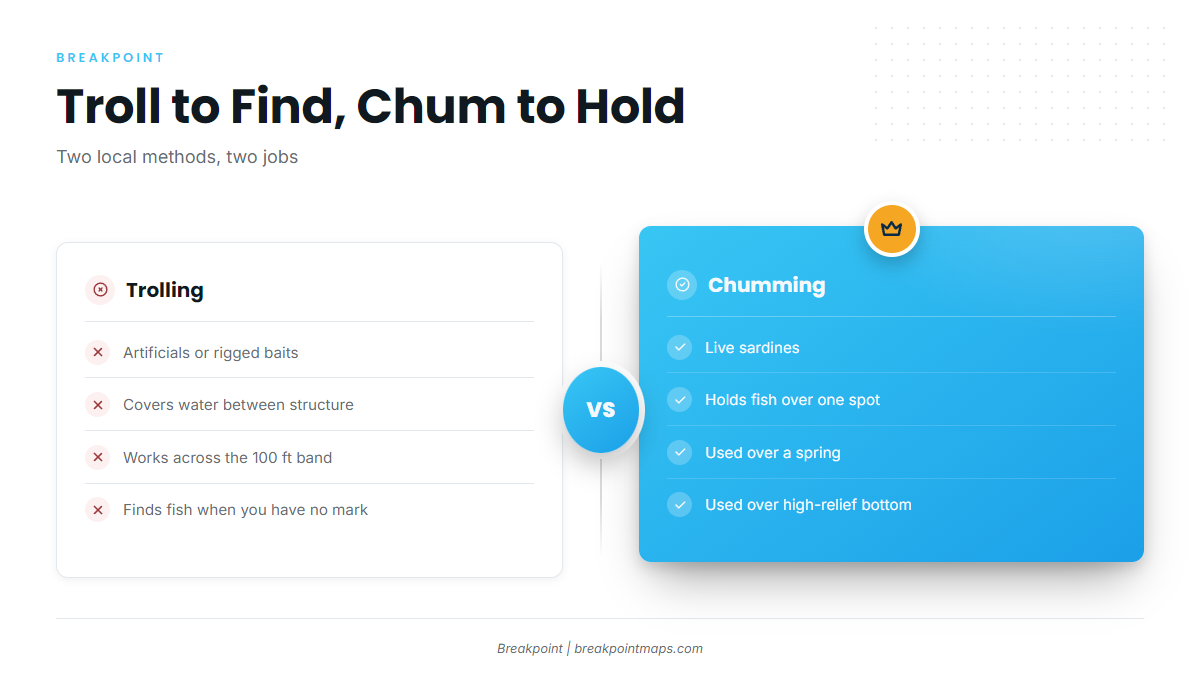
Locals use two methods. Trolling covers water, and chumming holds fish on one spot.
| Method | What locals use | Where it fits |
|---|---|---|
| Trolling | Artificials or rigged baits | Searching between structure and across the 100 ft band |
| Chumming | Live sardines | Holding fish over a spring or high-relief bottom |
Trolling
Locals troll artificials or rigged baits. This is the search method: use it between structure, across the 100 ft band, and whenever you have no mark to work.
Chumming live sardines
Locals chum live sardines over a spring or high-relief bottom. Once you are on structure, this is how you keep fish at the spot. In short, troll to find fish and chum to hold them.
Who fishes for blackfin out of Tarpon Springs
Private boaters running center consoles out of the Anclote River do most of it. Pasco and Pinellas tackle-shop roundups report the 100 ft runs, and local report writers describe fish in the deeper springs.
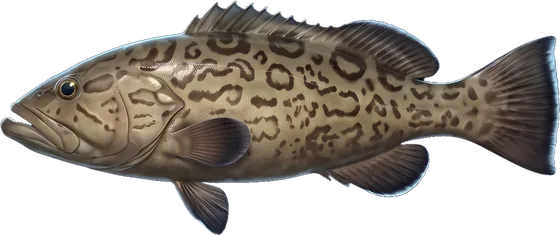
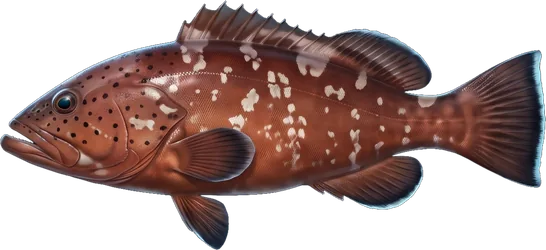
Anglers who already fish grouper on these reefs are well placed to add blackfin, since they know the ground and the blackfin work the same structure.
- Private center-console owners launching near the Anclote River
- Tackle-shop regulars who read the Pasco and Pinellas roundups
- Anglers who bottom fish the named reefs and want a second target
FAQ: blackfin tuna out of Tarpon Springs
When are blackfin best out of Tarpon Springs?
Spring and fall are better for blackfin tuna fishing out of Tarpon Springs.
How deep do boats fish for blackfin here?
About 100 ft. Work springs and high-relief bottom in that band.
What are "the deeper springs"?
Local reports describe blackfin in the deeper springs without naming one. Read it as deeper spring structure out toward the 100 ft band. No coordinate is published.
Should I troll or chum?
Troll artificials or rigged baits to cover water. Chum live sardines to hold fish over a spring or high-relief bottom.
Where are the rules?
FWC covers state waters and NOAA Fisheries covers federal tuna rules. Check both, because the run can cross into federal water.
Where can I read about other tuna species?
See our tuna fishing guides by species for the other tunas.