



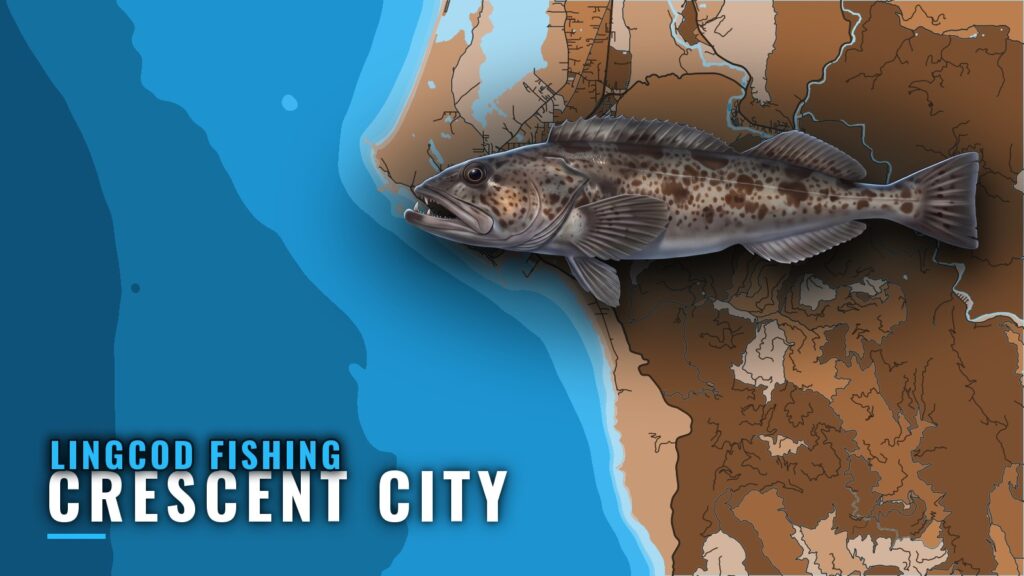
Lingcod fishing out of Crescent City comes down to rock: the inshore piles, South Reef and the reefs north toward Point St. George. This page covers where the fleet runs, how it fishes them and which buoy to read before you leave. Harbor, ramp and conditions are in our Crescent City port guide, and biology and general technique are in our lingcod guide. Region-wide coverage is in the wider Pacific Northwest guide.
When lingcod are around Crescent City
The boat window is long, and the buoy tells you what is outside the breakwater.
Boat season
Boat anglers fish lingcod at all depths through the end of December.
Reading conditions at 46027
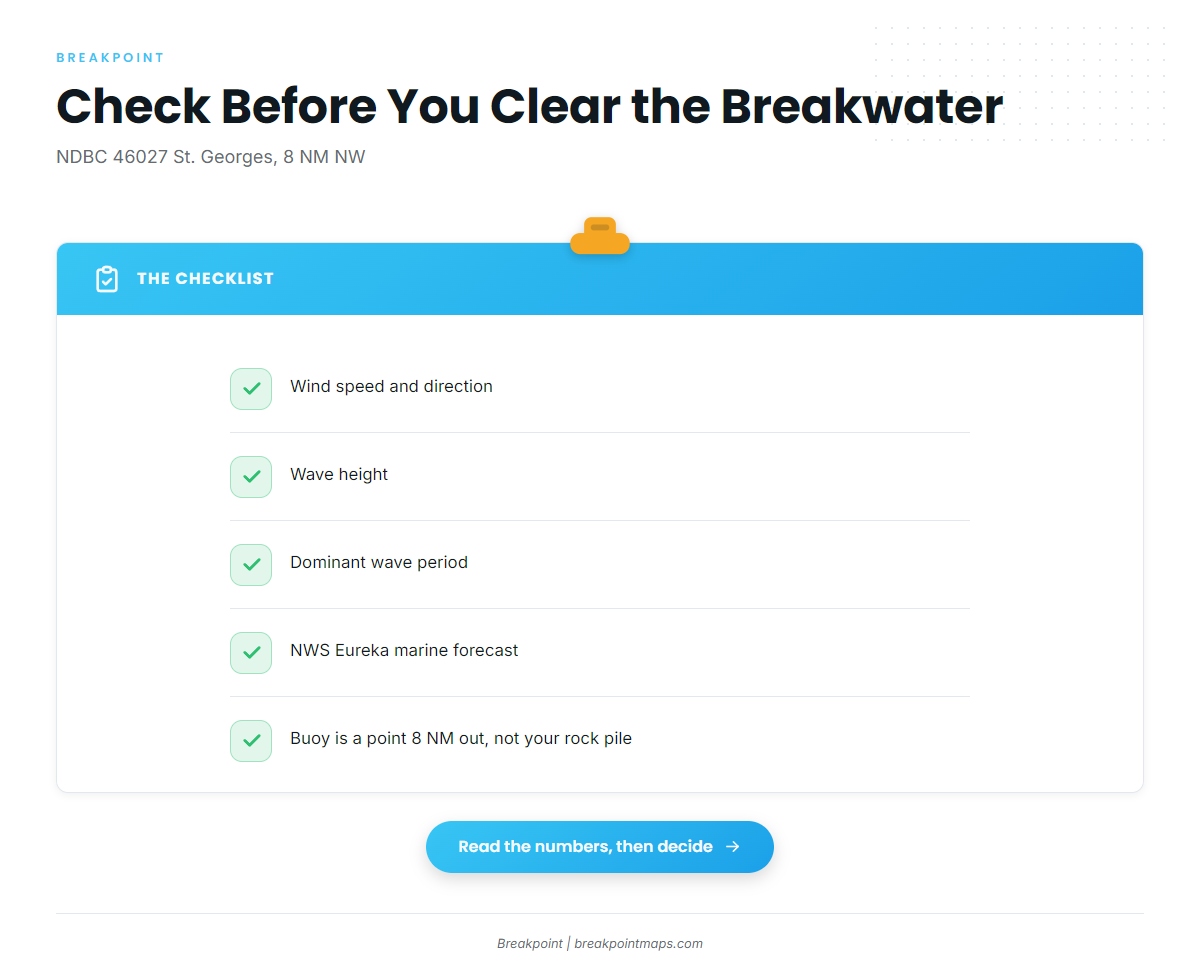
The nearest NOAA buoy is NDBC station 46027, St. Georges. It sits 8 NM NW of Crescent City at 41.840N 124.382W, in 60 m of water (about 197 ft).
Check three numbers before you run:
- Wind speed and direction
- Wave height
- Dominant wave period
A buoy reading is a point 8 NM out, so it may not match the water at your rock pile. Read it alongside the NWS Eureka marine forecast and make your own call.
Where Crescent City boats run
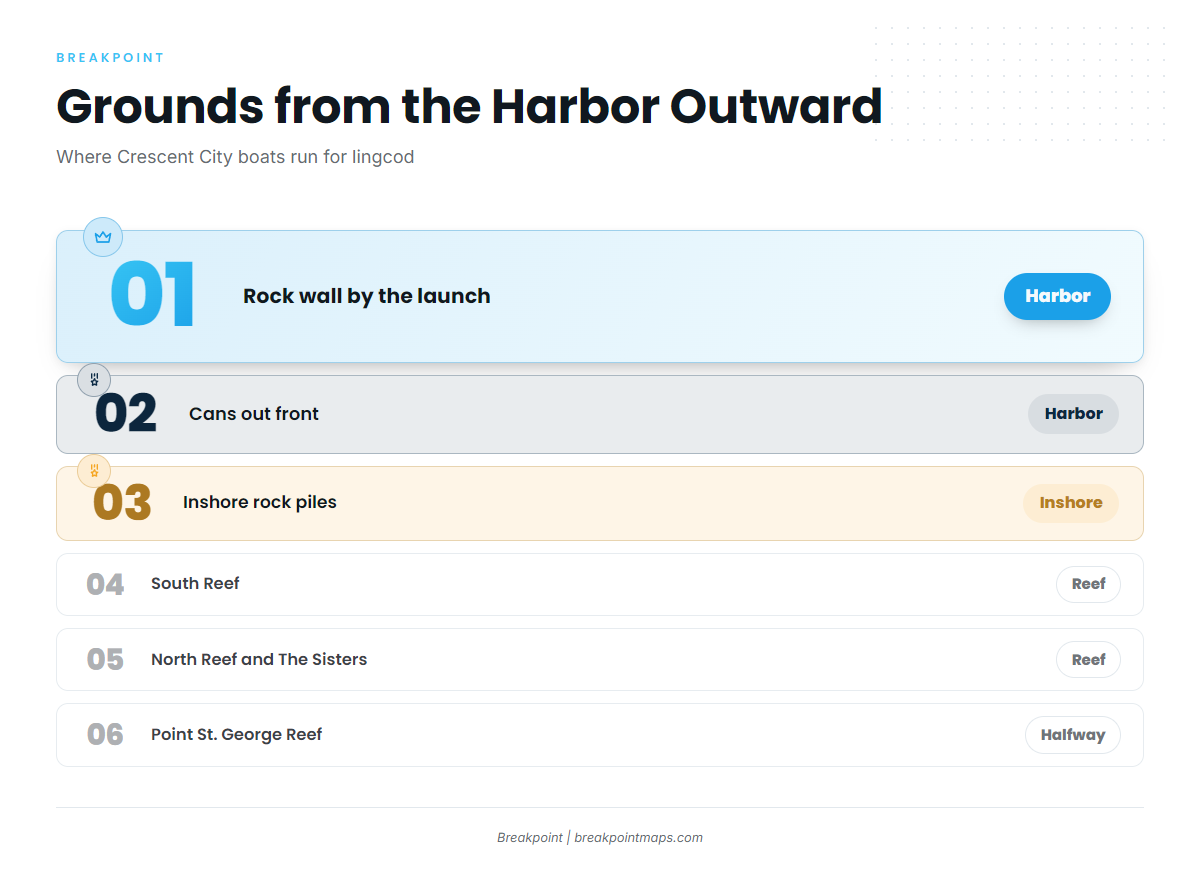
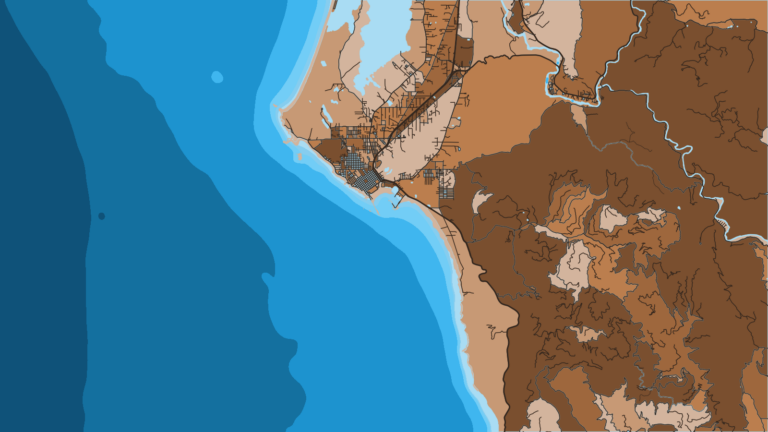
The grounds run from structure at the harbor out to the named reefs. Chart layers are not for navigation, so run off your chart and plotter.
Close to the harbor
These are the shortest runs from Crescent City Harbor:
- The rock wall across from the boat launch
- The cans right out front of the harbor
Inshore rock piles
The inshore rock piles are where local boats run for lingcod. They are also where the heavy-gear drifts happen, covered below.
South Reef
South Reef is the ground to know. The Brookings fleet’s Crescent City notes say the Crescent City charter fleet often focuses on it.
North Reef and The Sisters
North Reef and The Sisters are the other named grounds near Crescent City. Both are rock, and both are worth adding to your list once you have worked the inshore piles.
Point St. George Reef
Point St. George Reef and its lighthouse sit halfway between Brookings and Crescent City. Boats from both ports know this water.
Halibut water vs. lingcod rock
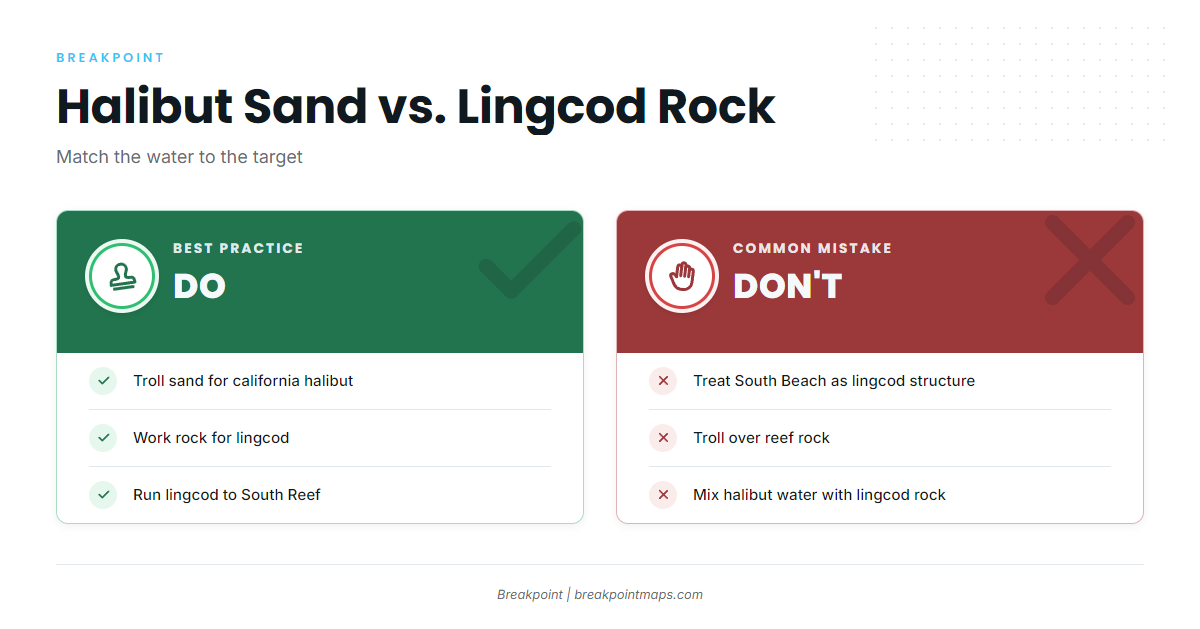
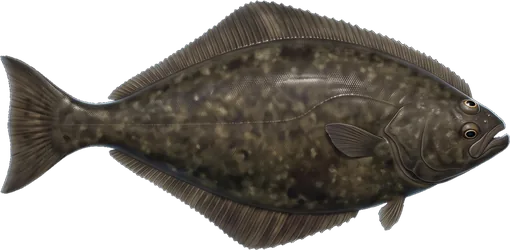
South Beach is trolling ground for California halibut and is not lingcod structure. Halibut are found over sand and taken by trolling, while lingcod are found over rock.
How lingcod are fished here
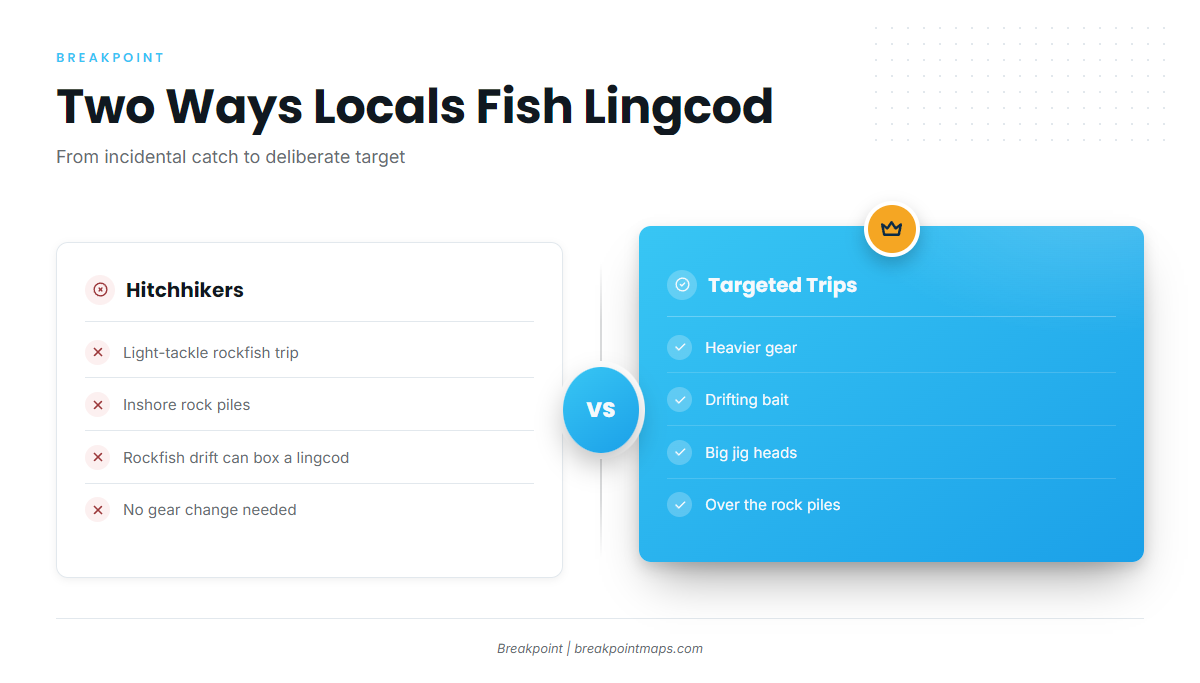
Local captains work lingcod in two ways: incidentally on other trips, and deliberately when they target them.
Hitchhikers on rockfish trips
On the light-tackle rockfish trip, lingcod come up as "hitchhikers." A rockfish drift on the inshore piles can put a lingcod in the box without changing gear.
Heavier gear over the rock piles
When the captain targets lingcod, he steps up to heavier gear, drifting bait and big jig heads over the rock piles. For the deeper-gear picture, see our bottom-fishing guides.
Who fishes for lingcod out of Crescent City
These local operators list lingcod:
- Capt. Steve Huber’s Crescent City Fishing (Steve Huber Guide Service)
- Crescent City Fishing Charters, Capt. Brad Miller, USCG 100 Ton Master
- Stella’s Adventures out of Crescent City
A day aboard shows you how the fleet works the piles before you run your own boat.
FAQ: Crescent City lingcod
How late can I fish lingcod from my boat here?
The boat season runs through the end of December at all depths. Check CDFW before you go.
Where does the local fleet focus?
The inshore rock piles and South Reef. The Brookings fleet notes that Crescent City charters often focus on South Reef.
What buoy should I check?
NDBC 46027 St. Georges, 8 NM NW of the harbor in 60 m of water. Read wind, wave height and period alongside the NWS forecast.
How do local captains target lingcod?
Lingcod come up as hitchhikers on light-tackle rockfish trips. Captains also target them on heavier gear, drifting bait and big jig heads over the rock piles.
Is Point St. George reachable from Crescent City?
Point St. George Reef and its lighthouse sit halfway between Brookings and Crescent City, so boats from both ports fish it. Check the buoy and forecast before you plan the run.