



When Bluefin Are Off Half Moon Bay
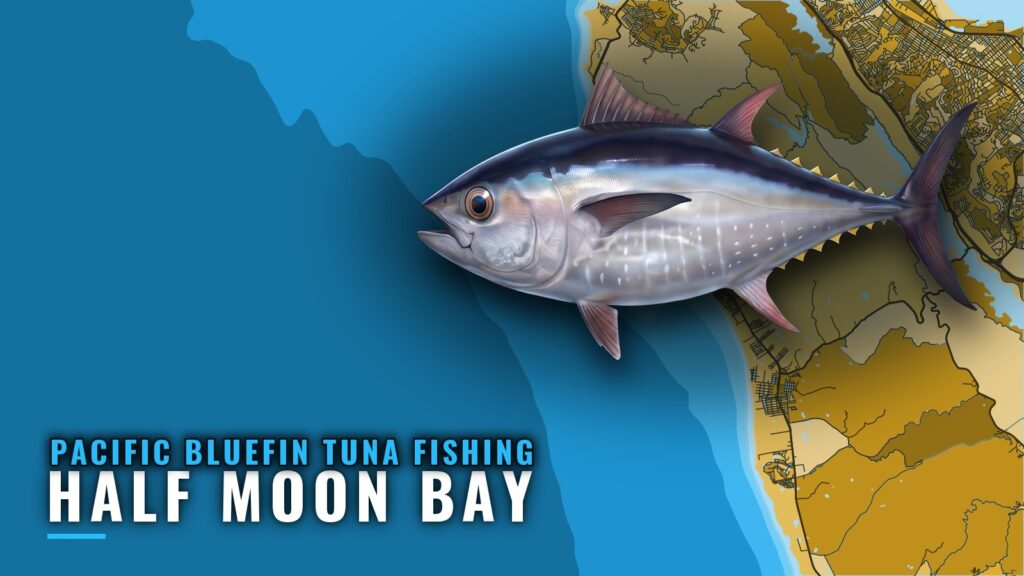
Pacific bluefin tuna fishing out of Half Moon Bay follows the water, not the calendar. Fish show up when warm-water edges and bait set up within reach of Pillar Point Harbor. The Half Moon Bay port page is the map hub for that run.
Three things set the timing:
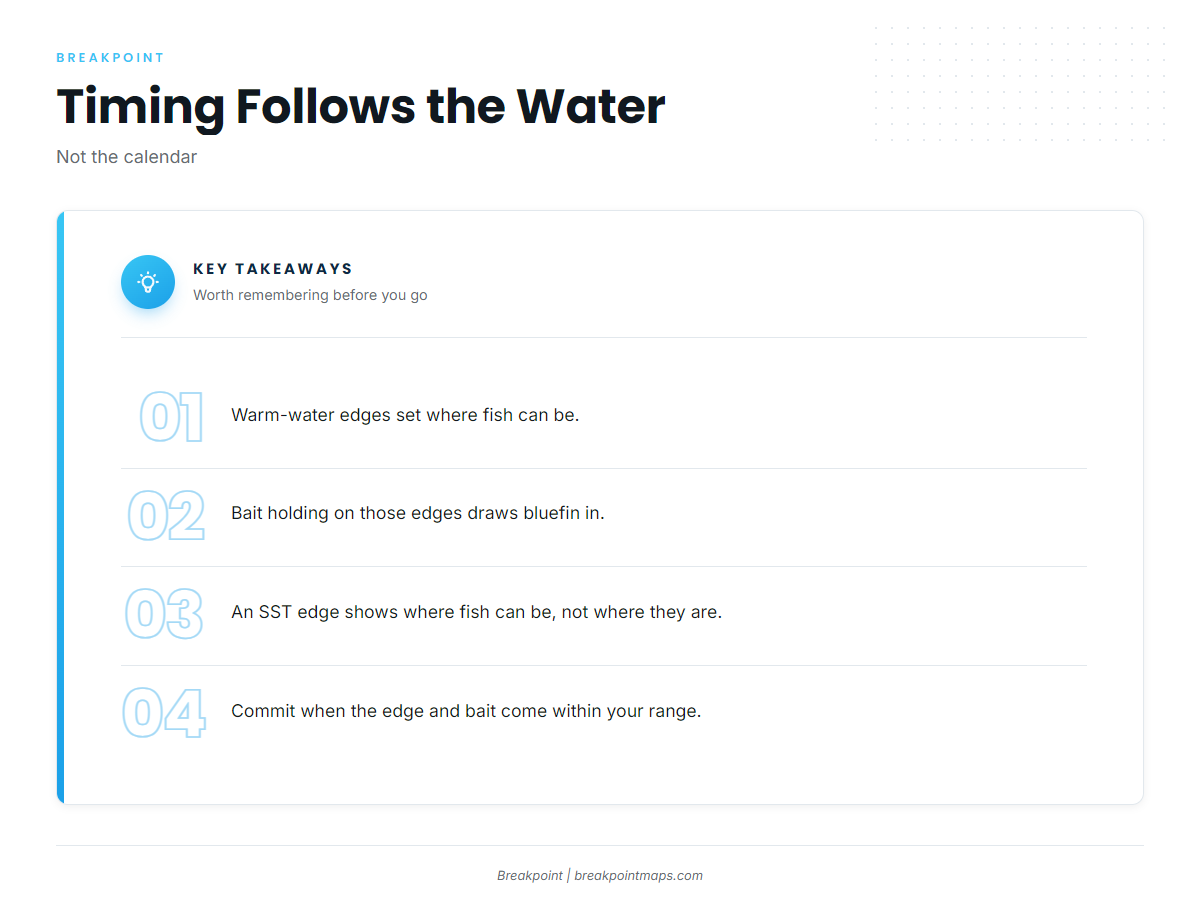
- Temperature edges. Bluefin hold where warmer water meets cooler water.
- Bait on those edges. Bluefin feed on sardines, anchovies, mackerel and squid, according to the NOAA Fisheries species profile. Where the bait stacks, the fish follow.
- Fish moving along the coast. Bluefin work up and down the California coast, so a good edge one week can be empty the next.
For biology and migration, read the Pacific bluefin tuna fishing guide. For coastwide and regional movement, use the Pacific Southwest bluefin guide (see also the Pacific Southwest fishing guide).
A temperature edge shows where fish can be, not where they are. Watch the water in the weeks you can fish, and commit when the edge and the bait come within your range.
Running Out of Pillar Point Harbor
There is no fixed run distance from Pillar Point. The run is however far the water is, and the direction follows the edge on the latest clear satellite pass. Some days that points one way and some days another, so read the water before picking a heading.
Plan fuel as you would for any offshore day:
- Work the round trip from your own boat’s burn, not from a number someone else posted.
- Account for running home loaded and into the wind.
- Keep a reserve for searching once you arrive.
For conditions, pull wind, wave height and period from the NWS marine forecast, then check them against NDBC buoy observations before you clear the breakwater.
In the app, check OBS SST for the edge, Chlorophyll for the color break and Chart Contours for the bottom. Chart layers are not for navigation. Cloud cover blocks satellite SST passes, so a gap in the image is missing data, not cold water.
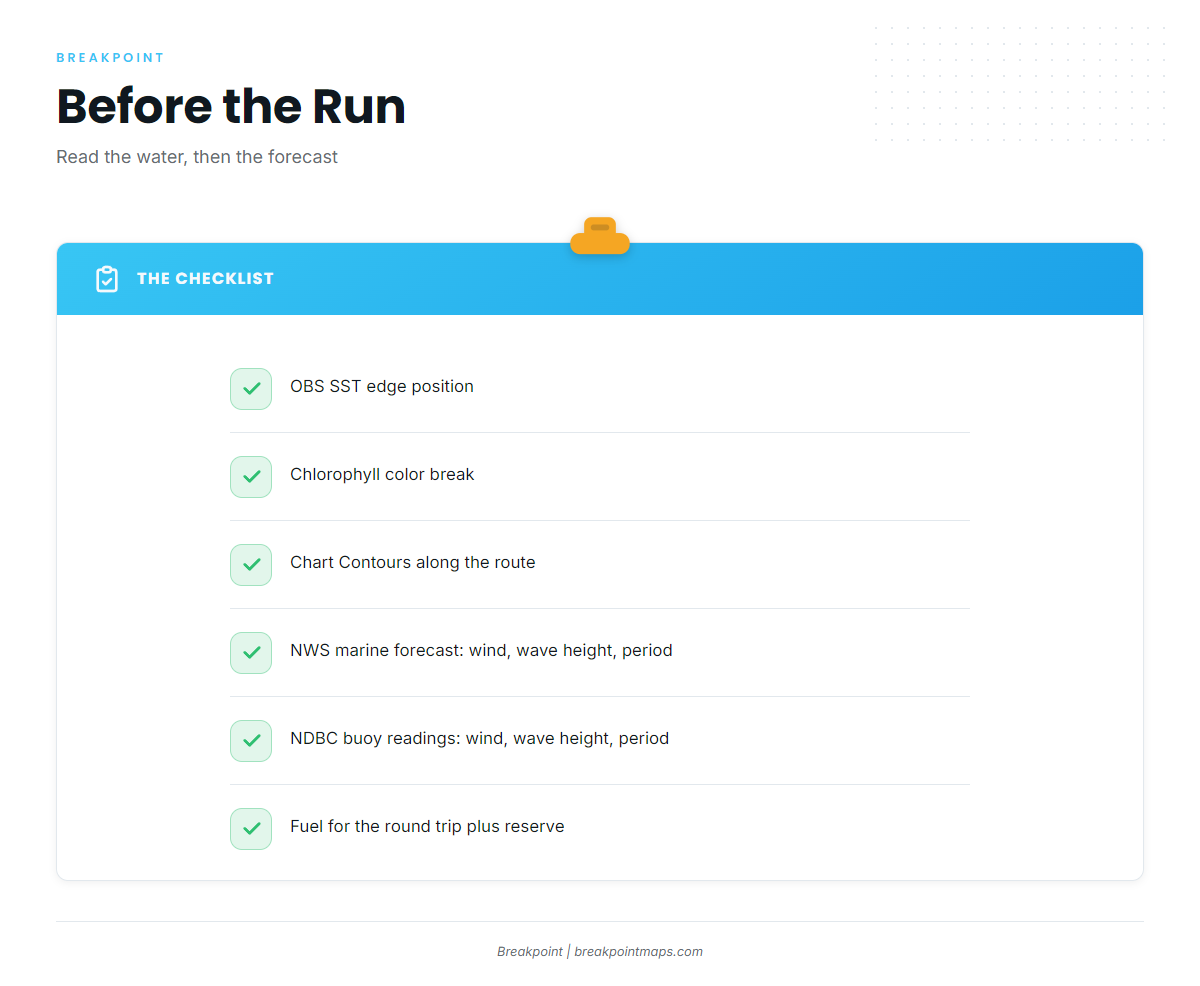
Before the run:
- OBS SST edge position
- Chlorophyll color break
- Chart Contours along the route
- NWS marine forecast and NDBC buoy readings for wind, wave height and period
- Fuel for the round trip plus reserve
A salmon or rockfish trip ends at a known spot. A bluefin run ends wherever the water is.
Grounds and Structure
Two reference points anchor a Half Moon Bay trip: one offshore ground and the harbor structure at the start and end of every run.
Deep Reef
Deep Reef is a local reference ground for boats running out of Half Moon Bay. Use it as a place to read the water against. Bluefin hold on water rather than on the reef itself, so it matters when an edge or bait sets up near it. Check the bottom around it with Chart Contours.
Inner and Outer Breakwaters
The inner and outer breakwaters sit inside and at the mouth of Pillar Point Harbor. They mark the start and end of every trip.
This is where you first see the day’s wind and swell on the way out, and the last place you feel them coming home. Compare what you see at the mouth with the NDBC numbers you pulled before leaving. If the two disagree, trust your eyes and rethink the run.
How Bluefin Are Fished From This Port
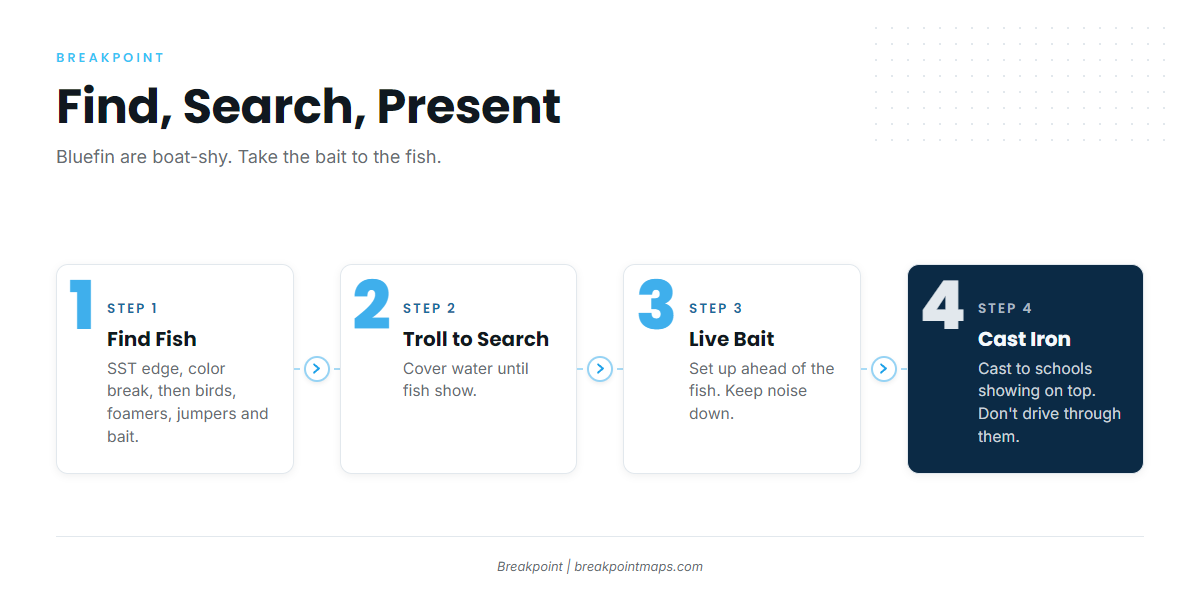
Bluefin are boat-shy. A private boat cannot chum fish to it the way a big bait boat can, so you take the bait to the fish. For rod, reel and leader detail, see the tuna fishing guides.
The order is find, then search, then present.
Finding Fish
Start with the chart, then move to the water:
- The temperature edge on OBS SST.
- The color break on Chlorophyll.
- On the water, bird piles, foamers, jumpers and bait.
The chart narrows the search, and your eyes and binoculars finish it.
Trolling
Trolling covers water until fish show, which makes it the search method. Put lures through the edge and the bait, and note where you get bit.
Live Bait
Live bait puts a natural offering in front of boat-shy fish without crowding them. Set up uptide or ahead of the direction the fish are moving. Keep noise down and let the bait do the work.
Iron and Surface Casting
Iron and surface casting suit schools showing on top. Cast to the fish rather than driving through them.
Who Fishes for Bluefin Here
Three groups fish for bluefin out of Pillar Point:
| Group | How they fish it |
|---|---|
| Private boats | Search with trolling, then switch to live bait or iron on showing fish |
| Smaller-boat anglers | Cross over from salmon and rockfish when the water comes within range |
| Charter fleet | Runs tuna trips when fish are within reach of the port |
When the charter fleet is running tuna trips, the fish are within reach of the harbor. The same boats often run other tunas too, so the fleet is a useful read on what the water is doing.
FAQ: Half Moon Bay Bluefin
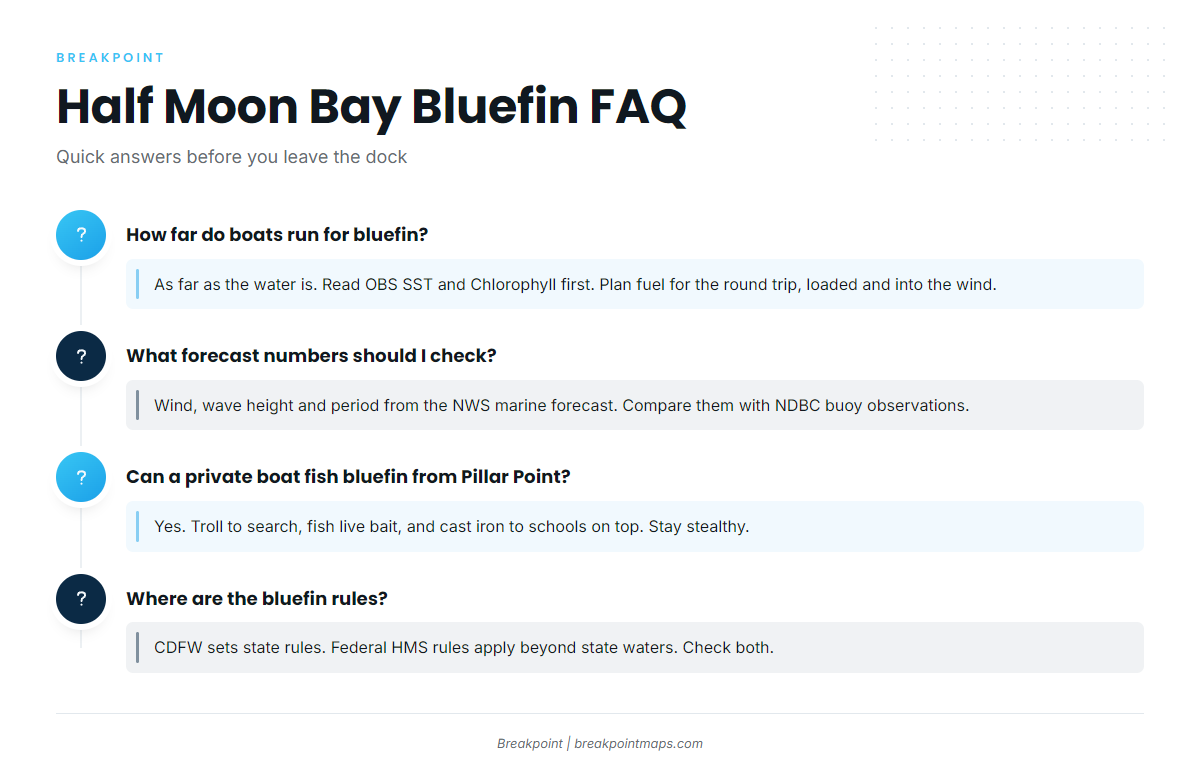
How far do boats run from Half Moon Bay for bluefin?
As far as the water is. The run follows the warm-water edge and the bait. Read OBS SST and Chlorophyll before you leave, and plan fuel for the round trip, loaded and into the wind.
When are bluefin off Half Moon Bay?
Pacific bluefin tuna fishing out of Half Moon Bay depends on warm water and bait reaching the coast within range of Pillar Point. Fish arrive when the edge and the bait line up, on no set date. Watch the SST edge instead of the calendar.
What is Deep Reef?
Deep Reef is a local reference ground for boats out of Half Moon Bay. Anglers read the water against it, and it matters when an edge or bait sets up nearby. Chart Contours shows the bottom around it.
Can a private boat fish bluefin out of Pillar Point?
Yes. Private boats troll to search, fish live bait and cast iron to showing schools. Bluefin are boat-shy, so you take the bait to them with stealth. Check your fuel and the forecast before you commit.
What forecast numbers should I check?
Check wind, wave height and period from the NWS marine forecast. Compare them with NDBC buoy observations, then judge conditions at the breakwaters before committing.
Where are the bluefin rules?
CDFW sets state rules, and federal highly migratory species rules apply beyond state waters. Runs from Pillar Point can cross that line, so check both before fishing.