



This page covers bigeye tuna fishing from Hatteras Village on Hatteras Island. Bigeye is not documented from this port specifically. The page applies what holds for the Outer Banks and the Gulf Stream edge off North Carolina, and ties that picture to the village’s inlet and offshore water. The bigeye tuna fishing guide covers identification. For the wider coast, see the bigeye tuna fishing in the Atlantic Southeast and the Atlantic Southeast offshore fishing guide.
When bigeye are around
No bigeye season for Hatteras is documented. Bigeye follow warm water rather than the calendar. Regionally, the Gulf Stream comes closest to the shelf at Hatteras, and winter fishing there is tied to that closeness, but no month range for bigeye is documented. Watch the temperature break on the chart before you commit to a trip.
Where boats run
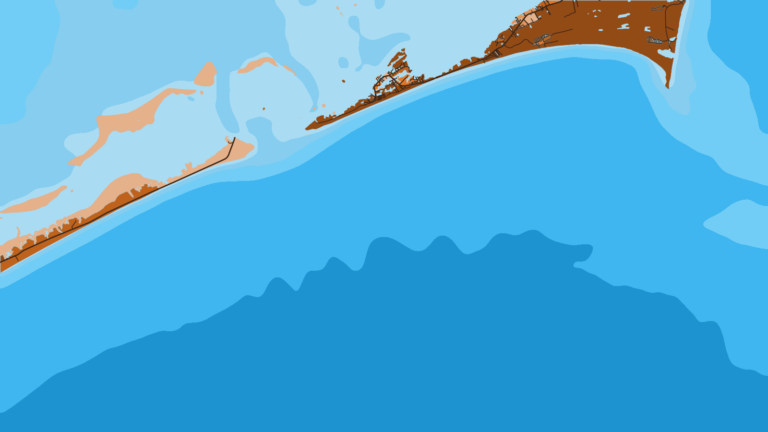
Hatteras Village sits on Hatteras Island, about 3 miles northeast of Hatteras Inlet. The harbor reaches the Atlantic through the dredged Hatteras Inlet Channel and the shifting-bar inlet, and it reaches Pamlico Sound through Rollinson Channel. Charter fleets run to the Gulf Stream, which operators put roughly 10 to 20 miles offshore. Regionally, The Point off Cape Hatteras is where the Stream meets cooler water from the north over steep bottom, producing sharp temperature breaks.
The inlet bar shifts continually, and the buoys over it are not charted. Diamond Shoals extend about 9 miles southeast from the cape, with depths as shallow as 3 feet. Stay in 120 feet, preferably 180 feet, when your position is uncertain. Strangers should not run Rollinson Channel at night. Check conditions yourself before you go.
Grounds and structure
Named structure around Hatteras is fished for other species. The AR-230 artificial reef off Hatteras Inlet sits in about 70 feet of water. Local accounts name Rock Pile, 280 Rocks and 230 Rocks for yellowfin tuna. Nothing documented places bigeye on those rocks or on the reef.
How bigeye are fished out of Hatteras
No Hatteras method is documented for bigeye. The regional approach follows the fish’s day. Bigeye feed deep by day and rise toward the surface at dusk and through the night, so anglers troll the break at dawn and dusk, chunk or drift the slope after dark, and fish deep by day with weighted dredges and deep-diving plugs. Spreader bars, daisy chains and rigged ballyhoo under skirts cover the edge. Heavy stand-up tackle is the usual standard.
Who fishes it
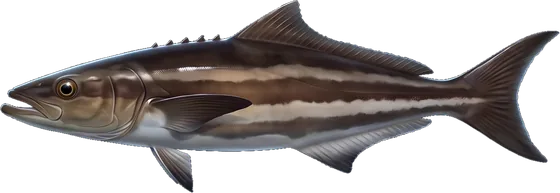
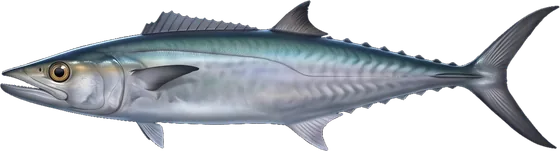
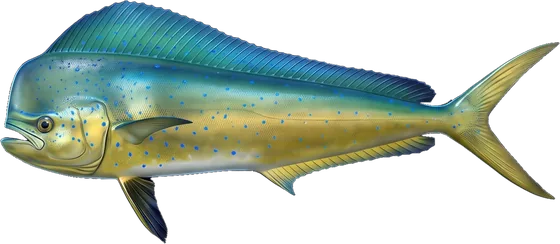
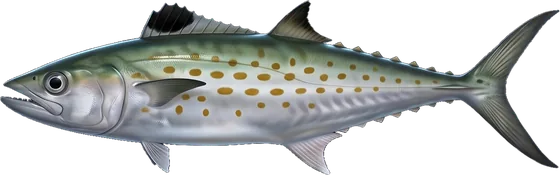
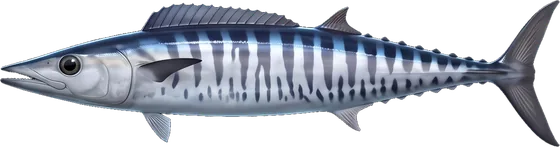
Hatteras charters target billfish, tuna and wahoo on Gulf Stream trips, but none is documented for bigeye. Ask a fleet whether it fishes the deep break for bigeye before you book. A Hatteras offshore tournament has run in past years, but no current bigeye event is documented.
Faq
Do I need a permit for bigeye off Hatteras?
Yes. The vessel needs an HMS Angling or HMS Charter/Headboat permit, which covers federal waters and the coastal state waters off North Carolina.
How do I tell bigeye from yellowfin?
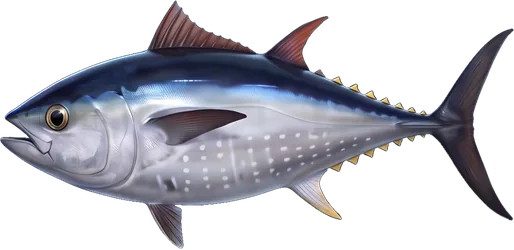
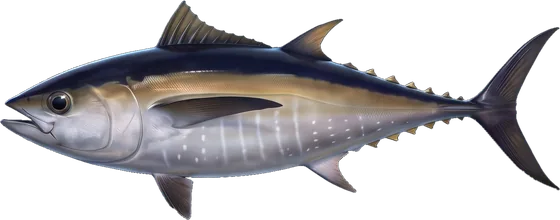
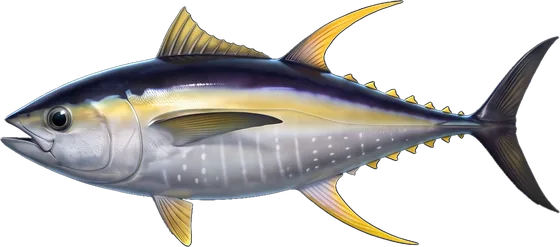
Bigeye has the larger eye, shorter second dorsal and anal fins, black-edged finlets and a stockier body. The liver settles it: a striated margin with equal lobes means bigeye, so check it soon after landing.
Is there a bag limit on bigeye?
No federal bag limit applies to bigeye, while yellowfin carry one. Misidentifying a fish can therefore put you over a limit, so identify every fish before you keep it.