


Season for Greater Amberjack Fishing Out of Georgetown
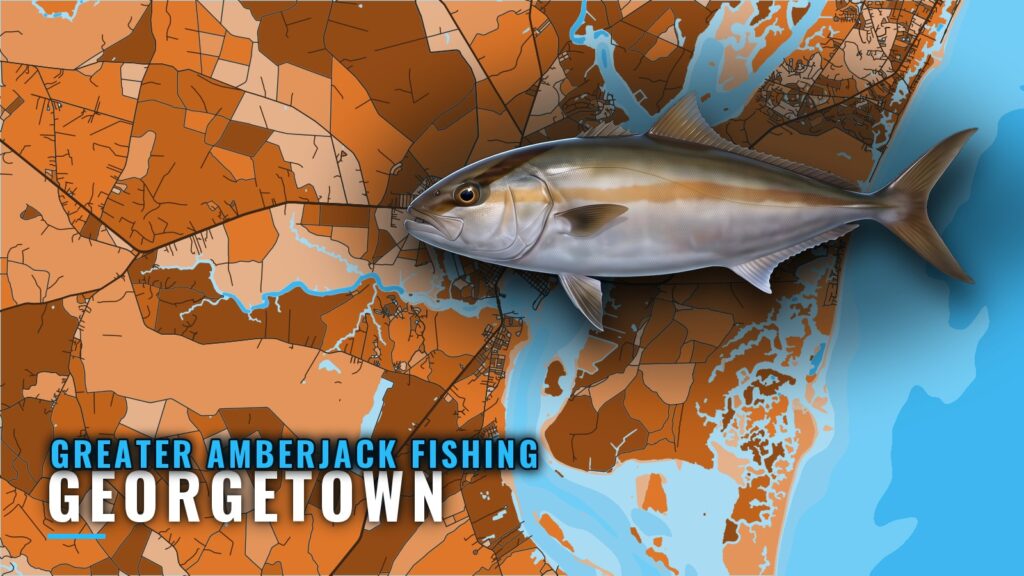
Greater amberjack fishing out of Georgetown is a spring fishery, according to FishingBooker’s Georgetown fishing guide. Boats run to artificial reefs and wrecks off the mouth of Winyah Bay. For ramps, the inlet and the wider species picture, use the Georgetown port page. The wider picture is in the greater amberjack fishing in the Atlantic Southeast and the Atlantic Southeast region guide.
The fish itself is covered in the greater amberjack species guide. This page stays on Georgetown water: where boats run, the reefs by depth, how amberjack are fished locally, and where to check the rules.
Where Boats Run
Boats run to artificial reefs and wrecks, starting at the mouth of Winyah Bay and working outward.
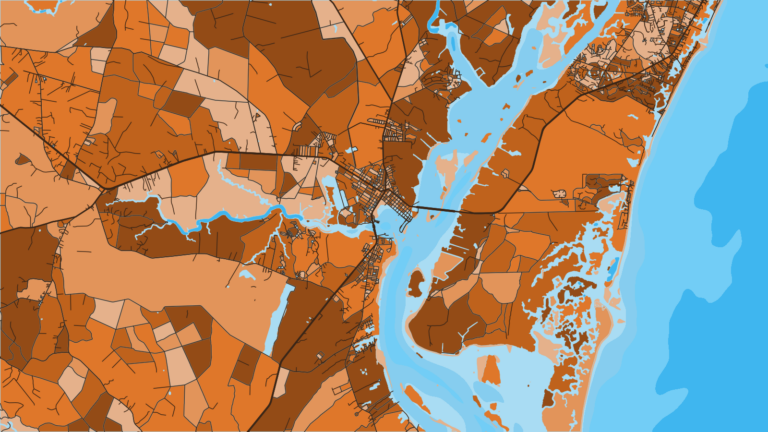
Winyah Bay Mouth and the Slue and Bottle Channels
FishingBooker’s Georgetown guide puts amberjack close to the Slue and Bottle Channels at the mouth of Winyah Bay. That is the closest named amberjack water in this port’s range. The reefs below sit farther out.
Channel Buoy 2WB
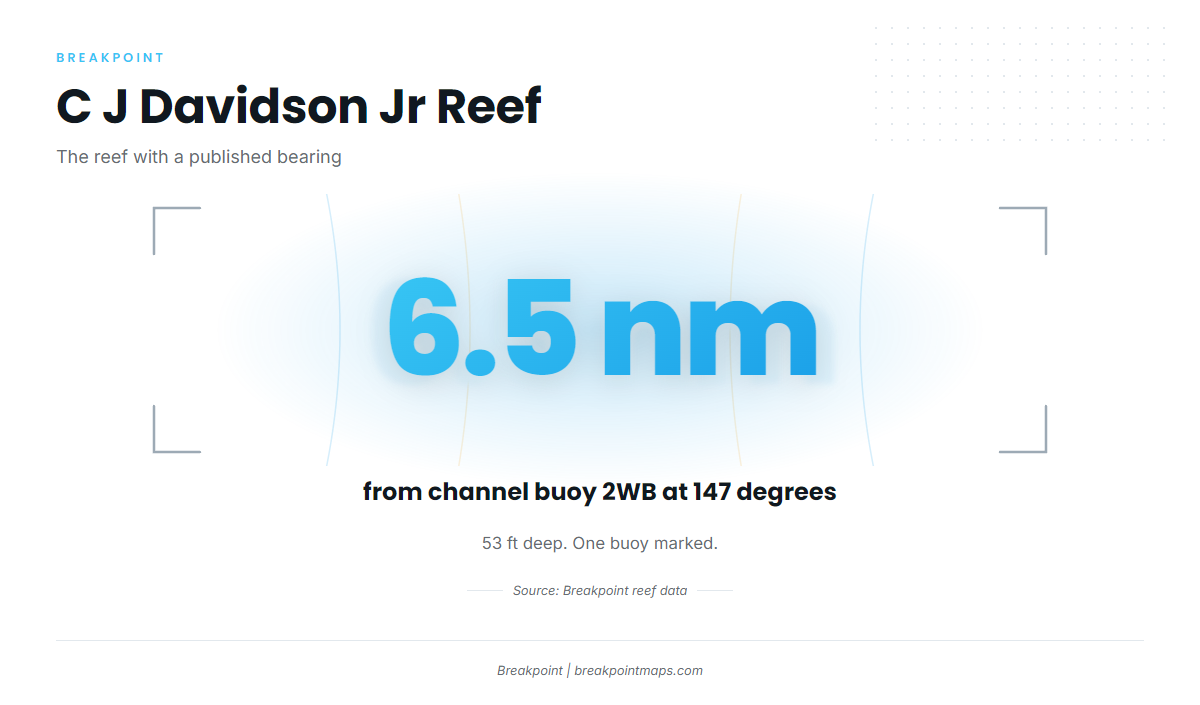
Channel buoy 2WB is the run reference for the one reef that carries a published bearing.
C J Davidson Jr Reef: 53 ft, 147 degrees, 6.5 nm from channel buoy 2WB, one buoy marked.
Run the bearing and distance from 2WB, then work the bottom with your sounder.
Reading Conditions at NIWS1
NOAA NDBC station NIWS1, Oyster Landing, North Inlet-Winyah Bay Reserve, 33.349 N, 79.189 W.
The station sits inside the reserve, away from the reefs. It reports wind, wave height and period as numbers. Check the official National Weather Service marine forecast before committing to the run.
Reefs and Wrecks That Hold Amberjack
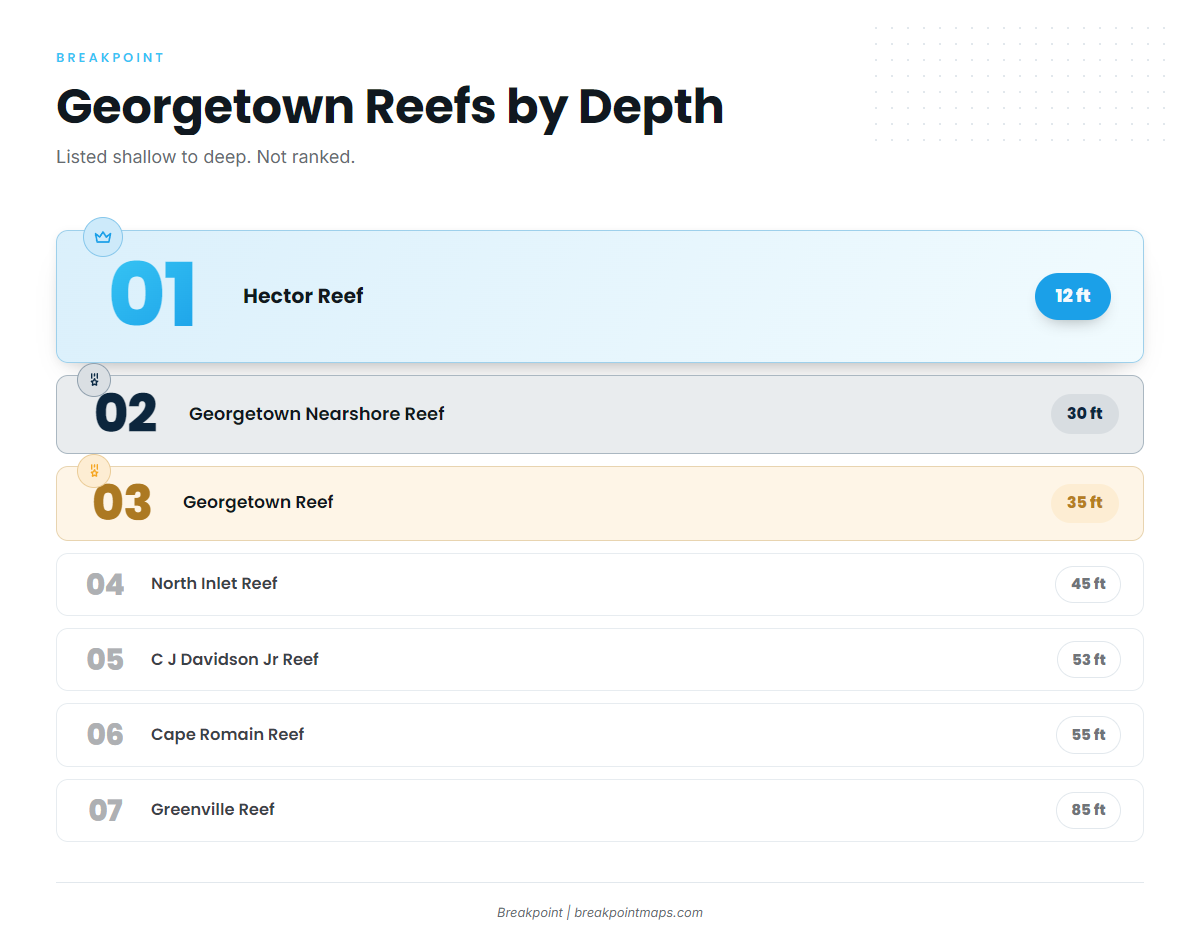
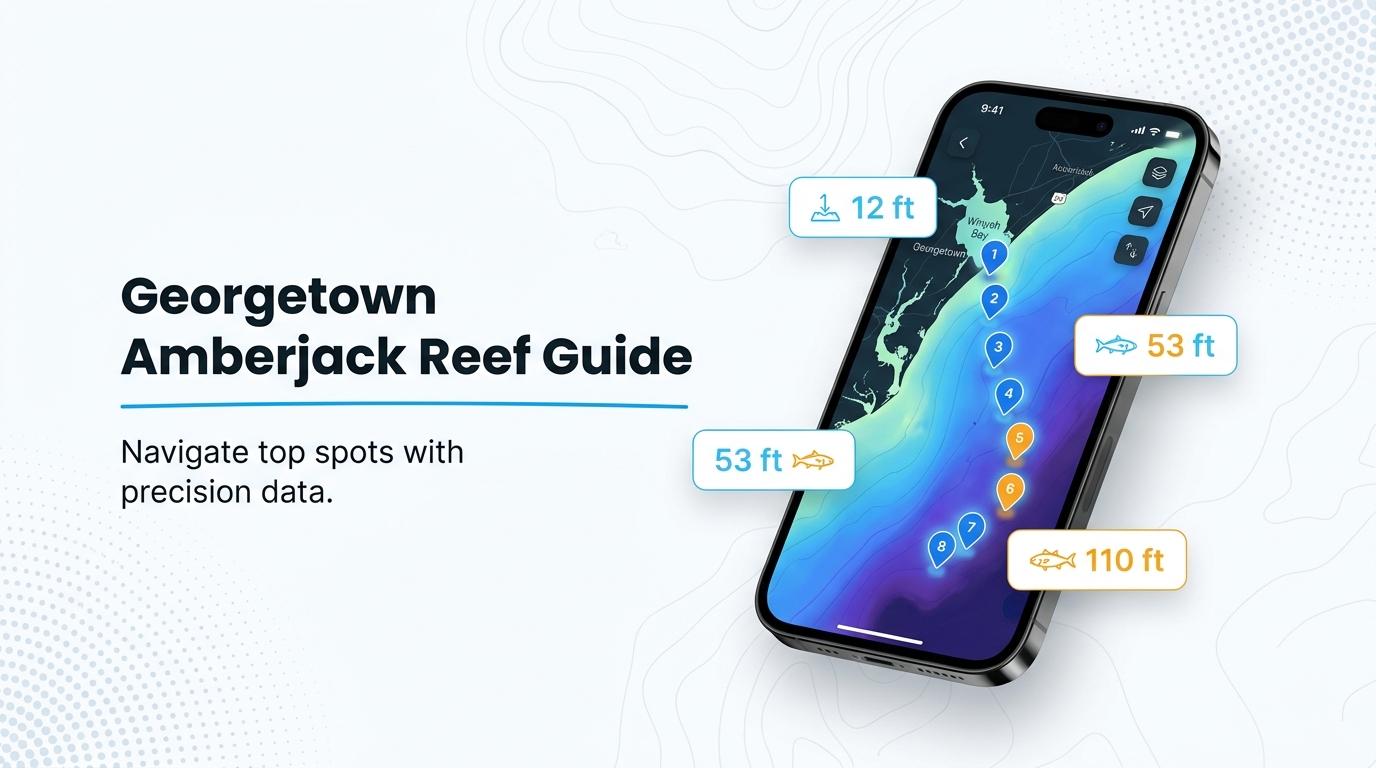
These are the named SCDNR artificial reef locations off Georgetown, listed from shallowest to deepest. The order reflects depth only.
| Reef | Depth (ft) | Run notes |
|---|---|---|
| Hector Reef | 12 | |
| Georgetown Nearshore Reef | 30 | |
| Georgetown Reef | 35 | |
| North Inlet Reef | 45 | |
| C J Davidson Jr Reef | 53 | 147 degrees, 6.5 nm from channel buoy 2WB, one buoy marked |
| Cape Romain Reef | 55 | |
| Greenville Reef | 85 | |
| Vermilion Reef | 110 |
Inside 35 ft
Hector Reef (12 ft), Georgetown Nearshore Reef (30 ft) and Georgetown Reef (35 ft) make up the shallow band.
45 to 55 ft
North Inlet Reef (45 ft), C J Davidson Jr Reef (53 ft) and Cape Romain Reef (55 ft) fill the middle band. C J Davidson Jr has the published bearing: 147 degrees, 6.5 nm from channel buoy 2WB.
85 to 110 ft
Greenville Reef (85 ft) and Vermilion Reef (110 ft) are the deepest sites in the list.
Load the reefs with the Chart Contours layer to see the bottom around each site before you run. Chart layers are not for navigation.
How Amberjack Are Fished Here
According to FishingBooker, the local method is bottom fishing over artificial reefs and wrecks. You anchor or hold over structure and work the bottom.
Private boats run their own structure, meaning the reefs listed above, in spring. For rigging and tackle depth, see our reef fish guides.
FAQ
When are greater amberjack around Georgetown?
Spring is the season for greater amberjack fishing out of Georgetown, according to FishingBooker.
How close to Winyah Bay do they come?
FishingBooker puts amberjack close to the Slue and Bottle Channels at the mouth of Winyah Bay.
Which reef has a published bearing from channel buoy 2WB?
C J Davidson Jr Reef: 53 ft, 147 degrees, 6.5 nm from channel buoy 2WB, one buoy marked.
What buoy is nearest?
NOAA NDBC station NIWS1 at Oyster Landing, North Inlet-Winyah Bay Reserve, 33.349 N, 79.189 W. It sits inside the reserve, away from the reefs. Pair it with the National Weather Service marine forecast.
Where should a first trip start?
The reefs run from Hector at 12 ft out to Vermilion at 110 ft. C J Davidson Jr is the one with a published bearing from 2WB. Pick based on the range your boat and the numbers allow.
How do locals fish for them?
Bottom fishing over artificial reefs and wrecks, according to FishingBooker.