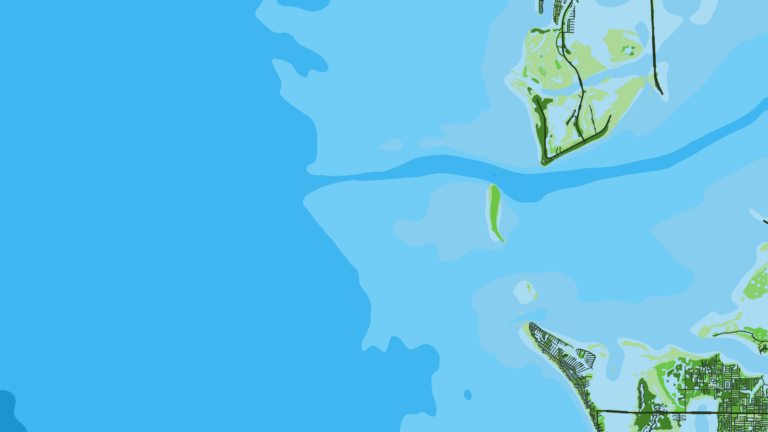




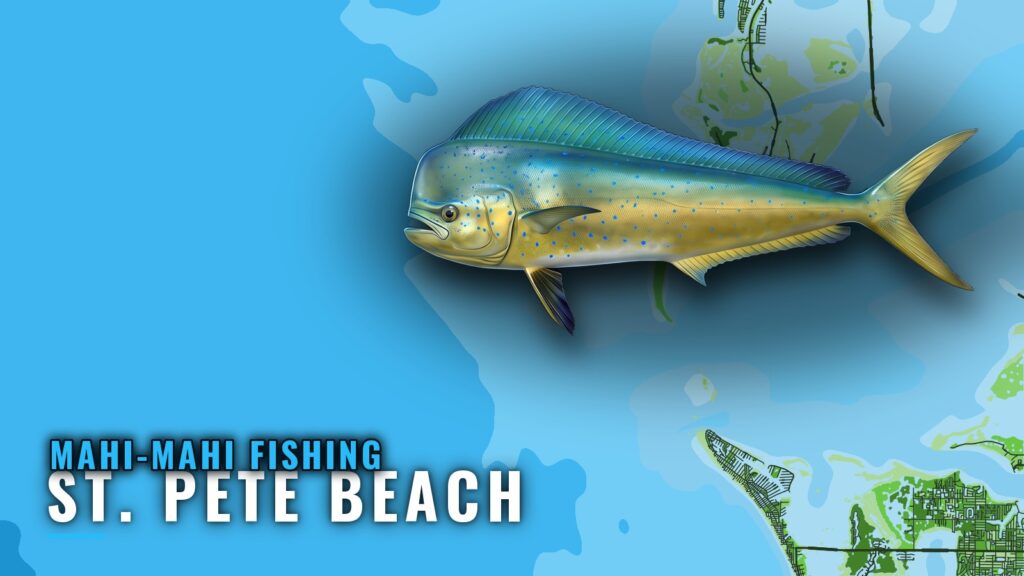
This page covers mahi-mahi fishing from St. Pete Beach on Florida’s Gulf coast. Boats reach the Gulf through Pass-a-Grille Channel, which links Boca Ciega Bay to open water at the south end of Long Key, or through Egmont Channel, the deepwater route past Egmont Key. For the port’s entrances, ramps and marinas, see the St. Pete Beach port page. For the wider coast, see the mahi-mahi fishing in the Gulf of Mexico and the wider Gulf of Mexico guide.
When the species is around the port
A charter that works from St. Petersburg describes late spring through early fall as the window for mahi, and says the strongest fishing runs from late spring through summer and into early fall. That window belongs to the operator’s home area, St. Petersburg, rather than St. Pete Beach itself, so treat it as a regional season and check the water before each trip.
Where boats run
The operator describes offshore weedlines, current edges, floating debris and birds as the places to fish, with no fixed distance. Pass-a-Grille Channel links Boca Ciega Bay to the Gulf. The North Channel over the bar was reported with a controlling depth of 3 feet to the Intracoastal channel, and the South Channel is shoaled. Bunces Pass is unmarked, and local knowledge is needed there. Egmont Channel carries a federal project depth of 45 feet at its entrance and is used by all deep-draft vessels entering Tampa Bay. Pilots board between Egmont Channel buoys 9 and 10, so give those transfers room. An ebb running out of the bay against a fresh west or southwest wind can stack steep seas over the bar, so time departures for a weaker ebb or the flood. Check conditions yourself.
Grounds and structure
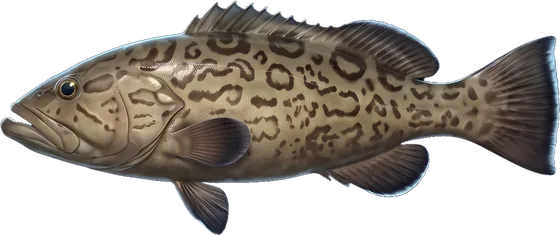
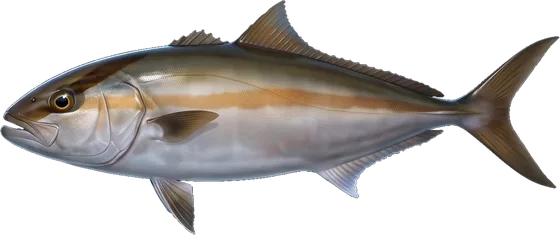
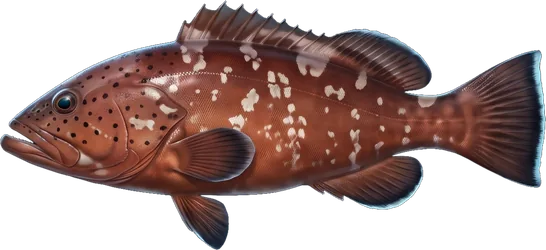
No dolphin ground is named in the available material, and the reef entries here are port-level rather than tied to mahi. St. Pete Beach Reef sits about 5 nautical miles from the Pass-a-Grille entrance in 25 to 30 feet. Its setting includes M60 Army tanks and concrete culverts, and the county guide says reefs like it are designed to attract grouper, snapper, mackerel, amberjack, cobia, barracuda and bait fish. South County Reef sits about 11 nautical miles out in about 50 feet. Egmont Key Reef lies near the mouth of Tampa Bay, and its depth is not confirmed. The Nohab, also called South Jack Wreck, is a 66-foot wreck about 15 nautical miles off Egmont Key and is popular for amberjack. None of these is documented as a mahi ground.
How the species is fished out of the port
The operator’s methods for mahi are trolling lures, rigged bait or a mixed spread, pitching live or dead bait to fish at weed, debris, buoys or current lines, chumming when it suits, and changing lure color, speed and presentation depth. Run the spread along the weedline edge rather than through it. When fish come up, pitch to them, and keep one hooked fish in the water beside the boat to hold the school.
Who fishes it
Reel Coquina Fishing Charters offers mahi trips from St. Pete Beach and runs out of St. Petersburg. Its mahi page is at reelcoquinafishing.com. Ask other charters in the area directly whether mahi are on their trips. No mahi tournament is documented for the area, and a local event targets kingfish and Spanish mackerel only.
Frequently asked questions
Is there a documented mahi season at St. Pete Beach?
A charter describes late spring through early fall, based on its St. Petersburg waters. Use that window as a guide, and check the surface temperature and weed edges before each trip.
How far offshore do the mahi grounds sit?
No fixed distance is given. Operators describe weedlines, current edges and floating debris, so the distance changes with the day’s edges.
Which entrance should I use?
Egmont Channel is the deepwater route, with a federal project depth of 45 feet at its entrance. The North Channel was reported with about 3 feet of controlling depth, so it is tight for boats that draw more. Check conditions yourself and the current chart before you choose.
Is there a mahi tournament here?
None is documented for mahi. A local event targets kingfish and Spanish mackerel only.