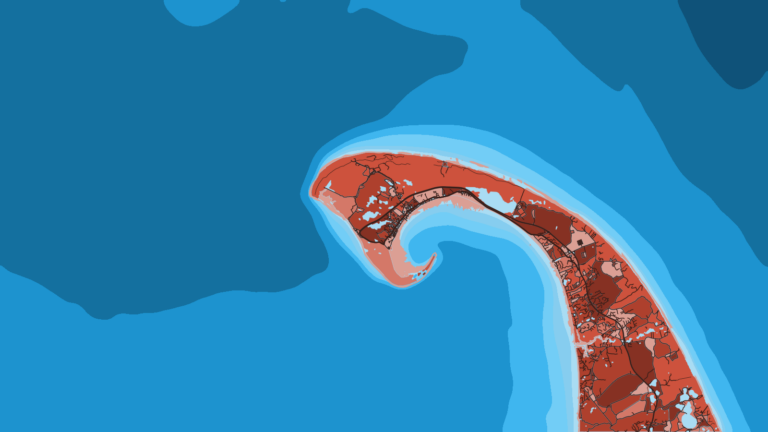




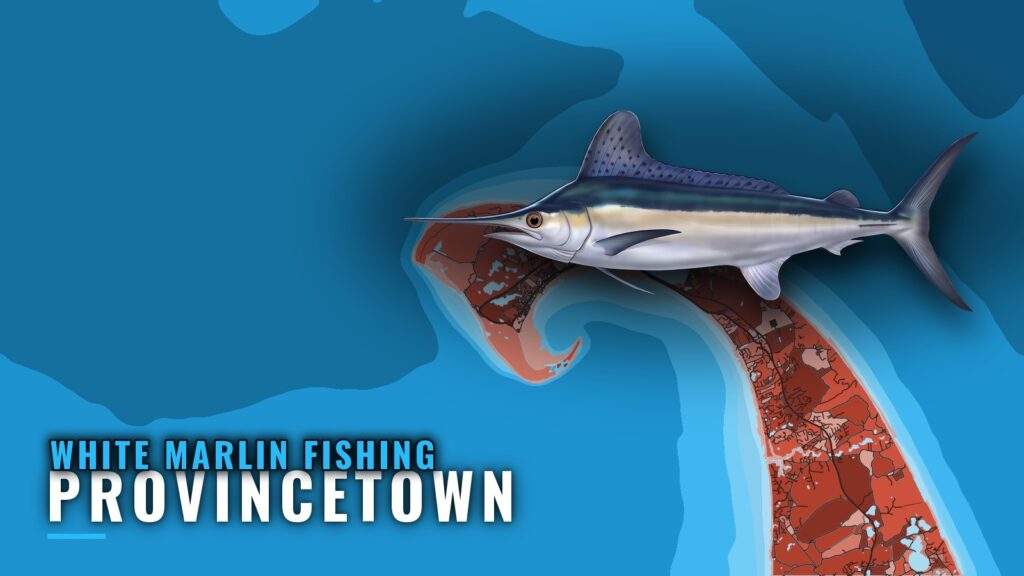
Provincetown sits at the northern tip of Cape Cod, on a harbor formed by a turn in the cape’s northern end and about 2 miles across. This page covers white marlin fishing from Provincetown. White marlin are not documented from this port specifically, so the page applies what holds for the region’s white marlin fishery and ties it to the port’s harbor, the water around it and the structure named nearby. For harbor, berth and ramp detail, start with the Provincetown port page. The wider picture is in the white marlin fishing in the Atlantic Northeast and the Atlantic Northeast fishing guide.
When white marlin show up around Provincetown
Regionally, white marlin are most abundant from mid-August through September, and the fishery is a summer one. The bite moves north with warm water and eddies in late summer and retreats south as the water cools. The fish reach the New England canyons later than the Mid-Atlantic grounds, and inside the shelf they turn up only occasionally in state waters off Massachusetts. Check the water before you commit to a trip.
Where boats run from Provincetown
The harbor entrance is marked by three lights and the Pilgrim Monument, and the approach is described as clear of dangers. A stone breakwater lies about 300 yards southeast of the end of the town pier, and anchorage inside it is fair to poor on a mud bottom. Fishermen are said to find protection in the harbor in gales from any direction. Offshore, shoals rise abruptly between Wood End and Race Point and reach about 0.6 mile from shore, and tidal current between Race Point and Highland Light runs very strong. Peaked Hill Bar, about 3.5 miles northeast of Race Point Light, has 11 feet over its shallowest part, and a berth of at least 2 miles is advised. Cape Cod Bay is critical habitat for North Atlantic right whales from December through May, so slow down and keep watch for surfacing animals.
Grounds and structure
No white marlin ground is documented at Provincetown. The named structure close to the port is Race Point, the drop-off between Wood End and Race Point, Peaked Hill Bar, Stellwagen Bank and the striper holes off the bathhouse west of Herring Cove Beach. None is documented for white marlin. The regional pattern puts white marlin on canyon heads and along the shelf edge, where warm and cold water meet, so compare those features with the water you find.
How white marlin are fished on this coast
Regionally, crews fish a dead-bait spread of rigged ballyhoo and small skirted baits on circle hooks, with teasers and dredges to raise fish. They pull it along temperature breaks and drop-offs. When a marlin shows on a teaser, pull the teaser away so the fish turns to a hooked bait. Circle hooks set in the corner of the jaw. Give the fish a free-spool drop-back and let it turn, without striking hard. Keep the fish in the water, leader it and revive it before release.
Frequently Asked Questions
Is white marlin fishing documented out of Provincetown?
No. This page applies the regional fishery, and the port’s own water is not documented for white marlin.
How far out do the fish sit?
No distance from the port is documented. The regional water is canyon heads and the shelf edge, and state waters off Massachusetts see white marlin only occasionally.
Is the harbor a place to wait out a blow?
Fishermen are said to find protection in the harbor in gales from any direction, though the anchorage inside the breakwater is fair to poor.