



Where mahi fit out of Boca Grande
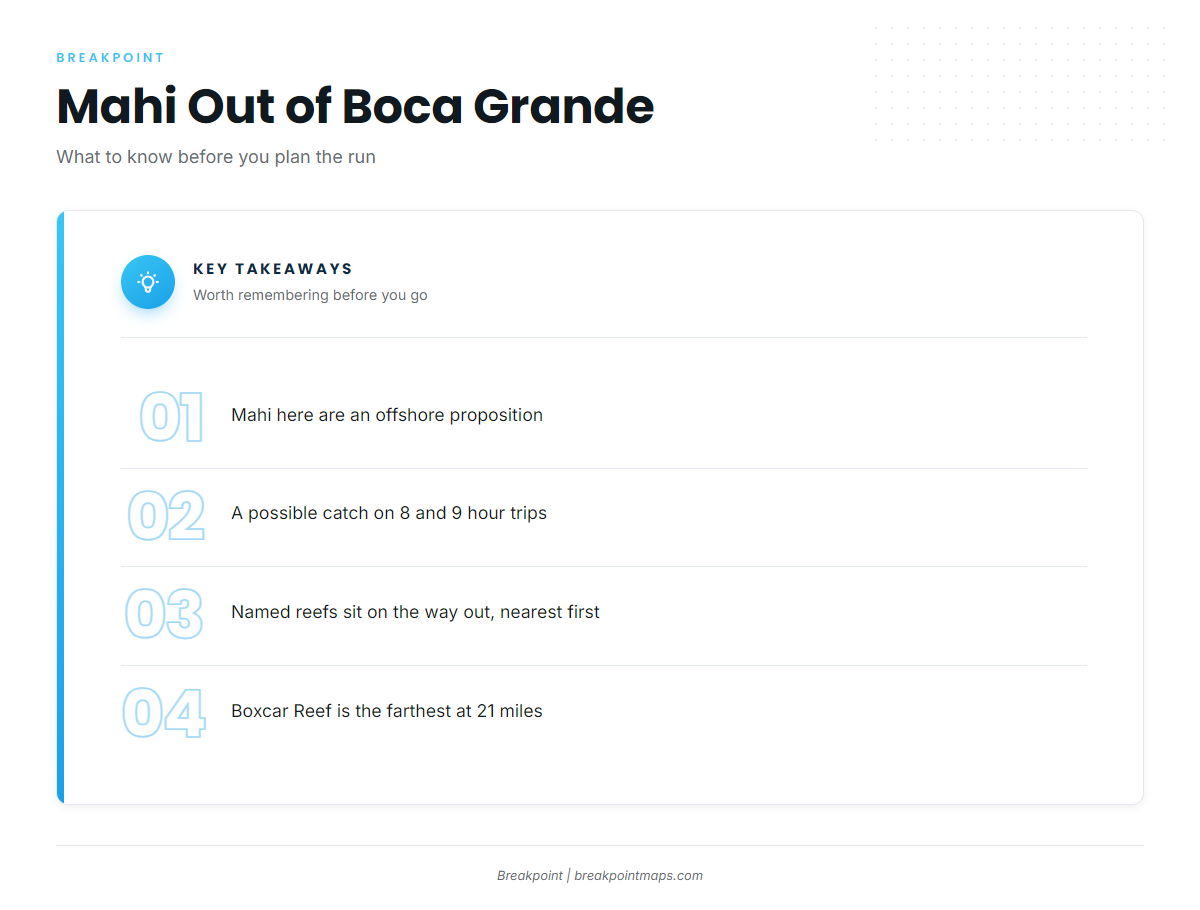
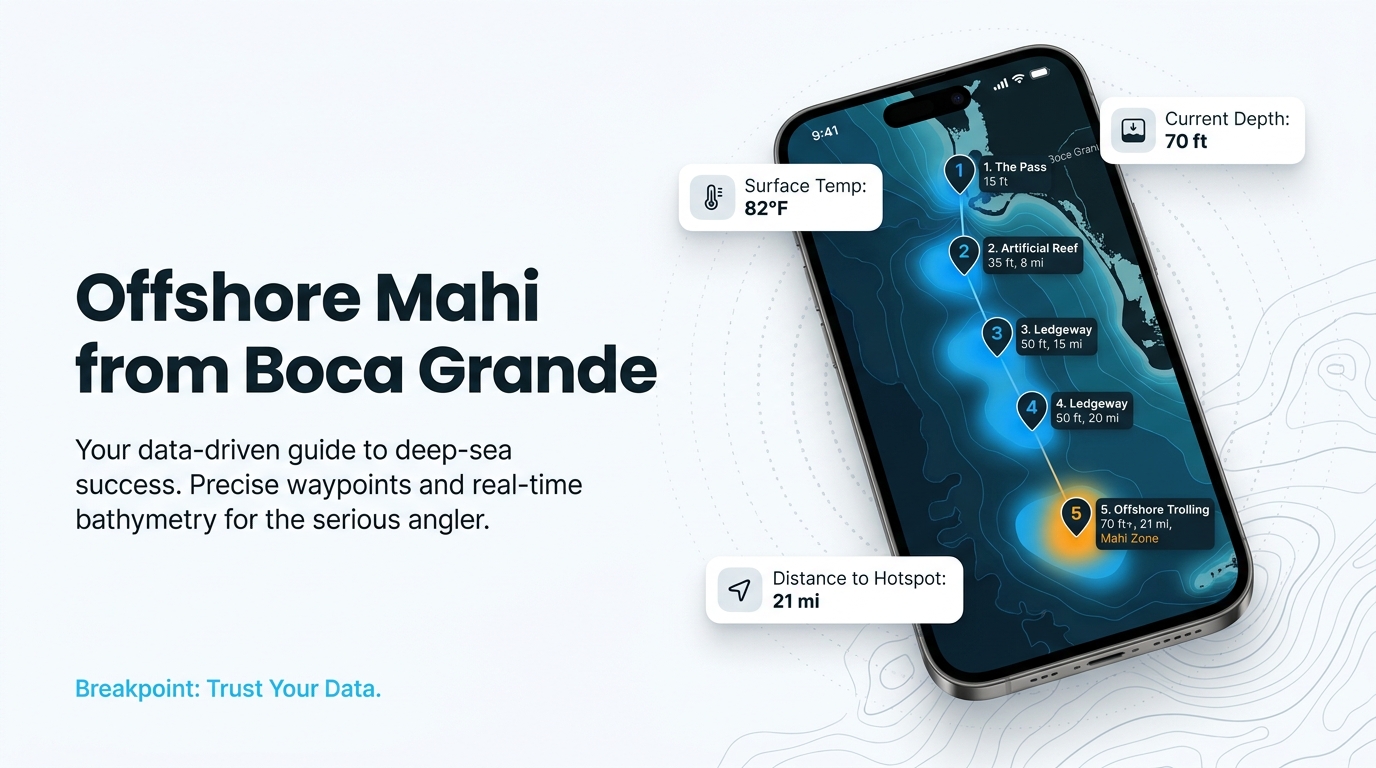
Mahi-mahi fishing out of Boca Grande happens offshore. A local charter lists mahi as a possible catch on its 8 and 9 hour offshore trips, which run into the Gulf of America (Gulf of Mexico) beyond the nearshore reefs. This page covers the named reefs on the run, with depth, distance and bearing from the passes, along with how the fish are worked locally and who fishes for them.
When mahi are around
No month is given for mahi at this port. They appear as a possible catch on the 8 and 9 hour offshore trips, so timing follows the trip type rather than a calendar.
For timing, biology and weedline behavior, see the mahi-mahi species guide. For the broader eastern Gulf picture, see the Gulf regional guide (see also the Gulf of Mexico region guide).
Check the official National Weather Service marine forecast before the run and plan around its wind and wave numbers.
How far boats run and the grounds on the way
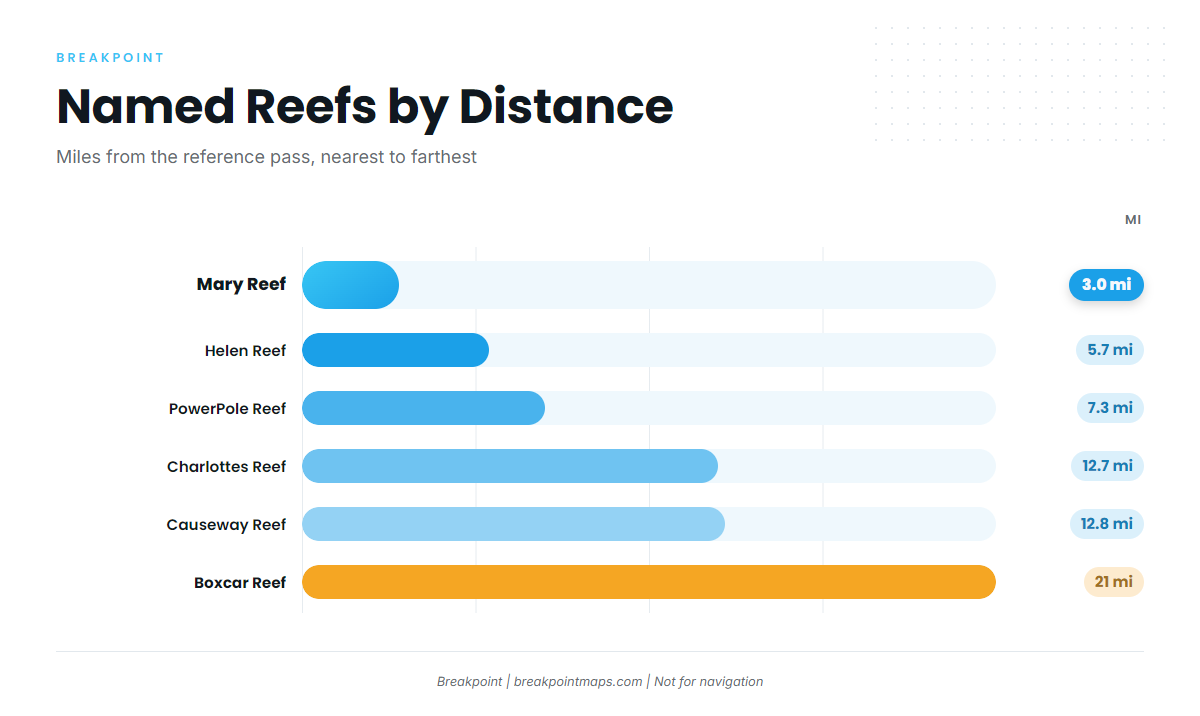
The listed offshore trips are 8 and 9 hours, and the named grounds below sit on the way out. The table orders them by distance from the reference pass, with the two grounds that have no listed distance at the bottom.
| Ground | Depth (ft) | Distance (mi) | Bearing | Reference pass |
|---|---|---|---|---|
| Mary Reef | 30 | 3.0 | 205 degrees | Gasparilla Pass |
| Helen Reef | 30 | 5.7 | 195 degrees | Boca Grande Pass |
| PowerPole Reef | 45 | 7.3 | 254 degrees | Boca Grande Pass |
| Charlottes Reef | 52 | 12.7 | 286 degrees | Boca Grande Pass |
| Causeway Reef | 26 | 12.8 | 286 degrees | Boca Grande Pass |
| Boxcar Reef | 70 | 21 | 267 degrees | Boca Grande Pass |
| CCA Phoenix Reef | 50 | – | – | – |
| Gasparilla Reef | 12 | – | – | – |
Swipe the table sideways to see every column.
Chart layers and the bearings listed here are not for navigation. Use official charts.
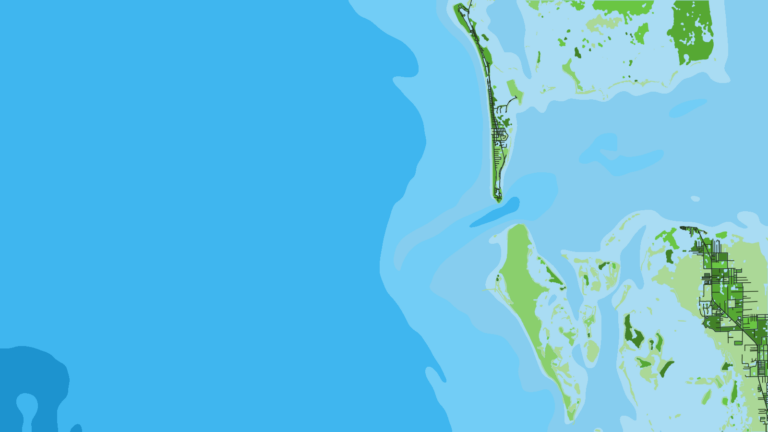
Reefs measured from Boca Grande Pass
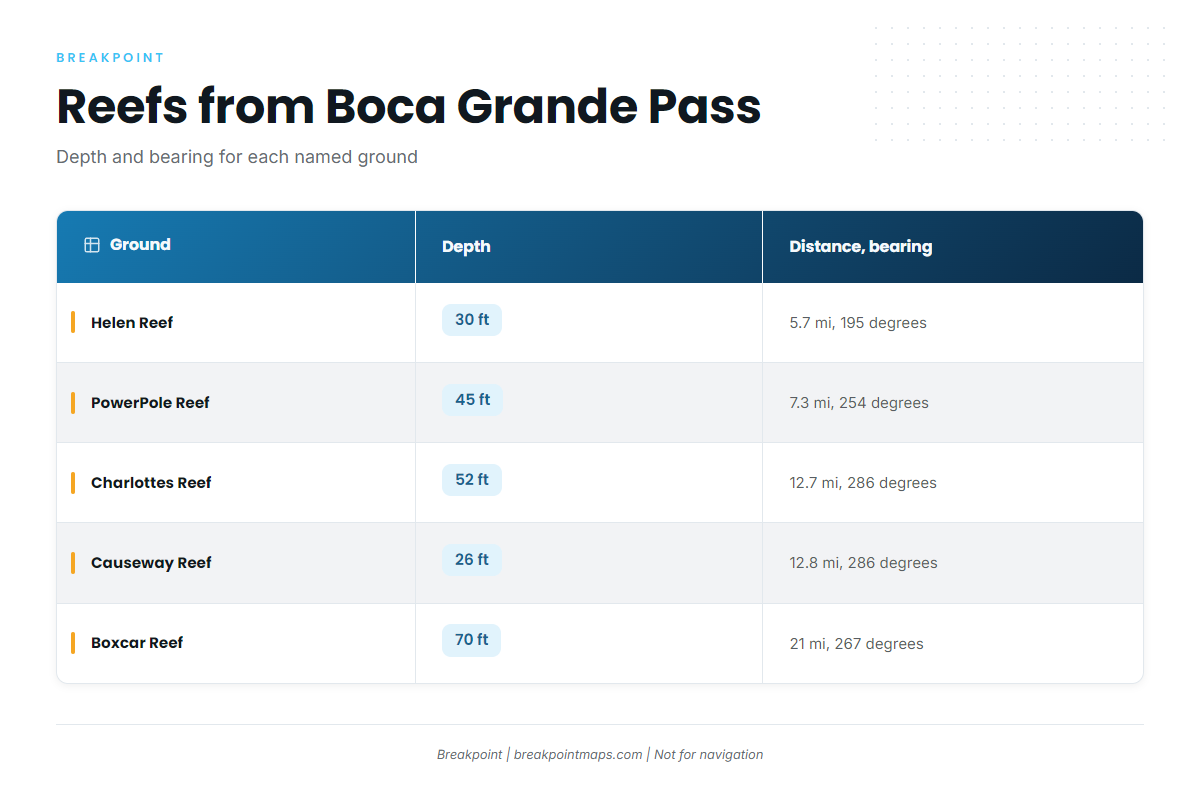
Helen Reef is the closest, in 30 ft, 5.7 miles at 195 degrees from the pass. PowerPole Reef follows in 45 ft, 7.3 miles at 254 degrees.
Charlottes Reef and Causeway Reef share a bearing of 286 degrees. Charlottes Reef is 12.7 miles out in 52 ft, and Causeway Reef is 12.8 miles out in 26 ft.
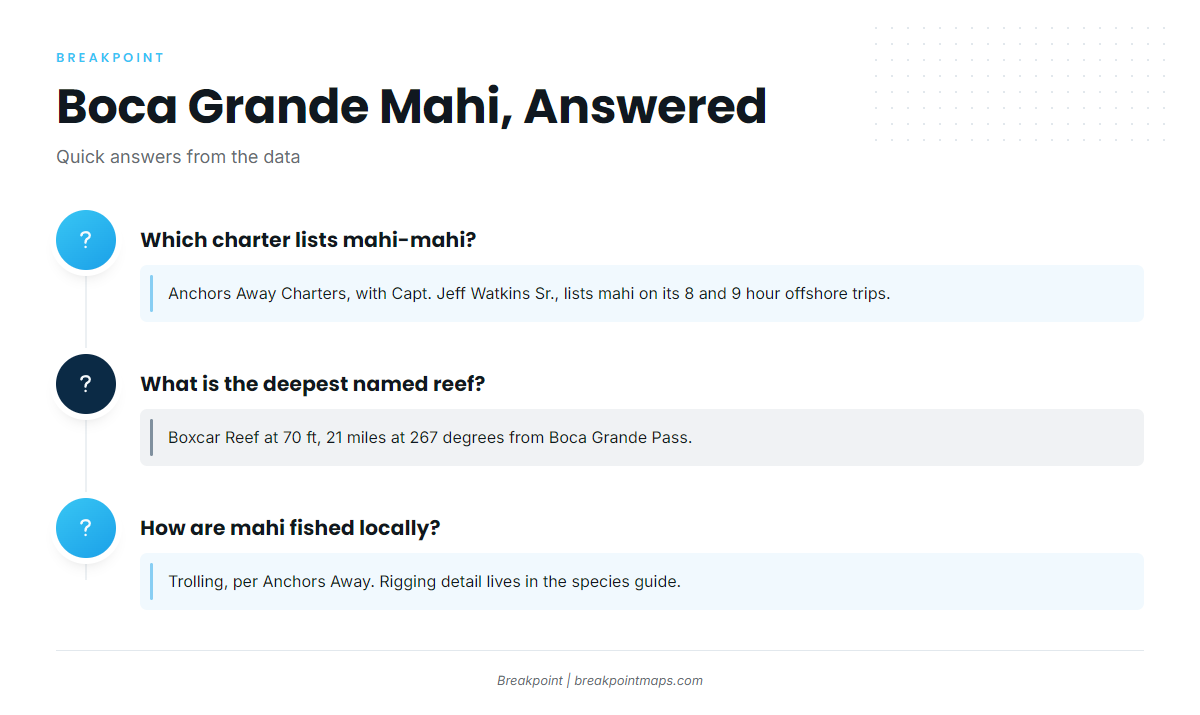
Boxcar Reef is the deepest and farthest named ground, in 70 ft, 21 miles at 267 degrees.
Reefs near Gasparilla Pass
Mary Reef sits in 30 ft, 3.0 miles at 205 degrees from Gasparilla Pass.
Two more named grounds are listed by depth only: CCA Phoenix Reef in 50 ft and Gasparilla Reef in 12 ft.
How mahi are fished here
Anchors Away Charters, run by Capt. Jeff Watkins Sr., is the local charter that lists mahi-mahi. Anchors Away offshore trip details show mahi-mahi as a possible catch on its 8 and 9 hour offshore trips. Those long runs are the core of mahi fishing out of Boca Grande, and the fish are a possible catch, not a guaranteed one.
Trolling
Trolling is the method Anchors Away uses. For rigging detail, use the mahi-mahi species guide.
The pelagic slam
Capt. Jay Withers names mahi in a pelagic slam in one of his posts. For how mahi sit alongside other offshore gamefish, see our offshore gamefish guides.
FAQ
How far do boats run for mahi-mahi fishing out of Boca Grande?
Mahi are listed as a possible catch on 8 and 9 hour offshore trips. The farthest named ground is Boxcar Reef, 21 miles at 267 degrees from Boca Grande Pass, the reference point for the bearings and distances in the table above.
Which local charter lists mahi-mahi?
Anchors Away Charters, with Capt. Jeff Watkins Sr., lists mahi-mahi on its 8 and 9 hour offshore trips. The method is trolling.
Is there a mahi season at Boca Grande?
No month is given for mahi at this port. They show up as a possible catch on the longest offshore trips. For timing, see the mahi-mahi species guide and the Gulf regional guide.
What is the deepest named reef near Boca Grande?
Boxcar Reef is the deepest at 70 ft, 21 miles at 267 degrees from Boca Grande Pass. Next is Charlottes Reef at 52 ft, 12.7 miles at 286 degrees.
How are mahi fished locally?
Anchors Away trolls for them, and Capt. Jay Withers’s post puts mahi in a pelagic slam. Rigging detail is in the mahi-mahi species guide.