



About Redondo Beach
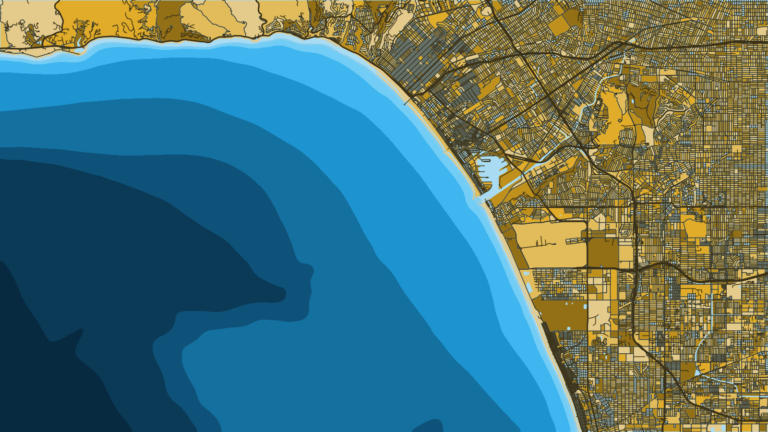
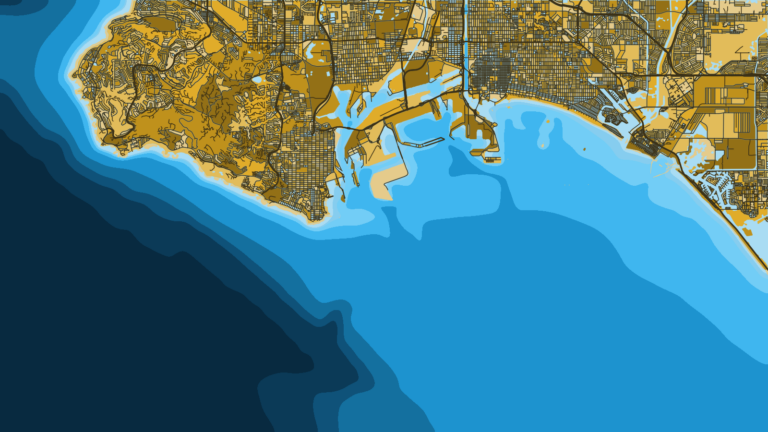
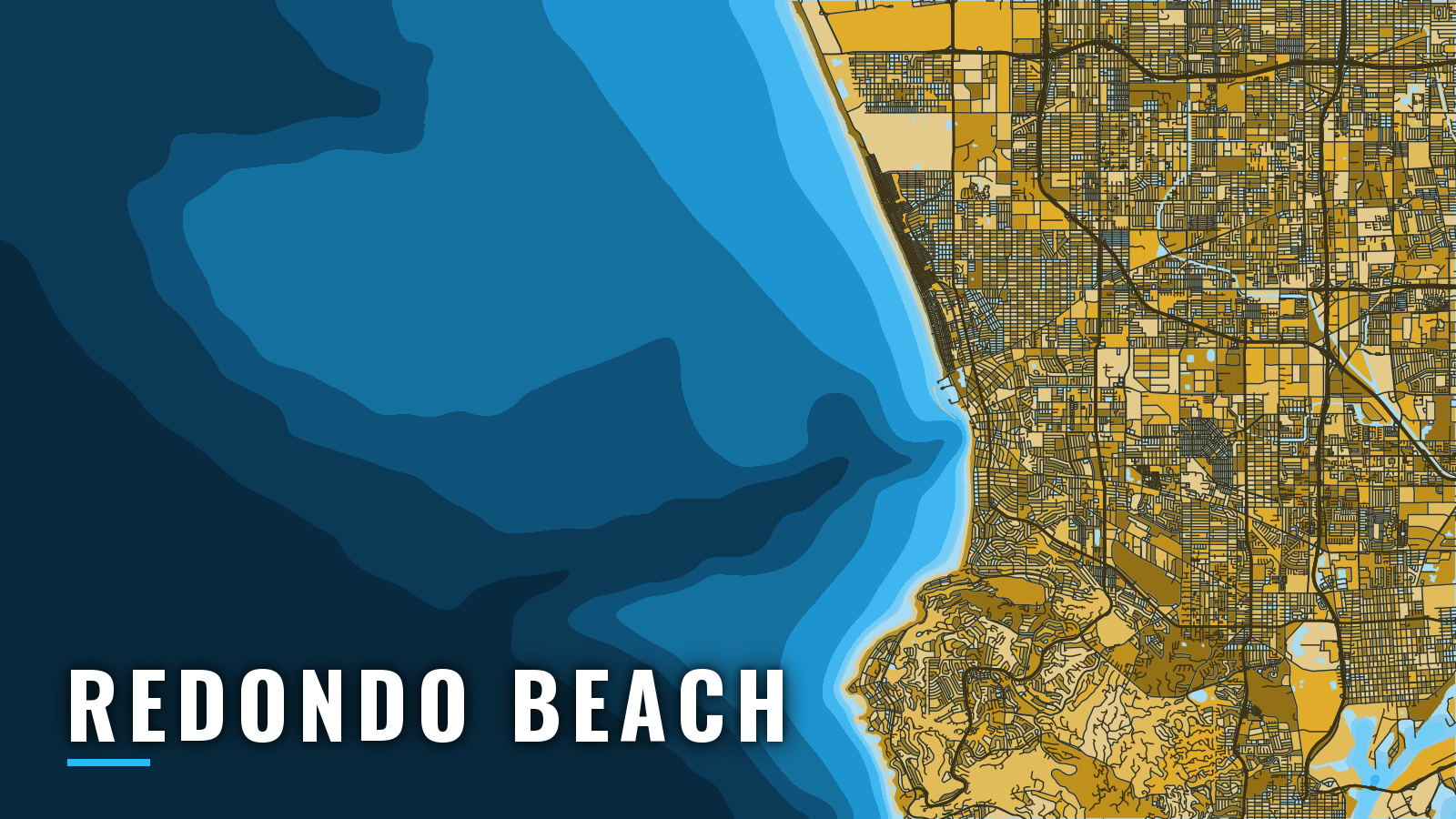
Redondo Beach fishes out of King Harbor, a man-made small-craft harbor at the south end of Santa Monica Bay, 7.6 miles south-southeast of Marina del Rey. San Pedro and Long Beach lie around the Palos Verdes Peninsula.
The harbor is entered through a single gap between breakwaters at its south end. Redondo Canyon heads close to shore just outside, so deep water is a short run from the slip.
Fishing runs year-round, and the mix shifts with water temperature. Anglers here work for California spiny lobster, Pacific bonito, sargo, California halibut, calico bass, white seabass, barracuda, rockfish and warm-water yellowtail. For the regional species picture, see the Pacific Southwest fishing guide.
California rules, including groundfish seasons and depth limits, change during the year, so check them before every trip.
Access and navigation
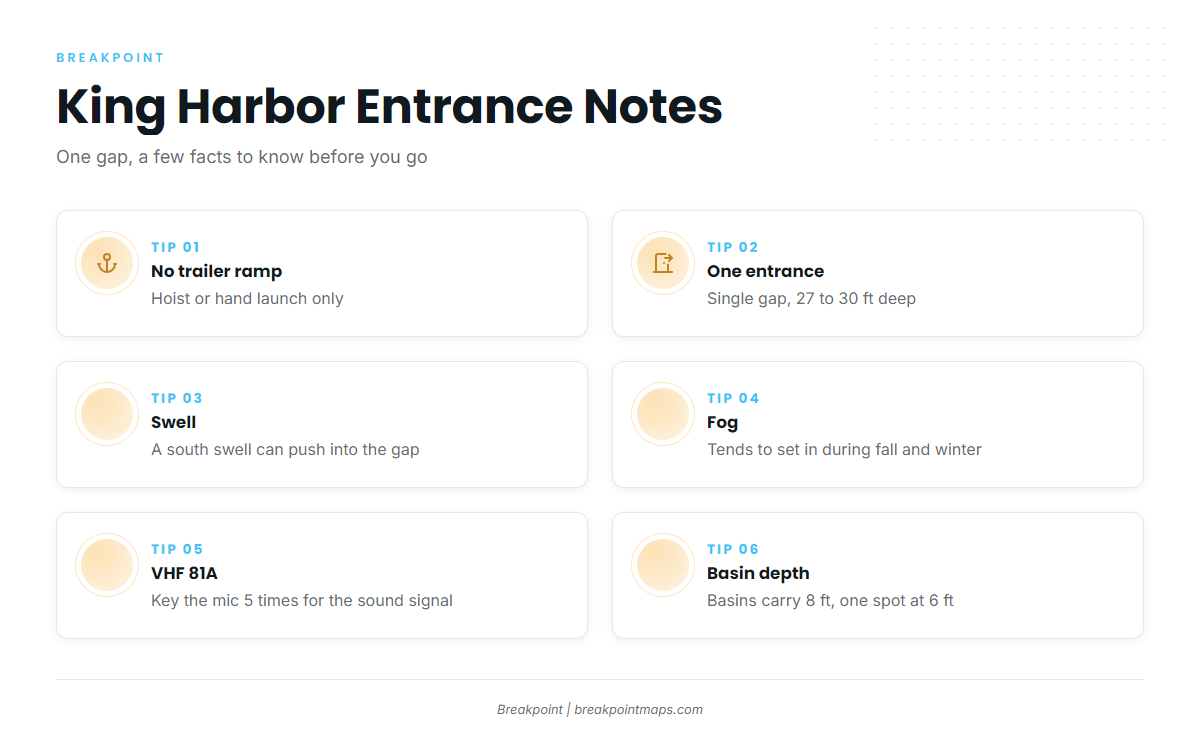
Redondo Beach has no public trailer ramp. Small boats go in by hoist or hand launch.
- Redondo Beach Marinaboat hoist and hand launch only, no trailer ramp; slips.
- King Harbor Marinaslips, fuel listed.
- Port Royal Marinaslips.
- Portofino Marinaslips, fuel listed.
King Harbor has one entrance, between the lights at the breakwater ends at the south end of the harbor. Natural depths run 27 to 30 feet through the gap. A lighted bell buoy sits south-southwest of the south end of the west breakwater. Inside, the three basins carry 8 feet, with an isolated 6 feet in the northeasternmost channel of Basin 1, so deeper drafts should take note.
Because the gap faces south, a south swell can push into the entrance and approaches. A winter west or northwest swell might wrap around and stack up near the breakwater ends. Stronger winds and larger seas tend to be more frequent from mid-fall through late spring, and sea fog tends to set in during fall and winter. In fog, key the mic 5 times on VHF-FM channel 81A to activate the sound signal at the east entrance light.
About 1.5 miles off the beach in Redondo Canyon, a natural submarine oil seep often leaves a film of petroleum on the surface. A second, more noticeable seep sits 3.5 to 4 miles to the northwest. Both are known seeps and do not need to be reported as spills.
Read conditions from these sources:
- NWS marine forecast, zone PZZ655inner waters forecast for wind and seas.
- NDBC 46221 Santa Monica Bay buoywave height and period at one point in the bay.
- NOAA Coast Pilot 7, Chapter 4entrance, basin and approach notes.
The buoy reads a single point in the bay, and neither it nor the forecast shows conditions at the gap itself. We’d look at the entrance and check the latest forecast on arrival. King Harbor has one way out, so if the gap or the approach looks bigger than you want, wait it out or switch to a shorter plan inside the bay.
Fishing conditions
What runs here follows water temperature. The OBS SST and Chlorophyll layers can show when warm, bait-rich water pushes onto the bay grounds. Chart layers are not for navigation.
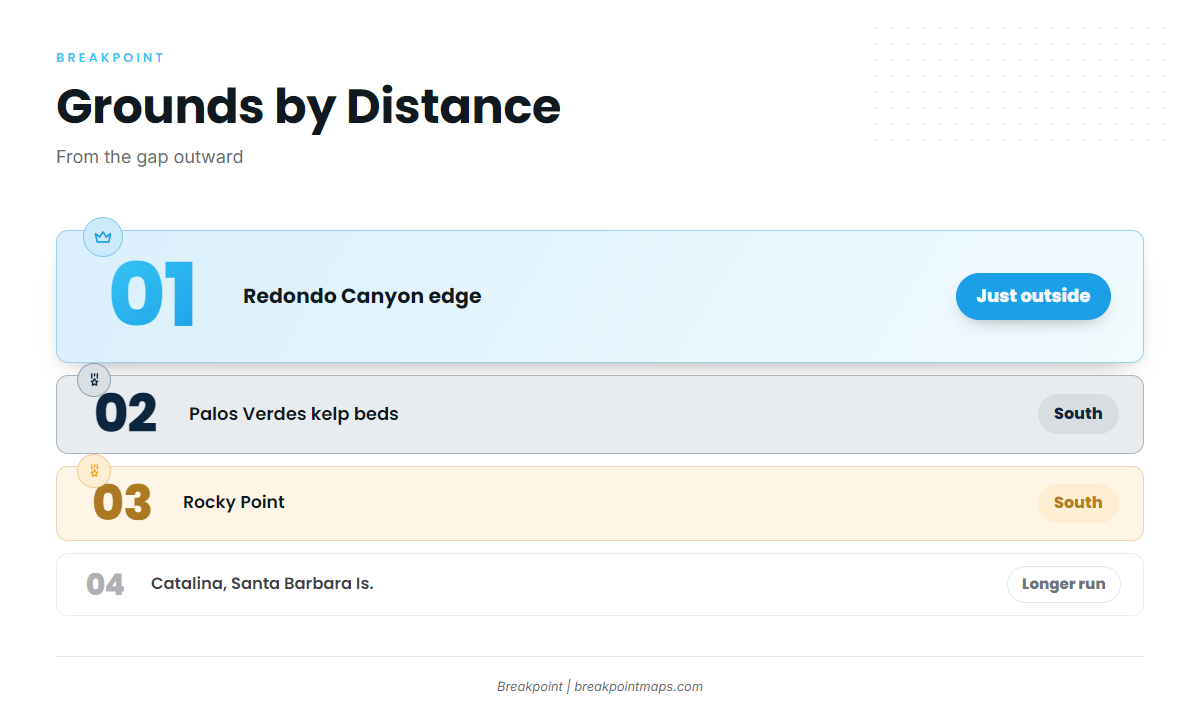
The grounds, in order of distance:
- Redondo Canyon edge. Just outside the gap. Deep water close in can hold bait, and rockfish come from the deeper structure. Seasons and depth limits change, so read the CDFW groundfish summary and CDFW’s in-season changes before fishing. The California groundfish rules page points you there too.
- Palos Verdes kelp beds and Rocky Point. South of the harbor. Kelp structure holds calico bass, and barracuda might show in warmer months. Marine protected areas sit along this coast, so check CDFW’s MPA page and Ocean Sport Fishing map for boundaries before you fish.
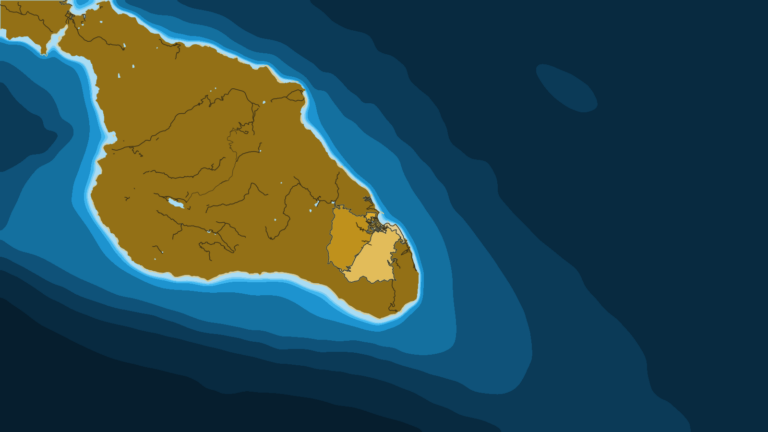
- Santa Catalina Island and Santa Barbara Island. Longer runs that depend on the weather.
Winter
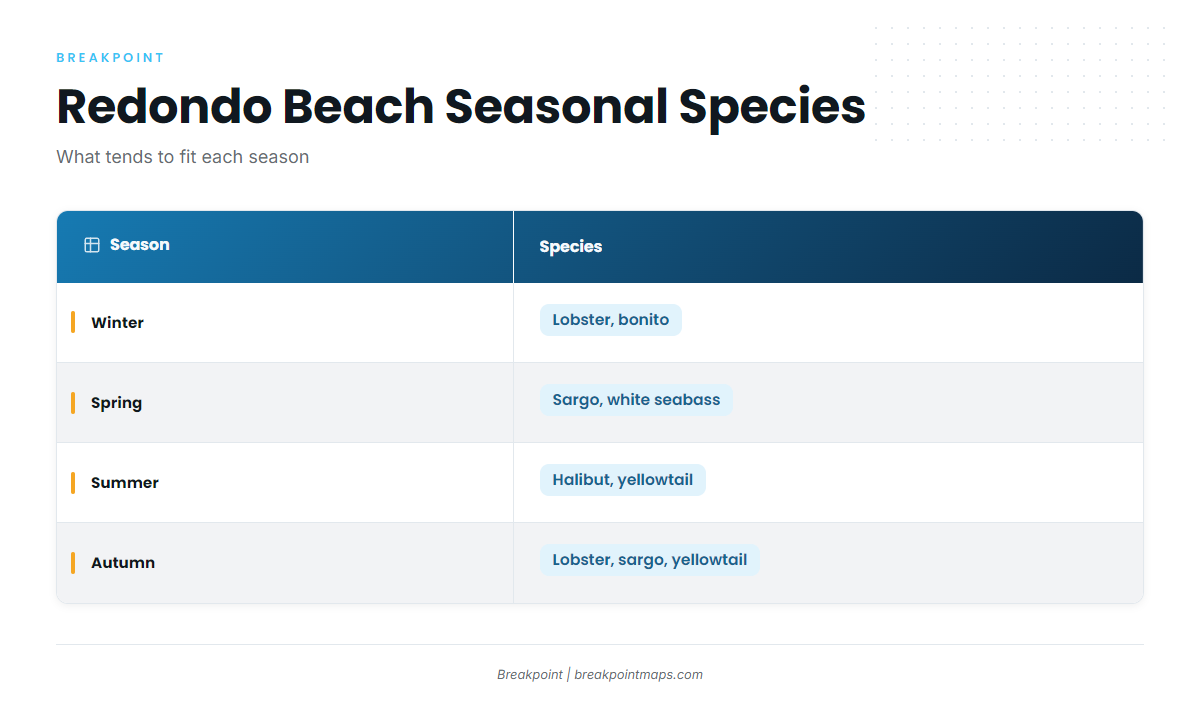
California spiny lobster is on the list, and CDFW sets the season and report-card rules. Pacific bonito are the winter draw, and King Harbor has a reputation as one of the better bonito spots on this coast. Fog and larger seas tend to cluster in this window.
Spring
Lobster and bonito carry over, and sargo join them. White seabass might move in with squid. CDFW’s rule south of Point Conception limits the take to 1 fish from March 15 through June 15.
Summer
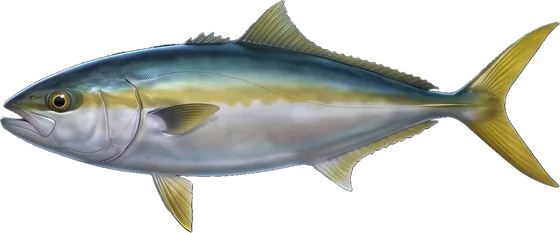
California halibut work the sand. Yellowtail can show when warm water pushes in, and the California yellowtail fishing guide covers how they fish. Anglers who follow the warm edge tend to find the most fish.
Autumn
Lobster and sargo are the steady fish. Yellowtail can linger while the water holds warm, and yellowtail patterns across the Pacific Southwest shows how that plays out along the coast. Sea fog and larger seas tend to return from mid-fall.