



About Oregon Inlet
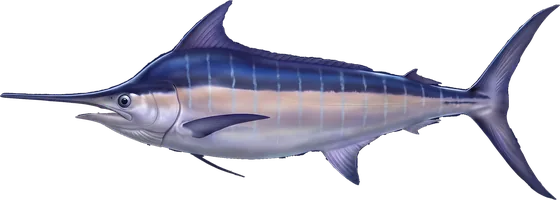
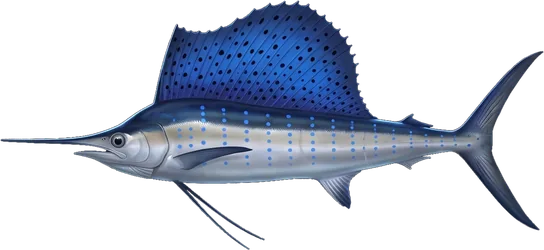
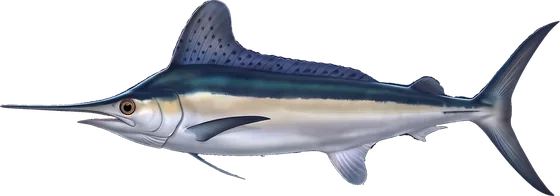
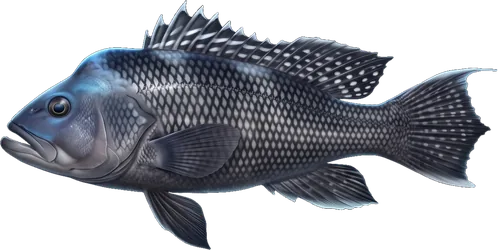
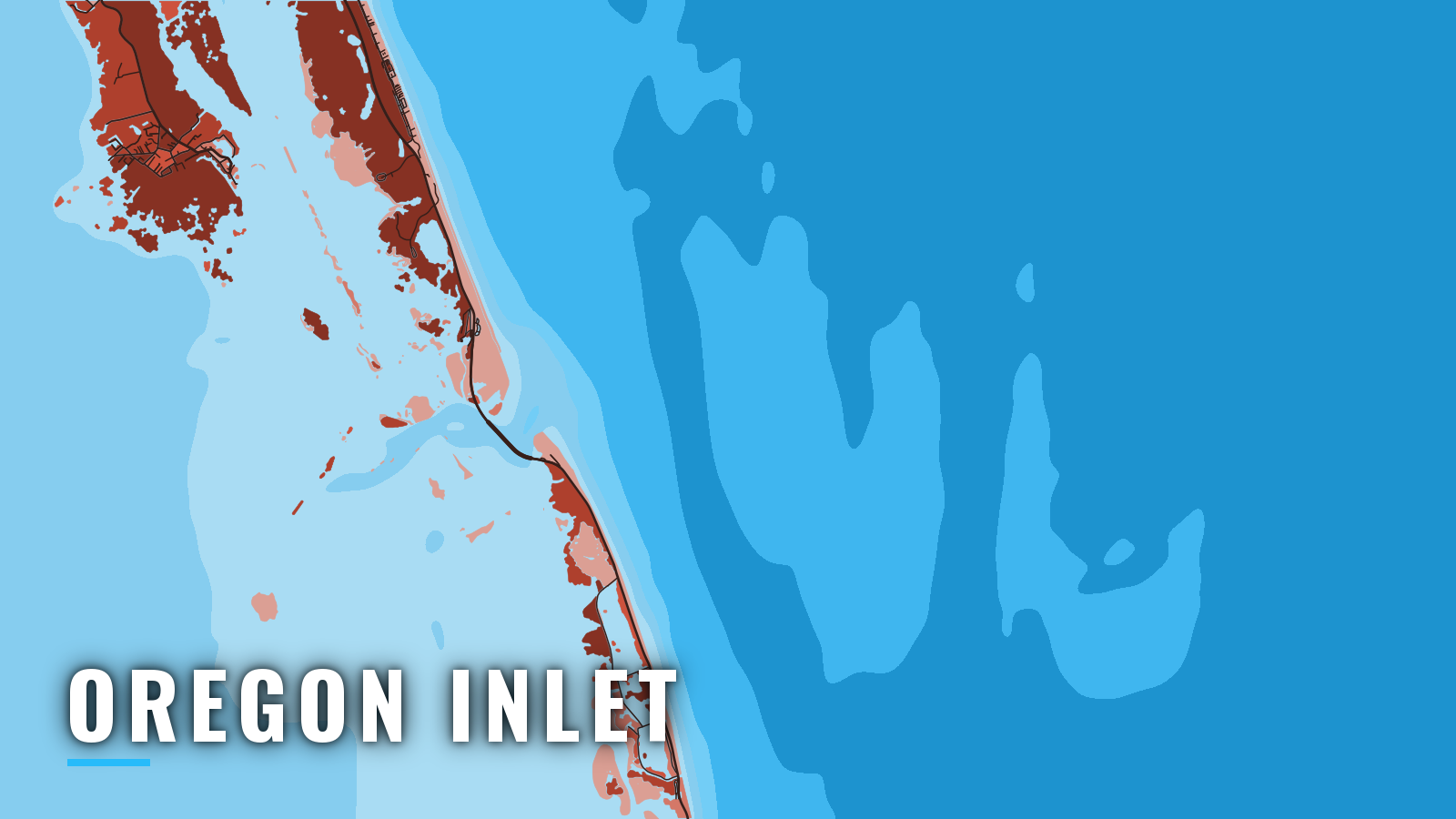
Oregon Inlet is the ocean outlet from Pamlico Sound and Roanoke Sound, between Bodie Island and Pea Island on the North Carolina Outer Banks. Boats from the Oregon Inlet Fishing Center, Pirate’s Cove Marina in Manteo and Wanchese Marina all reach the Atlantic through this one entrance. Offshore fishing runs year-round, and the main species are yellowfin, bluefin and blackfin tuna, mahi-mahi, wahoo, blue and white marlin, and sailfish.
Access and navigation
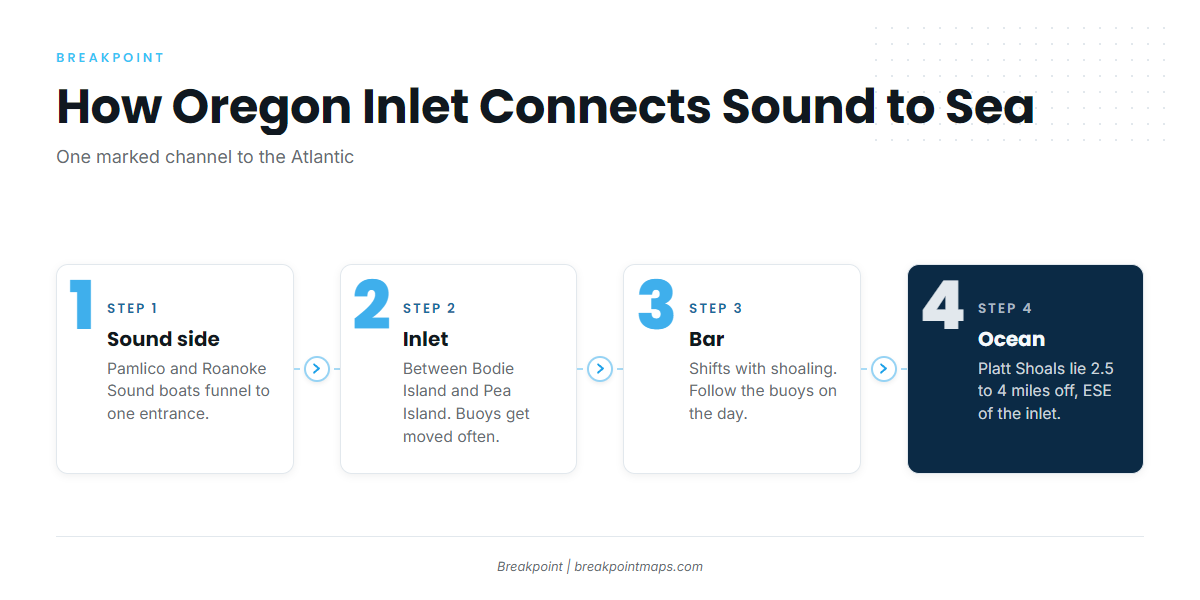
The public ramps and the Oregon Inlet Fishing Center are at the inlet itself. The marinas are inside, on the sound side.
- Oregon Inlet public boat ramps – National Park Service, Cape Hatteras National Seashore, at the inlet
- Washington Baum Bridge Boating Access Area – NC Wildlife Resources Commission ramp
- Oregon Inlet Fishing Center – fuel listed, at the inlet
- Pirate’s Cove Marina – fuel listed, about 8 miles inside in Manteo
- Wanchese Marina – fuel listed, Wanchese
How the entrance behaves
NOAA Coast Pilot 4, Chapter 4 describes Oregon Inlet as used by local fishing vessels and "not recommended to strangers."
The bar shifts. A lighted whistle buoy marks it, and the other buoys are not charted because they are moved often to mark the best water. The inlet needs continuous dredging, and it tends to deepen with northwest winds and fill in with northeast winds. After severe shoaling across the previous channel along the east side of Bodie Island, the seaward buoys were moved to a channel northeast of Pea Island. A chart, a plotter track or an old saved route might not match the buoys on the day, so follow the buoys.
Tidal currents in the inlet are reported at about 5 knots, and 6 to 8 knots with southwesterly winds. Platt Shoals lie east-southeast of the inlet, 2.5 to 4 miles off, with spots covered 30 to 39 feet. In easterly gales, breakers can mark the shoaler spots.
Inside, Pirate’s Cove is about 8 miles north by a marked deepwater channel, with a reported 10 feet. The federal project channels to Roanoke Sound, Manteo and Wanchese have a 12 foot project depth. The fixed bridge over Roanoke Sound has 65 feet of clearance.
Read conditions on arrival
Check the water and the official forecast before committing to the bar. The NWS Newport/Morehead City marine forecast gives wind speed and direction, wave height and period. The NDBC station ORIN7 observations show what the marina sensor is reading now. The bar webcams on the Oregon Inlet Fishing Center site give a visual check, though they are not an official source.
Oregon Inlet has one marked ocean channel. If the bar looks bigger than you want, stay inside and fish the sound.
Fishing conditions
The Gulf Stream is the main offshore water, and the Atlantic Southeast fishing guide covers the regional pattern. The OBS SST and Chlorophyll layers in Breakpoint show where the Gulf Stream edge sits on a given day. Cloud can block a satellite pass, and the chart layers are not for navigation.
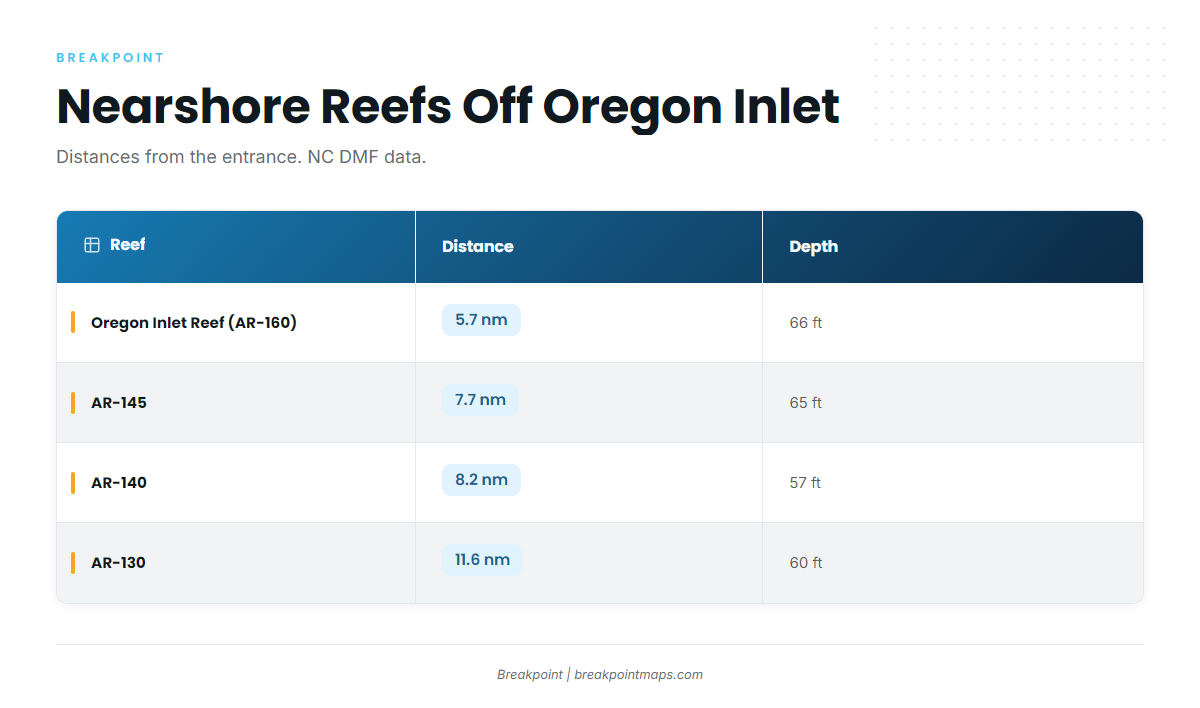
The nearshore reefs sit inside the Gulf Stream run. The NC DMF artificial reef guide lists them, with distances from the entrance:
| Reef | Distance from entrance | Depth |
|---|---|---|
| Oregon Inlet Reef (AR-160) | 5.7 nm | 66 ft |
| AR-145 | 7.7 nm | 65 ft |
| AR-140 | 8.2 nm | 57 ft |
| AR-130 | 11.6 nm | 60 ft |
| AR-165 | not listed | not listed |
At 5.7 to 11.6 nm, these reefs are the realistic nearshore option for boats not making the Gulf Stream run. Check NC Division of Marine Fisheries rules before fishing. Tuna and billfish require a NOAA Fisheries HMS permit, so confirm the requirements before you go.
Winter
Yellowfin tuna and bluefin tuna are the offshore targets, and bluefin tuna running down the coast bring the season’s biggest fish. Nearshore, king mackerel and big bluefish fill the gap.
Spring
The offshore list opens up to yellowfin and bluefin tuna, mahi-mahi, wahoo, blue and white marlin, and sailfish. The yellowfin tuna guide covers that species. Mahi-mahi (dolphin) arrive with the warming water. Nearshore and inshore, king and Spanish mackerel, cobia, red drum, bluefish and speckled trout all show up.
Summer
The blue marlin guide covers that species, and blue marlin along the Mid-Atlantic and Northeast edge covers the wider range. For sailfish, see the sailfish guide. White marlin, yellowfin and bluefin tuna, mahi-mahi and wahoo also run offshore, while cobia, king and Spanish mackerel and red drum hold nearshore.
Autumn
The white marlin guide covers the autumn billfish, and the wahoo guide covers wahoo along the edge. Blue marlin, sailfish, yellowfin and bluefin tuna, and mahi-mahi also run offshore. Nearshore, king and Spanish mackerel, big bluefish and red drum fill the list. Blackfin tuna can turn up offshore across the year.