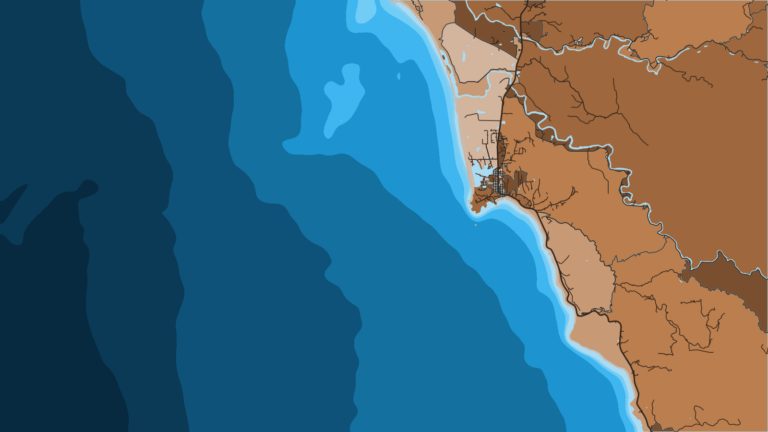



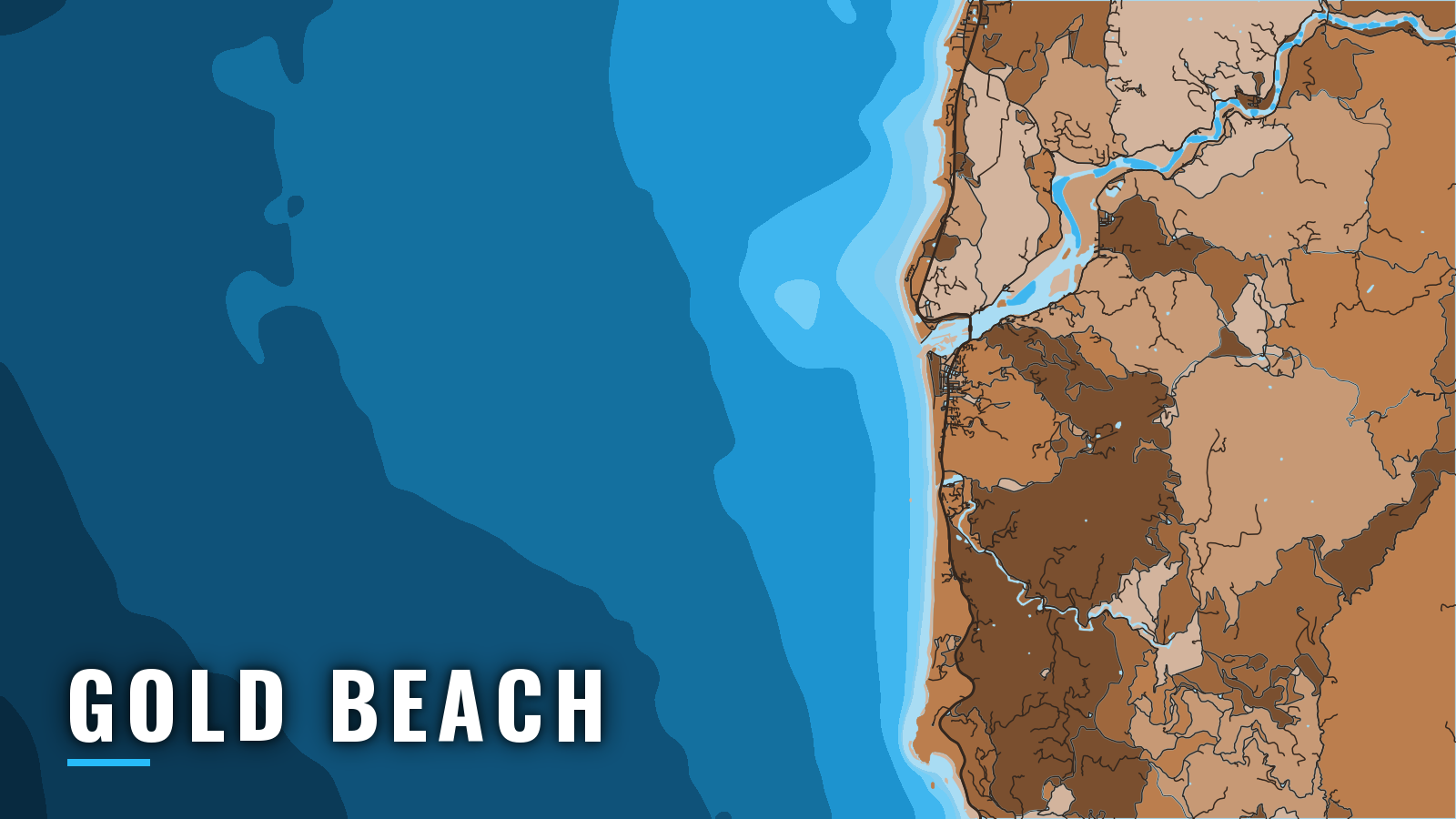

About Gold Beach
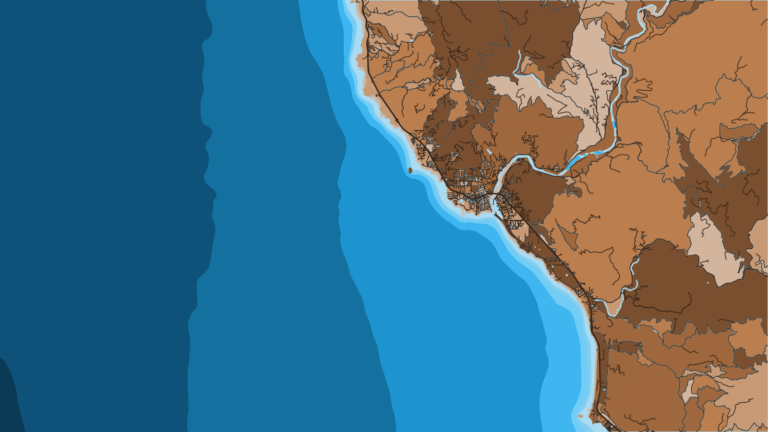
The Port of Gold Beach sits just inside the Rogue River mouth on the south side, behind a breakwater, on the southern Oregon coast, between Port Orford and Brookings. Offshore fishing out of Gold Beach starts at a Corps-dredged channel between two jetties.
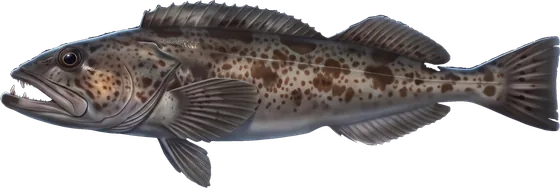
Ocean bottomfish trips work a reef about 3 miles out. The same harbor serves the Rogue River salmon and steelhead fisheries, so a boat here can fish the ocean or stay inside.
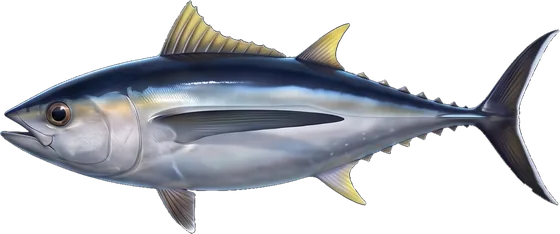
The year runs steelhead in winter, lingcod and spring Chinook in spring, lingcod and rockfish in summer, and fall Chinook and coho in autumn. Halibut and albacore come into play offshore when their seasons and the water allow. The port is part of the wider Pacific Northwest fishery.
Access and navigation out of Gold Beach
Gold Beach has a three-lane ramp, dockside moorage and a single jettied entrance. The notes below cover each, plus how the bar tends to behave and what to do if it looks rough.
Launch and berth
The Port of Gold Beach boat ramp is a 3-lane launch. Drive between the Port Offices and the Post Office to reach it. The ramp has boarding floats and a large parking area.
The marina sells fuel and has a fish cleaning station. Moorage is dockside, with one dock for commercial vessels and a separate dock for pleasure vessels. Anchoring is not permitted in the harbor. Details are on the Port of Gold Beach facilities page.
The entrance
There is one jettied entrance: the Rogue River entrance between the north and south jetties. The channel is authorized at 13 ft deep and 300 ft wide.
The boat basin is reached through an opening in the port breakwater, upstream of the entrance. The basin access channel is authorized at 10 ft deep and 100 ft wide. A gravel shoal has formed upstream of that channel, and maintenance dredging of the entrance and access channels continues. The USACE Rogue River project notes cover the channel details.
How the bar behaves
The Rogue River bar can stack up when swell meets an ebbing river. The entrance changes as shoals build and get dredged, and authorized depth is a design figure that can differ from actual depth.
USACE advises boaters unfamiliar with the Rogue River bar to get local information before crossing.
The alternative approach
There is no second ocean entrance here. If the bar looks bad, the alternative is to stay inside and fish the Rogue estuary, bay and river.
Look at the water on arrival
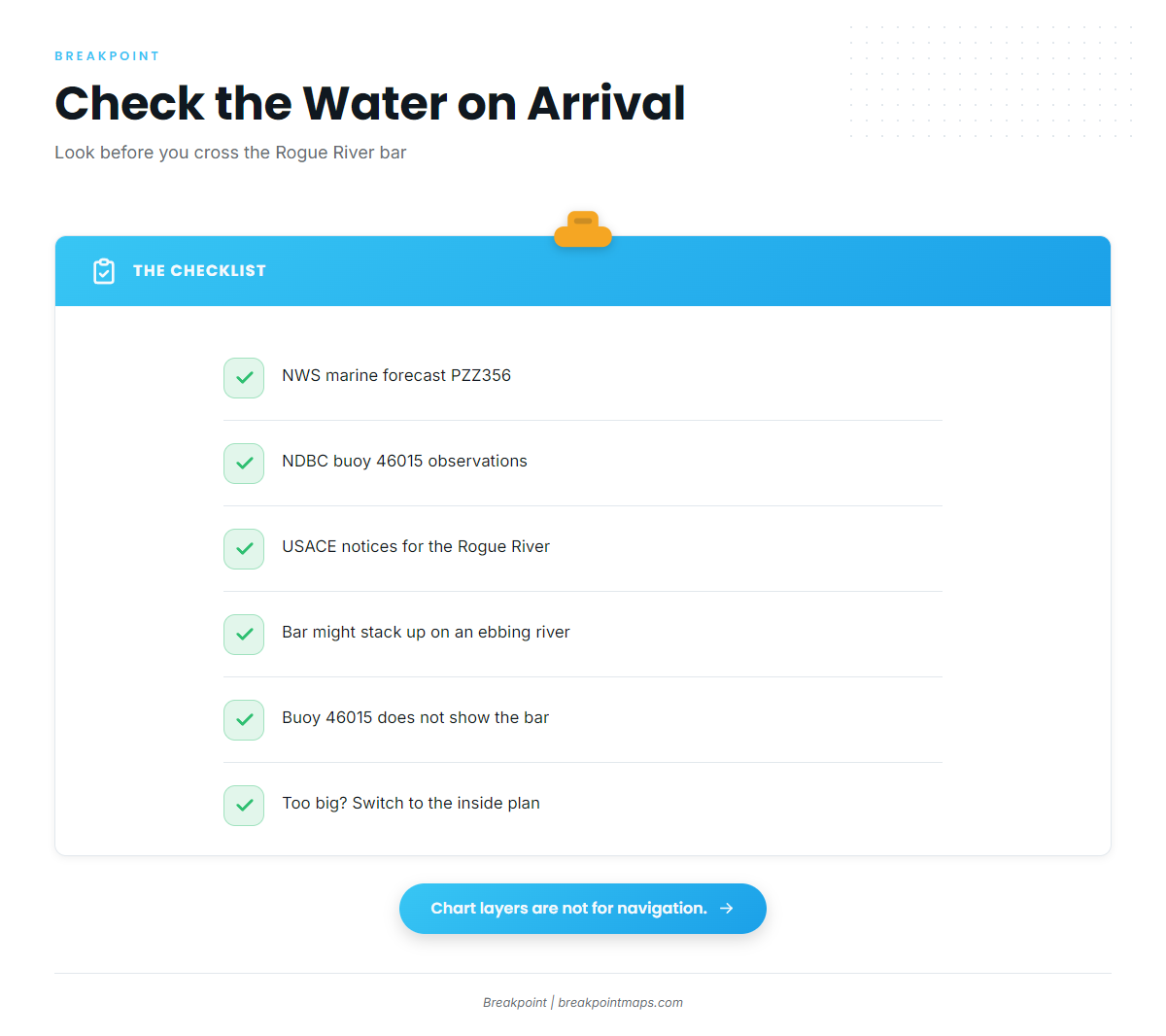
Look at the water when you arrive, then check the official sources:
- NWS marine forecast PZZ356, Cape Blanco to Pt. St. George out 10 nm
- NDBC buoy 46015 observations, 15 nautical miles west of Port Orford
- USACE notices for the Rogue River at Gold Beach
Buoy 46015 sits offshore and north of the port, so it does not show conditions at the bar itself. If the water or the forecast looks bigger than you want, switch to the inside plan.
Chart layers are not for navigation.
Offshore fishing conditions off Gold Beach
Rogue Reef, about 3 miles out, is the named bottomfish ground. It holds lingcod, and our lingcod fishing guide covers the species in detail.
The Oregon Department of Fish and Wildlife sets the ocean rules. Check the ODFW marine zone regulations before every trip.
- Lingcod and rockfish are open year-round at all depths.
- A working descending device must be aboard any vessel fishing for bottomfish or halibut.
- Yelloweye and quillback rockfish are prohibited.
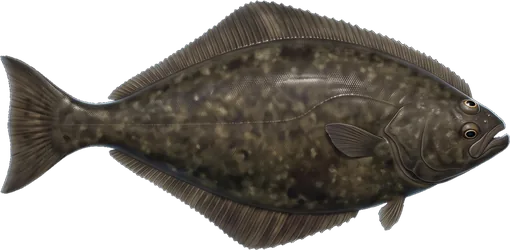
- Halibut in the Southern Oregon subarea and ocean salmon follow seasons and quotas. Check the ODFW Pacific halibut and ocean salmon regulation pages before fishing.
- Black rockfish limits can be cut in-season, so check with ODFW rather than relying on a printed number.
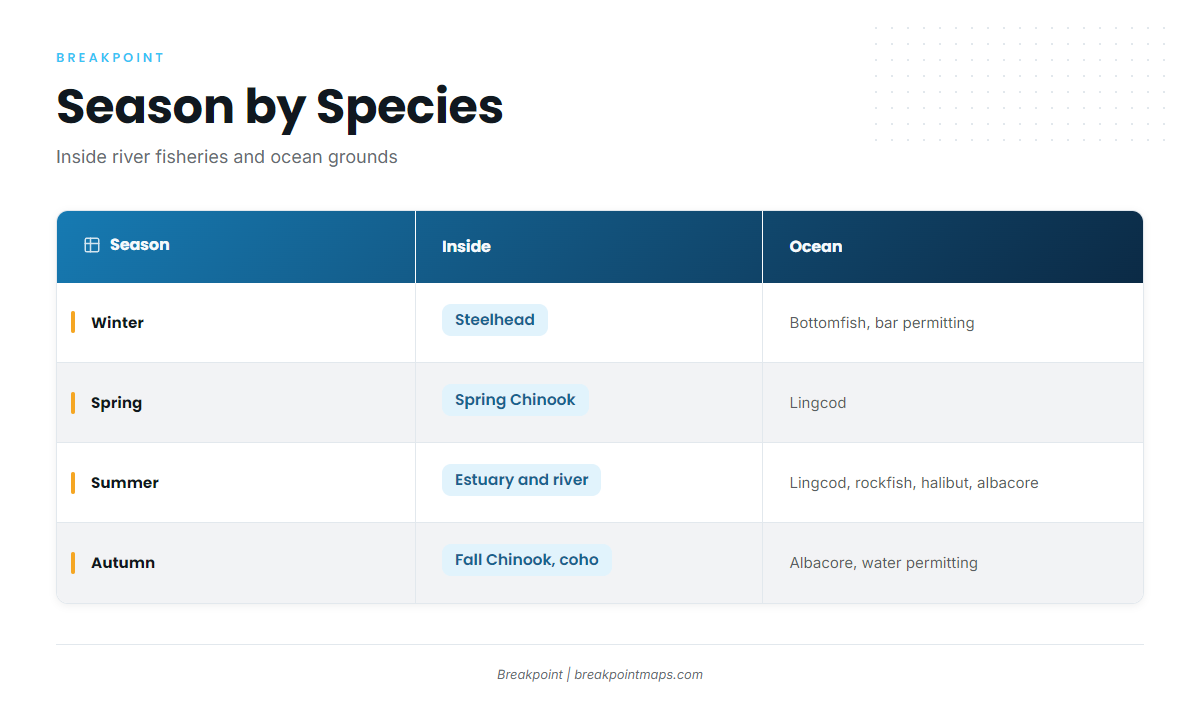
| Season | Inside (river and estuary) | Ocean |
|---|---|---|
| Winter | Steelhead | Bottomfish, as the bar and forecast allow |
| Spring | Spring Chinook | Lingcod |
| Summer | Estuary and river | Lingcod, rockfish, halibut, albacore |
| Autumn | Fall Chinook, coho | Albacore, as the water allows |
Winter
Steelhead is an inside, river fishery. Bottomfish stay open year-round, but ocean days depend on the bar and the forecast, so run the checks above first.
Spring
Lingcod fish on the reef. Spring Chinook is a river fishery here and is not fished in the ocean.
Summer
Lingcod and rockfish fish on Rogue Reef. Cabezon retention opens partway through the year, so check ODFW for the date.
Pacific halibut in the Southern Oregon subarea run on a season and quota.
Albacore depend on warm water reaching within range of the port.
Autumn
Fall Chinook and coho run into the Rogue. For albacore off the Pacific Northwest, what matters is how far warm water sits from the coast, and sea surface temperature breaks decide the run.
Temperature breaks show on the OBS SST and Chlorophyll layers in Breakpoint. Chart layers are not for navigation.