


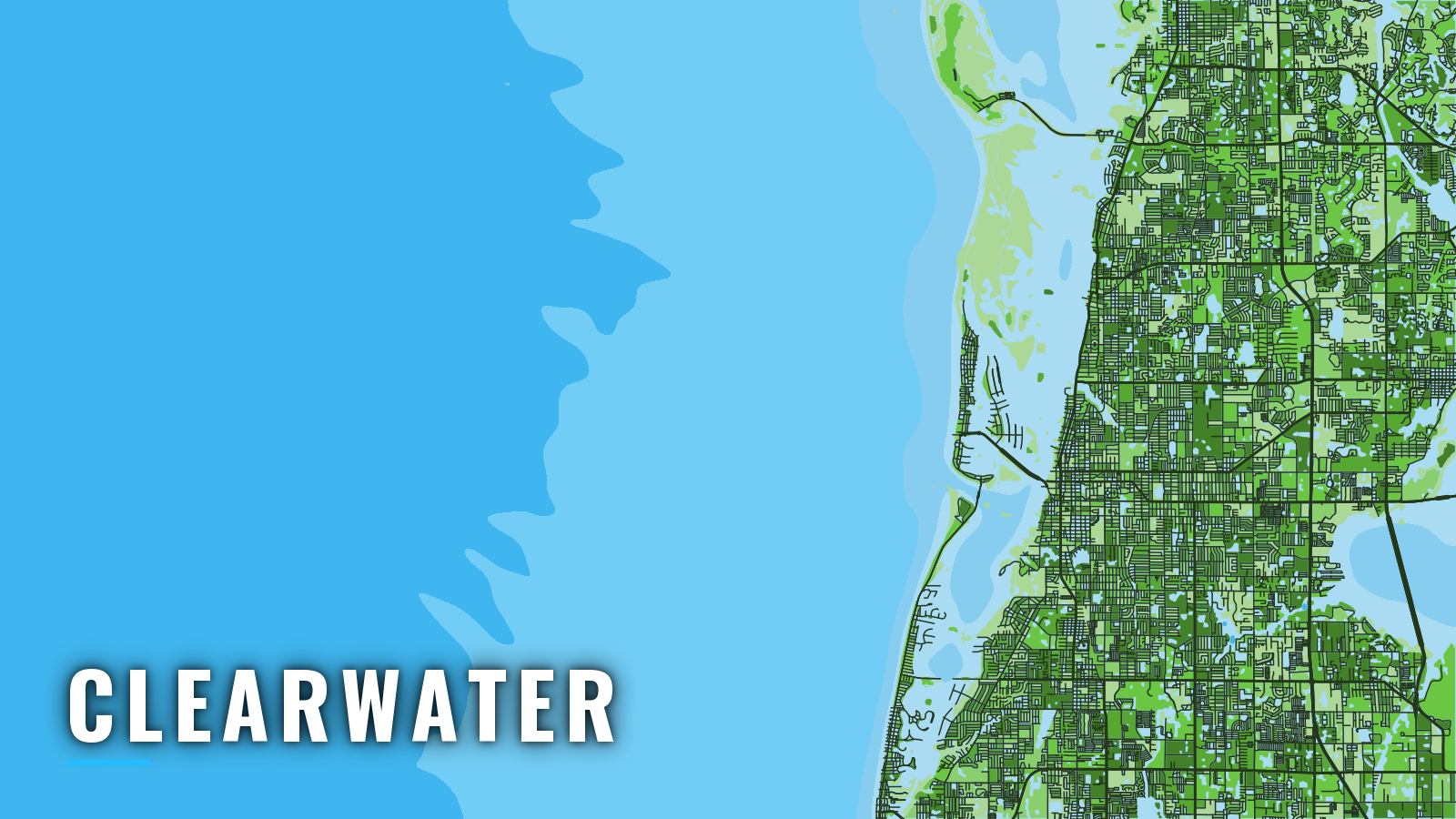

About Clearwater
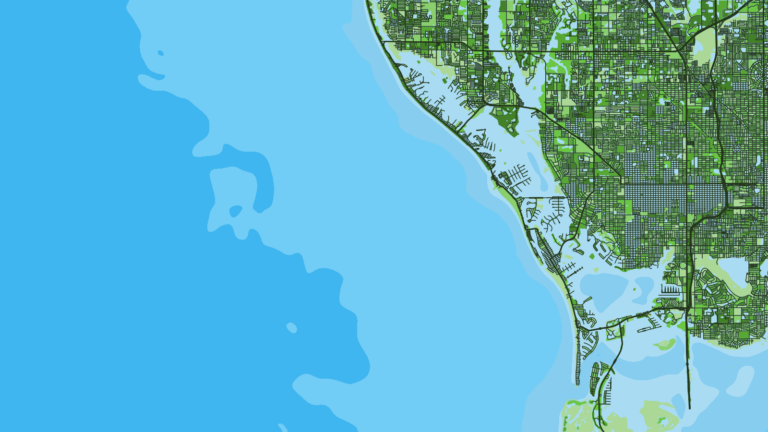
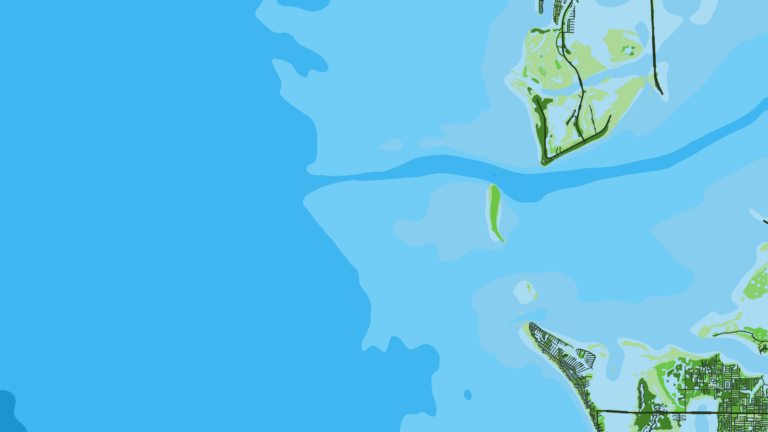
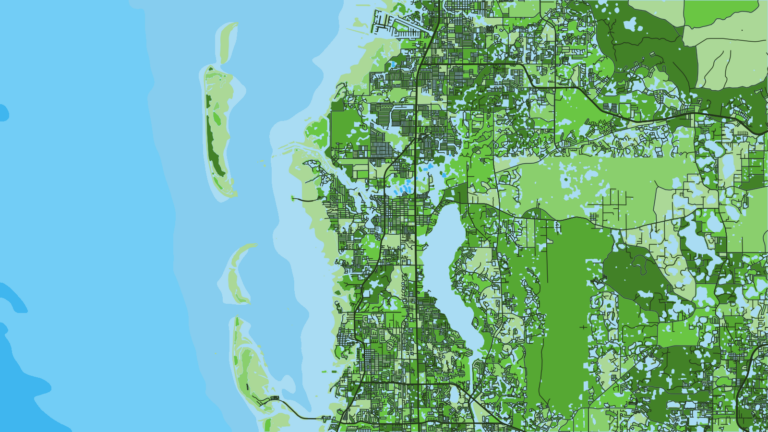
Clearwater is a Pinellas County port that reaches offshore water through Clearwater Pass, one of the Gulf coast ports in our Florida guides. The pass runs between the north end of Sand Key and the south end of Clearwater Beach Island and opens west to the Gulf of America (Gulf of Mexico). The port sits on the Pinellas coast between Tarpon Springs to the north and Madeira Beach and St. Pete Beach to the south.
The offshore fishery runs year-round, with the species mix and the productive areas changing by season.
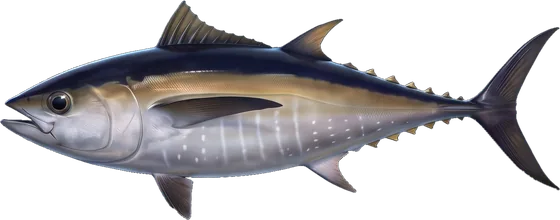
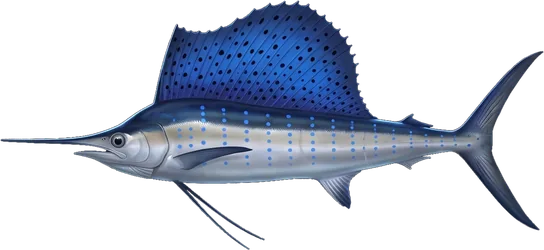
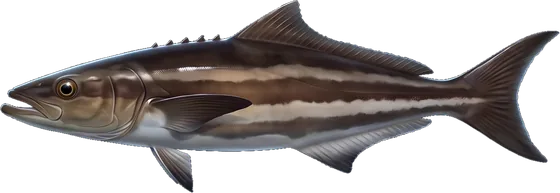
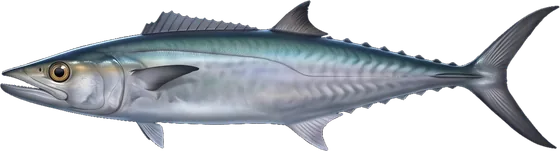
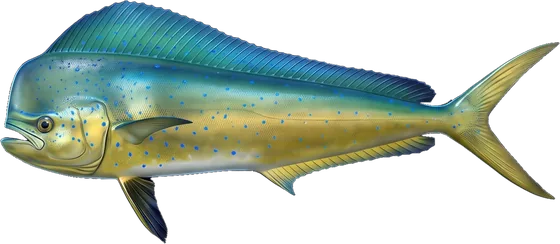
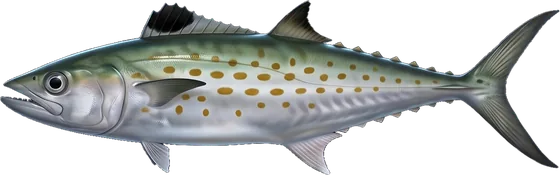
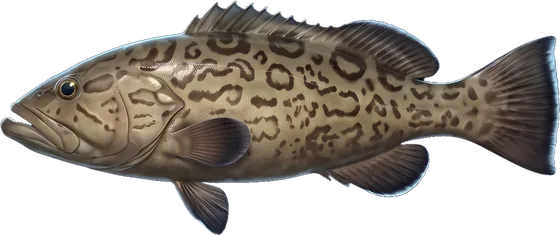
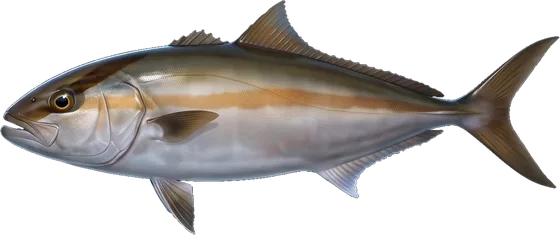
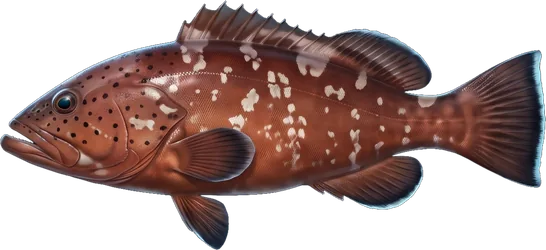
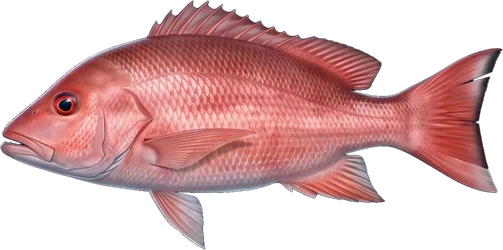
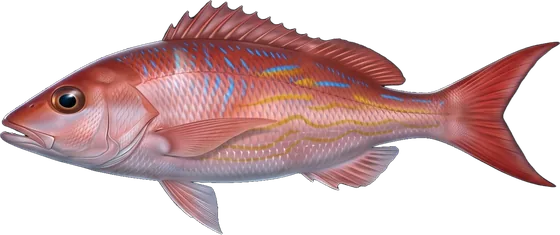
Targets include gag grouper, red grouper, red snapper, greater amberjack, kingfish, cobia, mangrove snapper, lane snapper and hogfish. Mahi-mahi and tuna show up farther out in summer. Gag grouper has its own write-up in our gag grouper guide for Tampa Bay. Reef fish rules change by season and quota, so check FWC recreational saltwater regulations before you fish. Private-vessel anglers 16 and older also need the free State Reef Fish Angler designation to keep gag grouper, red grouper, red snapper, amberjack, hogfish and other listed reef fish.
Access and navigation
Clearwater boats run offshore through Clearwater Pass, a dredged channel that leads from the Intracoastal Waterway west to the Gulf. According to the U.S. Coast Pilot 5, the channel is well marked by lights and daybeacons.
Two public launch and dock options serve offshore boats:
- Seminole Street Boat Ramp – city ramp on Clearwater Harbor, truck and trailer parking $20 per day with a 72-hour limit.
- Clearwater Beach Marina – city marina on the east side of Clearwater Beach Island, fuel available, reached by the side channel north of the pass.
The pass
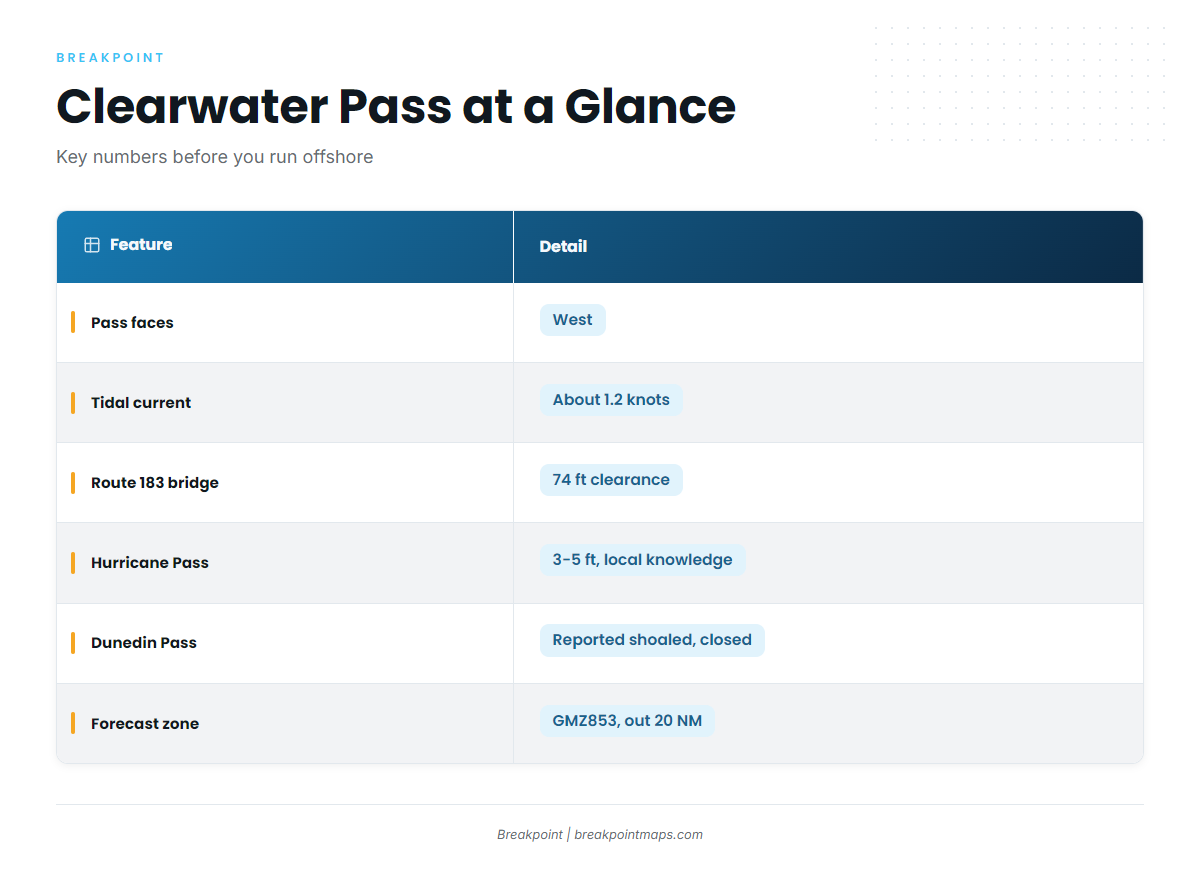
Clearwater Pass faces west. Tidal current averages about 1.2 knots, and an ebb running out against a west wind can stand the water up, so look at it before committing. The Route 183 bridge over the pass has a charted clearance of 74 feet. A dredged side channel leads north from just inside the pass to the municipal marina turning basin.
The alternative approach
Hurricane Pass, to the north, carries 3 to 5 feet with local knowledge, though that depth depends on bars that can shift. Dunedin Pass, 3 miles north, is reported shoaled and closed to navigation.
Arrival check
When you arrive, look at the water in the pass. Read CWBF1 at Clearwater Beach and the NWS Tampa Bay coastal forecast for GMZ853, which covers Englewood to Tarpon Springs out 20 NM. Because GMZ853 stops at 20 NM, it does not cover the Middle Ground run. If the pass looks bigger than you want, switch approaches or change the plan.
Fishing conditions
Clearwater sits on a wide, gently sloping shelf, and the offshore fishing here is built on reef and hard bottom. For the wider shelf, see our Gulf of Mexico fishing guide.
Named grounds close to the pass:
- Clearwater Reef – artificial reef, 27-32 ft
- Dunedin Reef – artificial reef, 27-33 ft
Both depths come from the FWC artificial reef map.
Nearshore hard bottom lies between and beyond the reefs and holds grouper and snapper in general terms. The long run is the Florida Middle Ground, about 95 miles northwest of the Tampa Bay entrance. Two seasonal areas there protect reef fish under federal rule 50 CFR 622.34, so check them before you plan the trip.
The Chart Contours layer shows the bottom around Clearwater Reef and Dunedin Reef. Chart layers are not for navigation.
Winter
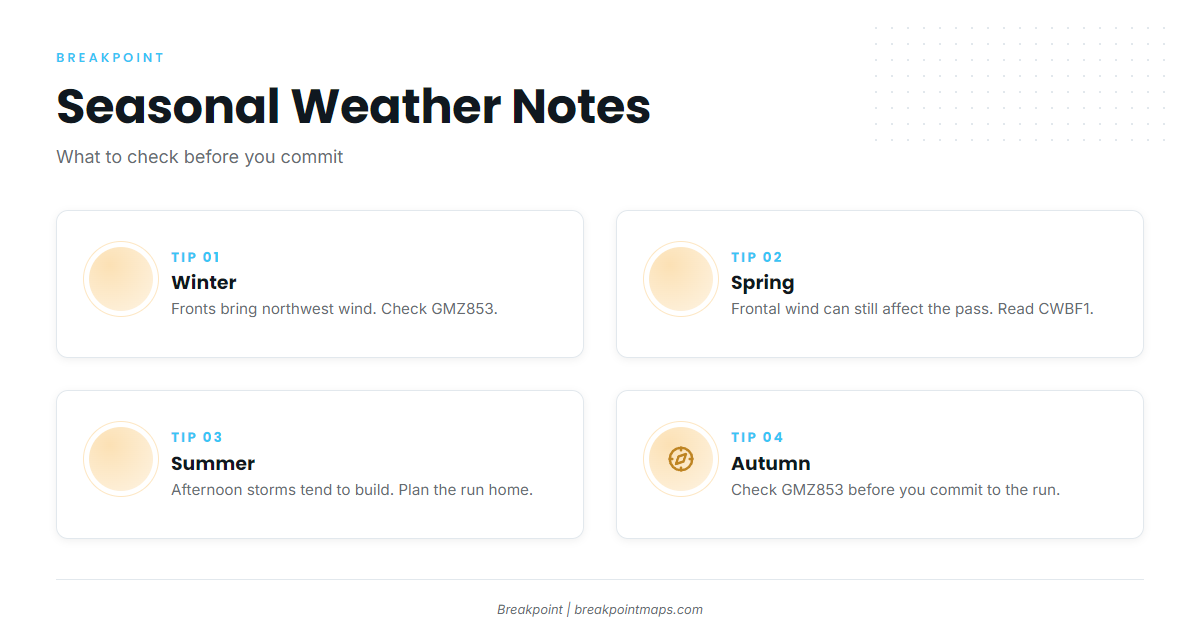
Look for gag grouper, red grouper and hogfish, with bottom species tending to be the focus. Fronts bring northwest wind, so check GMZ853 before you commit. Seasons and closures can apply, so check FWC.
Spring
Look for red grouper, lane snapper, mangrove snapper, greater amberjack, cobia and kingfish. The pelagics might show around the reefs and markers. Frontal wind can still affect the pass, so read CWBF1 on arrival.
Summer
Look for red snapper, gag grouper, red grouper, greater amberjack and kingfish, with mahi-mahi and tuna farther out. Red snapper is quota-driven, so check FWC. Afternoon thunderstorms tend to build, so plan the run home around them.
Autumn
Look for gag grouper, red grouper, hogfish, kingfish, bonito and cobia. Fish tend to work the same reefs and hard bottom you fished in summer. Wind can shift as fall fronts begin to arrive, so read GMZ853 before you leave the dock.