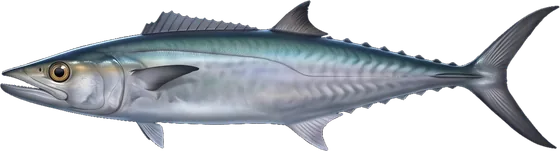




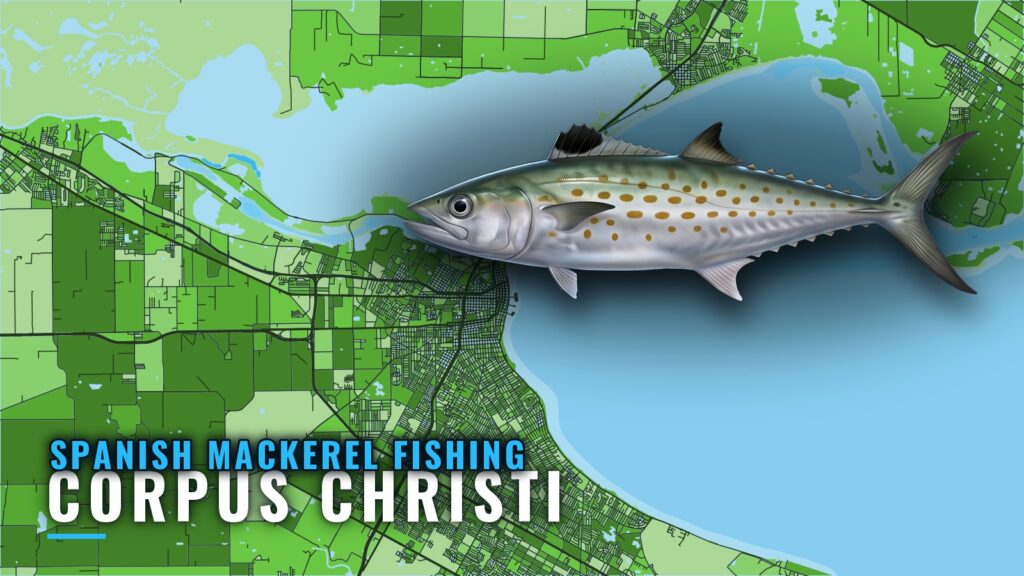
For Spanish mackerel out of Corpus Christi, the water runs from reefs a few miles off the barrier islands to rigs and banks well offshore. This page lists the named structure, depths and distances in order from the beach outward, so you can pick where to start from Corpus Christi. For biology and behavior, see the Spanish mackerel guide. For timing across the Gulf, see the Gulf of Mexico Spanish mackerel guide (see also the Gulf of Mexico region guide).
When the fish are here and how far boats run
Two decisions come first: whether to go, and how far. The nearshore reefs sit a few miles out from the barrier islands. The far grounds run to about 65 miles southeast of the port.
Season
Season timing for the Texas coast is in the Gulf-wide guide linked above. For a first look, check the nearshore reefs, which are the closest structure.
Running distances
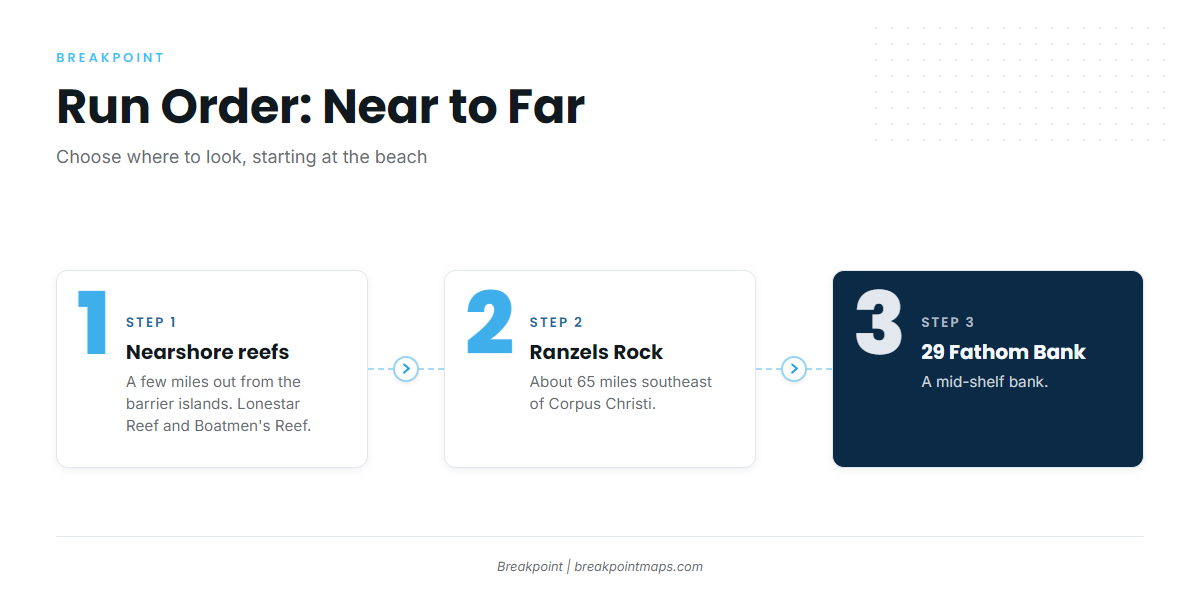
From nearest to farthest:
- Nearshore reefs: a few miles out from the barrier islands (Lonestar Reef, Boatmen’s Reef).
- 29 Fathom Bank: a mid-shelf bank.
- Ranzels Rock: about 65 miles southeast of Corpus Christi.
Before any of the longer runs, check the official marine forecast for wind, wave height and period.
Grounds and structure near Corpus Christi
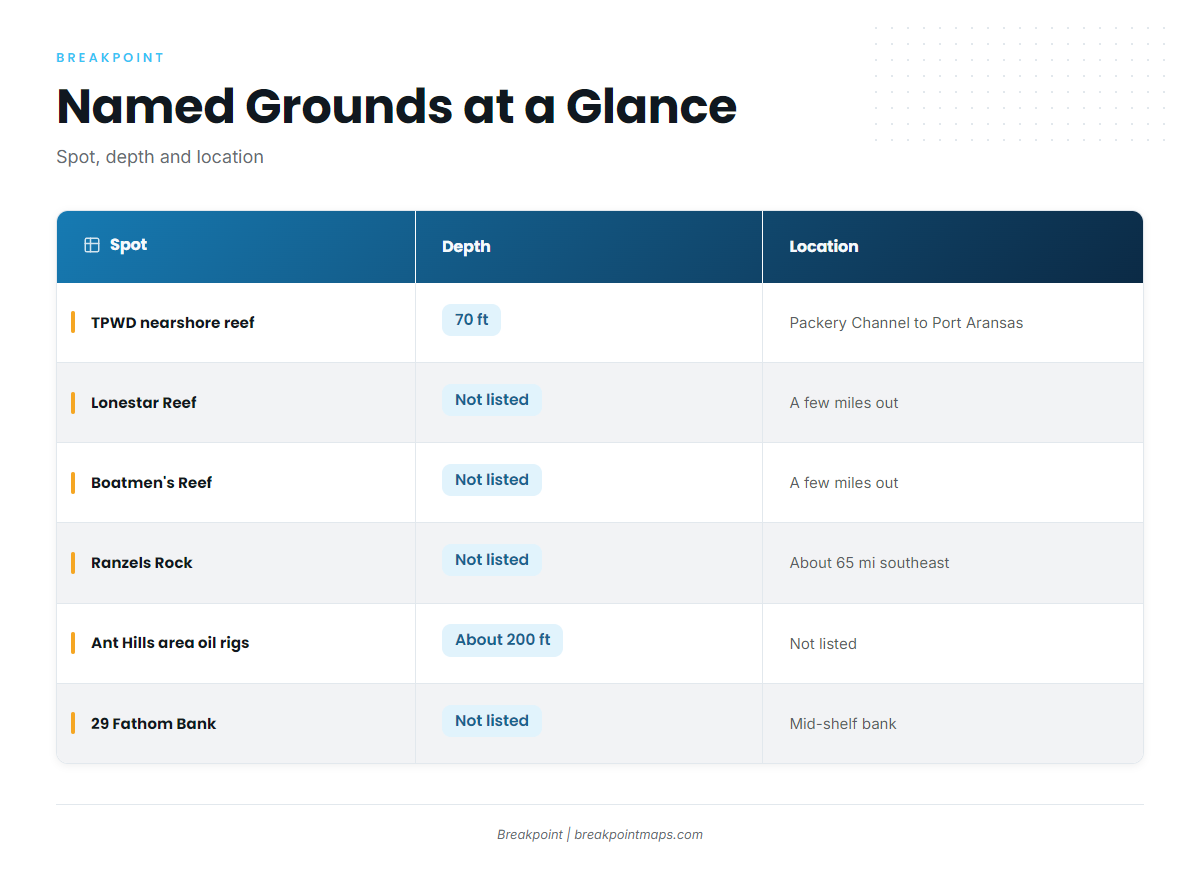
Eight named spots cover the run from the beach to the mid-shelf. Cells are blank where we have no figure to print.
| Spot | Depth | Location |
|---|---|---|
| Corpus Christi Reef Site | TPWD nearshore reef | |
| TPWD nearshore reef | 70 ft | State waters between Packery Channel and Port Aransas, 160 acres |
| Lonestar Reef | A few miles out from the barrier islands | |
| Boatmen’s Reef | A few miles out from the barrier islands | |
| Mustang Island-775 | Backup spot | |
| Ranzels Rock | About 65 miles southeast of Corpus Christi | |
| Ant Hills area oil rigs | About 200 ft | |
| 29 Fathom Bank | Mid-shelf bank |
The Chart Contours layer in Breakpoint shows the bottom around these spots. Chart layers are not for navigation. For reef positions, the TPWD interactive reef locator maps the state’s artificial reefs.
Nearshore reefs
Start close to the beach and work outward:
- TPWD nearshore reef: 70 ft of water and 160 acres, in state waters between Packery Channel and Port Aransas. Texas Parks and Wildlife Department (TPWD) manages it.
- Corpus Christi Reef Site: a TPWD nearshore reef, listed separately from the reef above.
- Lonestar Reef: a few miles out from the barrier islands, among TPWD’s nearshore reef sites.
- Boatmen’s Reef: a few miles out from the barrier islands.
Backup spot: Mustang Island-775
Mustang Island-775 is a backup spot. Work the reefs above first.
Farther out
Three grounds sit well offshore:
- Ranzels Rock: about 65 miles southeast of Corpus Christi.
- Ant Hills area oil rigs: fished in about 200 feet of water.
- 29 Fathom Bank: a mid-shelf bank.
Their distance from shore affects which regulations apply.
How it’s fished here and who fishes for them
Spanish mackerel are listed on a 6-hour offshore charter out of Corpus Christi. GET BENT CHARTERS has a Corpus Christi listing that names Spanish mackerel.
If you run your own boat, the named reefs above give you the same targets to work from. Other coastal and offshore gamefish share these grounds and are covered in our coastal and offshore gamefish guides. Which structure you pick depends on your boat and the day’s wind and sea numbers.
FAQ about Spanish mackerel fishing out of Corpus Christi
How deep is the TPWD nearshore reef?
70 ft. The reef covers 160 acres in state waters between Packery Channel and Port Aransas.
How far is Ranzels Rock from Corpus Christi?
About 65 miles southeast of Corpus Christi.
What depth are the Ant Hills rigs fished in?
About 200 feet of water.
Which charter lists Spanish mackerel out of Corpus Christi?
GET BENT CHARTERS’ Corpus Christi listing names Spanish mackerel. Spanish mackerel also appear on a 6-hour offshore charter listing.
Where are the rules for Spanish mackerel here?
TPWD rules cover state waters, including the TPWD nearshore reef. The farther grounds such as Ranzels Rock call for checking the federal rules too. Check both before fishing.