



When striped bass are at Indian River Inlet
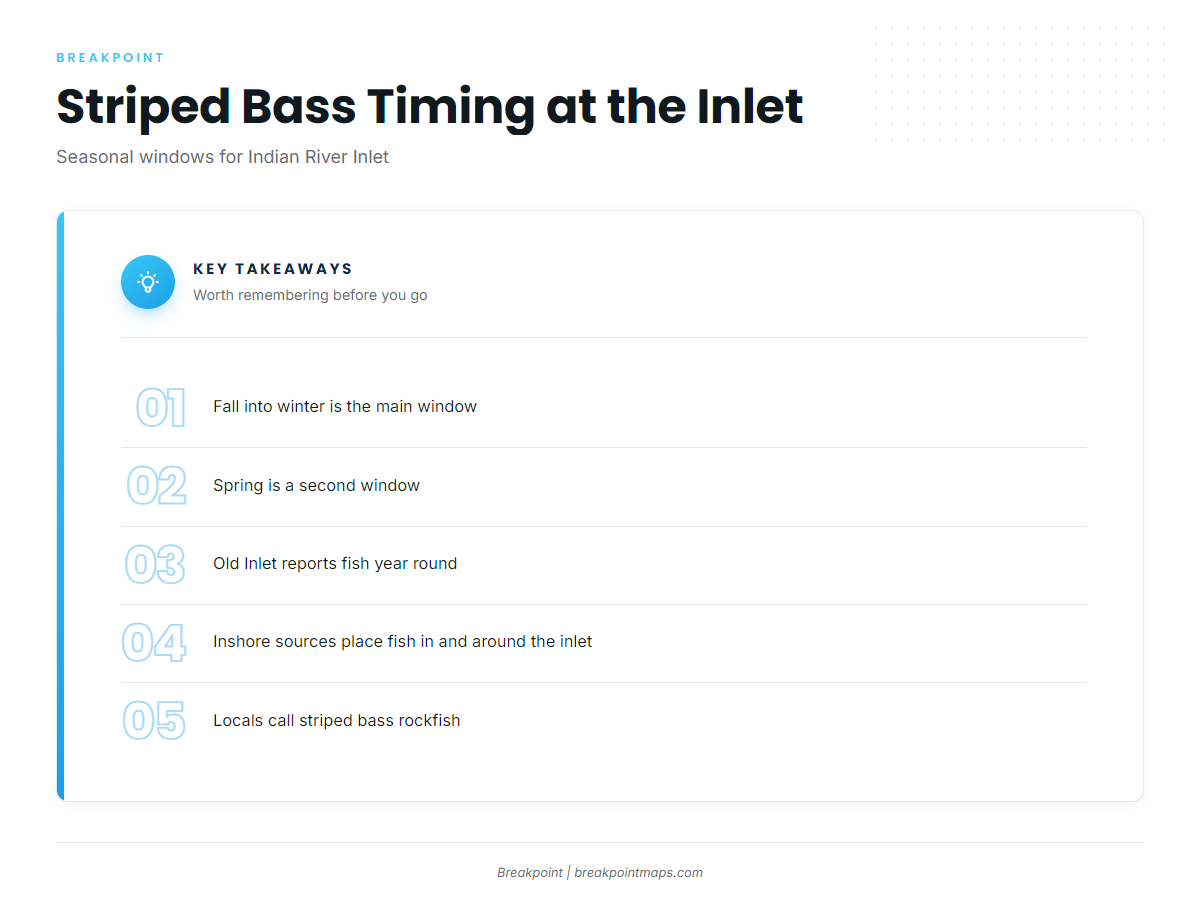
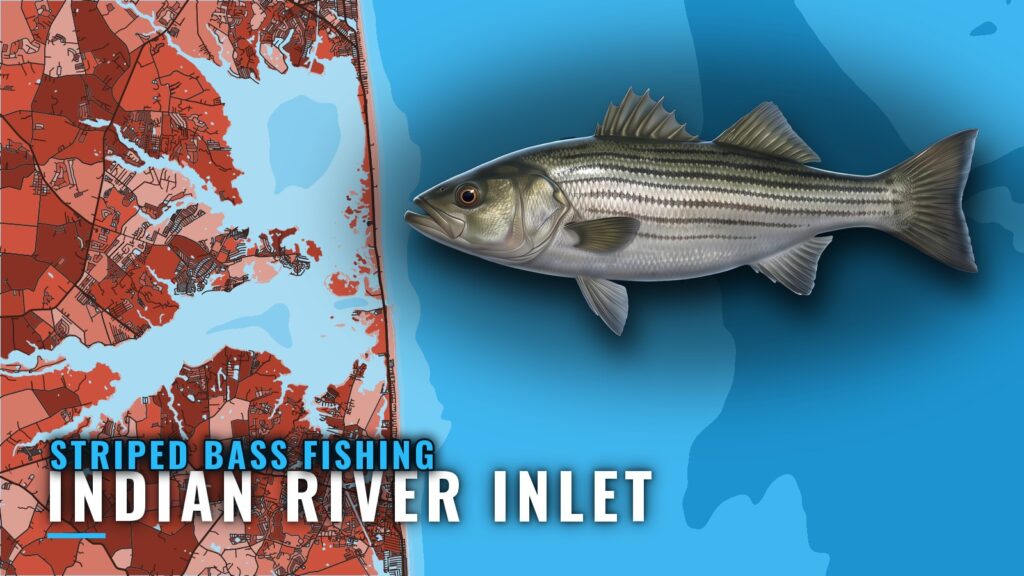
Striped bass fishing at Indian River Inlet runs from fall into winter, with a second window in spring. That is the timing the inshore sources give for fish in and around Indian River Inlet.
Old Inlet Bait & Tackle reports that stripers are found in the inlet year round. Locals call them rockfish. The inshore sources place the fish in and around the inlet itself, so the rest of this page starts there.
For biology and migration, read the striped bass guide. For the coastwide run, see the Atlantic Northeast striped bass guide (see also the Atlantic Northeast offshore fishing guide).
Where boats fish the inlet
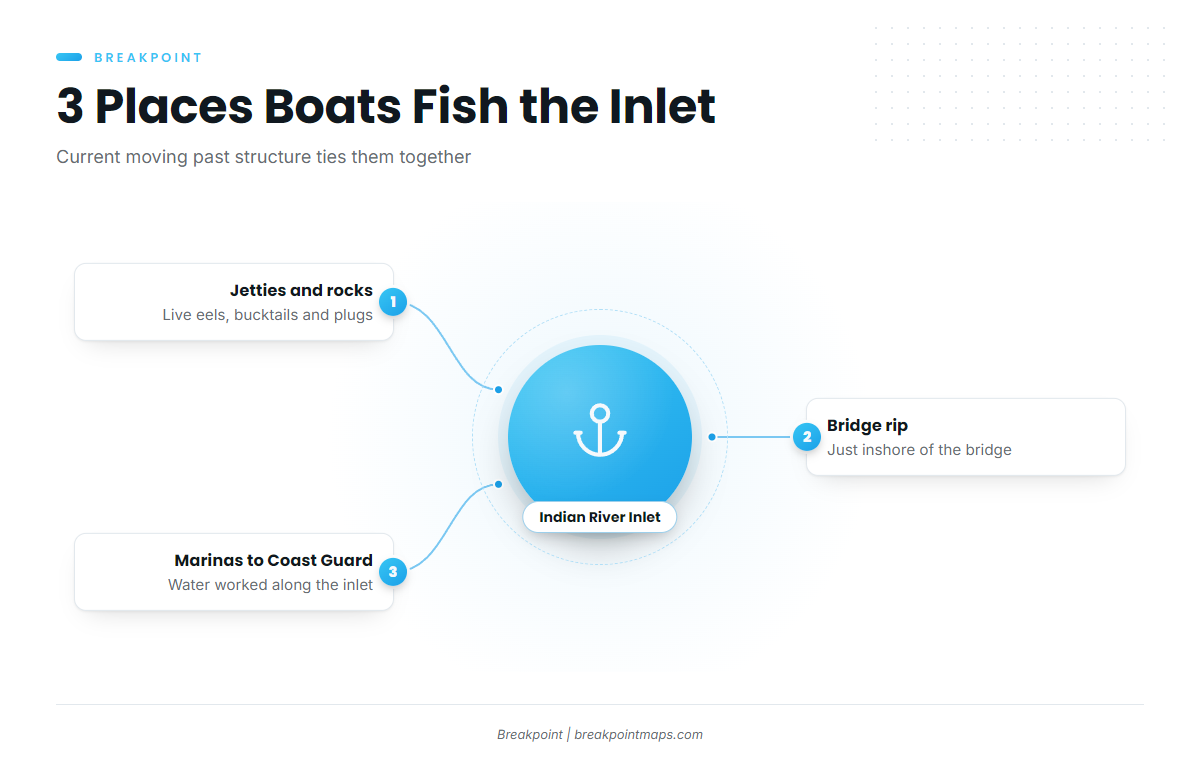
Boats work three places:
- The jetties and rocks
- The rip just inshore of the bridge, across from the Coast Guard Station
- The inlet from the marinas back to the Coast Guard Station
Current ties these spots together. Each is defined by how moving water meets structure, and the fish sit where that water gives them a place to ambush bait.
The jetties and rocks
Live eels, bucktails and plugs are fished at the jetties and rocks. Method detail follows below.
The bridge rip by the Coast Guard Station
The rip sits just inshore of the bridge, across from the Coast Guard Station. A rip is a seam where current meets changing bottom or structure. Bait gets pushed through it, and stripers wait on the edge.
Marinas to the Coast Guard Station
Boats work this stretch along its length, drifting or holding in the flow.
How the inlet is fished
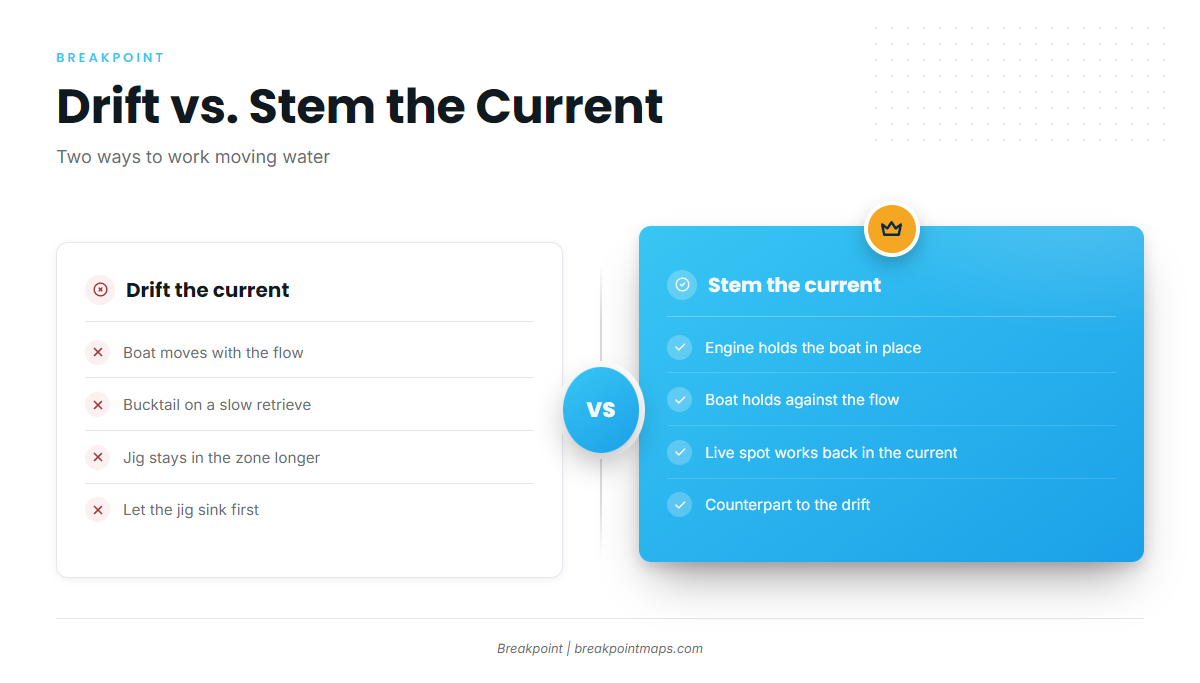
The local methods are:
- Live eels from the rocks
- Bucktails and plugs
- Drifting the incoming current with a bucktail on a slow retrieve
- Stemming the current with a live spot
Live eels from the rocks
Live eels are fished along the rocks and worked close to the structure, where fish hold out of the current.
Bucktails and plugs
Bucktails and plugs are the artificials used around the rocks. The bucktail is a jig that gets down in moving water, while the plug is worked higher in the column.
Drifting the incoming current
Boats drift with the incoming current while working a bucktail on a slow retrieve. Moving with the flow keeps the jig in the zone longer. Let the jig sink, then keep the slow retrieve near bottom.
Stemming the current with live spot
A Fisherman article describes stemming the current with a live spot. Stemming means using the engine to hold the boat in place against the flow while the live spot works back in the current toward the fish. It is the counterpart to the drift: one method moves with the water, the other holds against it.
Reefs, wrecks and grounds within range
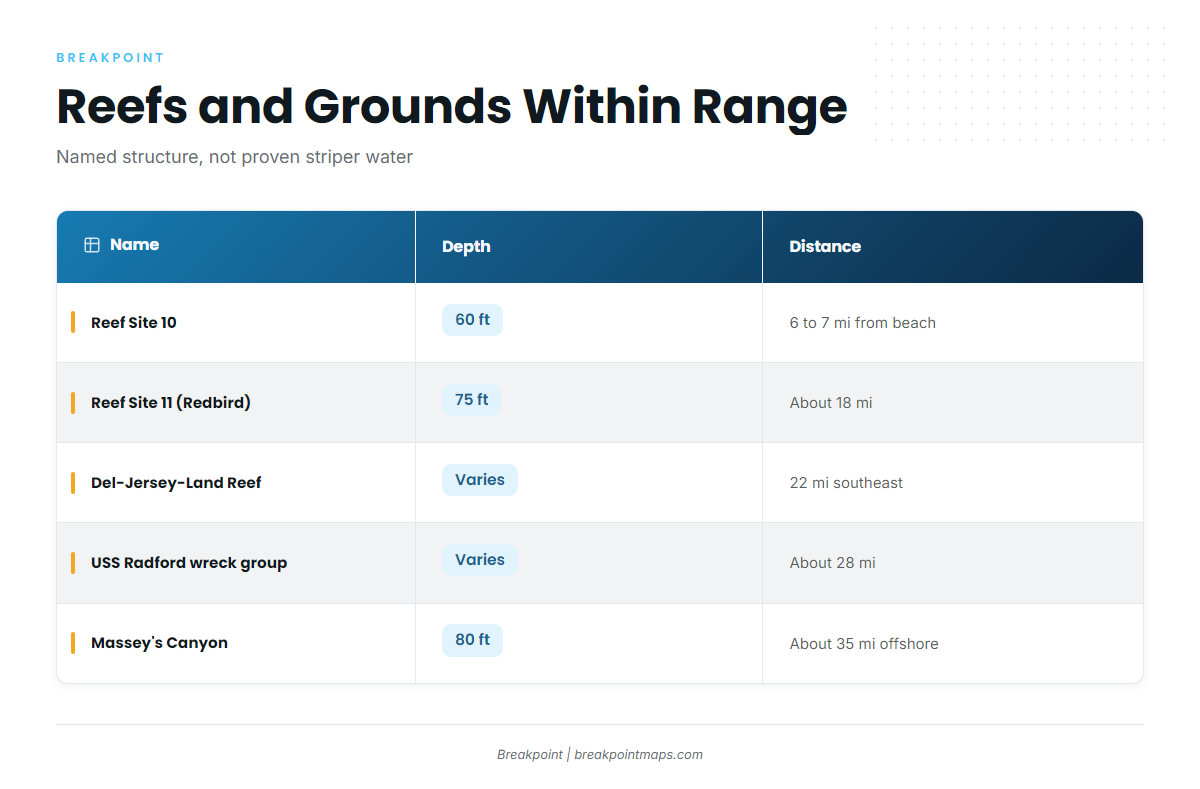
DNREC’s Delaware reef guide covers the state’s artificial reef sites. The table lists those sites and the offshore grounds within range of the inlet. The inshore sources place striped bass in and around the inlet, not on these grounds.
| Name | Depth | Distance/position (source) |
|---|---|---|
| Delaware Artificial Reef Site 9 | ||
| Delaware Artificial Reef Site 10 | 60 ft | 6 to 7 miles from the beach (FishTalk) |
| Delaware Artificial Reef Site 11 (Redbird Reef) | 75 ft | About 18 miles from the inlet (FishTalk) |
| Del-Jersey-Land Reef | 22 miles southeast of the inlet (ProPTalk) | |
| USS Arthur W. Radford wreck group | About 28 miles from the inlet (FishTalk) | |
| Old Grounds | 13 miles off the bell on a 113 heading (ProPTalk) | |
| Massey’s Canyon | 80 ft | About 35 miles offshore from the inlet (DNREC) |
| Hot Dog | Tuna and dolphin grounds (ProPTalk) |
Massey’s Canyon and Hot Dog are tuna and dolphin water. For that fishing, see the coastal and offshore gamefish guides.
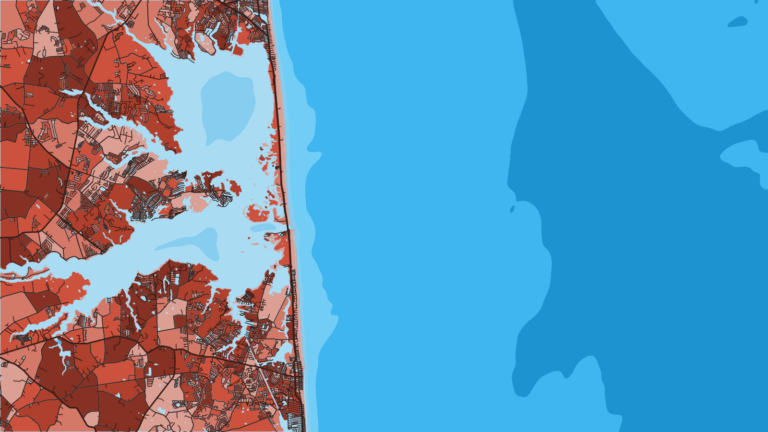
The reef sites show on Chart Contours. Chart layers are not for navigation.
Who fishes striped bass out of this port
Makai Charters lists striped bass out of this port. Capt. Lawrence Coyle runs a 28-ft Sportsman with twin 300 HP Yamaha engines.
FAQ
When are striped bass in Indian River Inlet?
Fall into winter and spring, per the inshore sources. Old Inlet Bait & Tackle reports fish in the inlet year round.
Where does striped bass fishing out of Indian River Inlet happen?
Boats work three inshore spots: the jetties and rocks, the rip inshore of the bridge across from the Coast Guard Station, and the stretch from the marinas back to the Coast Guard Station.
What baits and lures are used?
Live eels from the rocks, bucktails and plugs. Anglers also stem the current with a live spot.
What does stemming the current mean?
It means holding the boat against the flow while a live spot works back in the current. It is the counterpart to drifting the incoming current.
How far is Redbird Reef?
Site 11, Redbird Reef, sits in 75 ft about 18 miles from the inlet, per FishTalk.
Who runs striped bass charters here?
Makai Charters, with Capt. Lawrence Coyle, on a 28-ft Sportsman with twin 300 HP Yamaha engines.