



About Jupiter
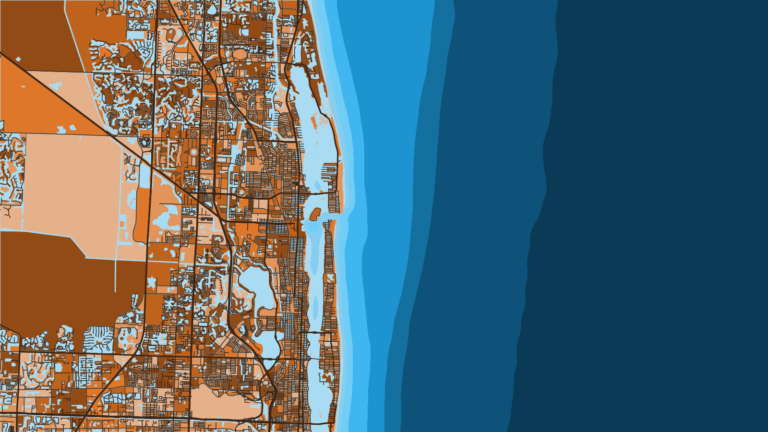
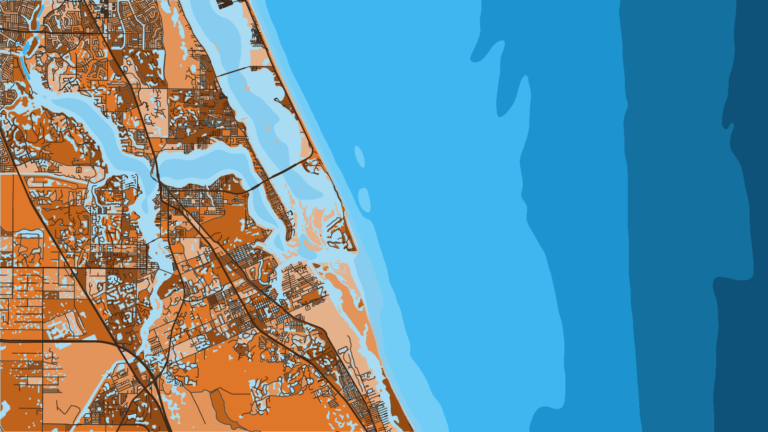
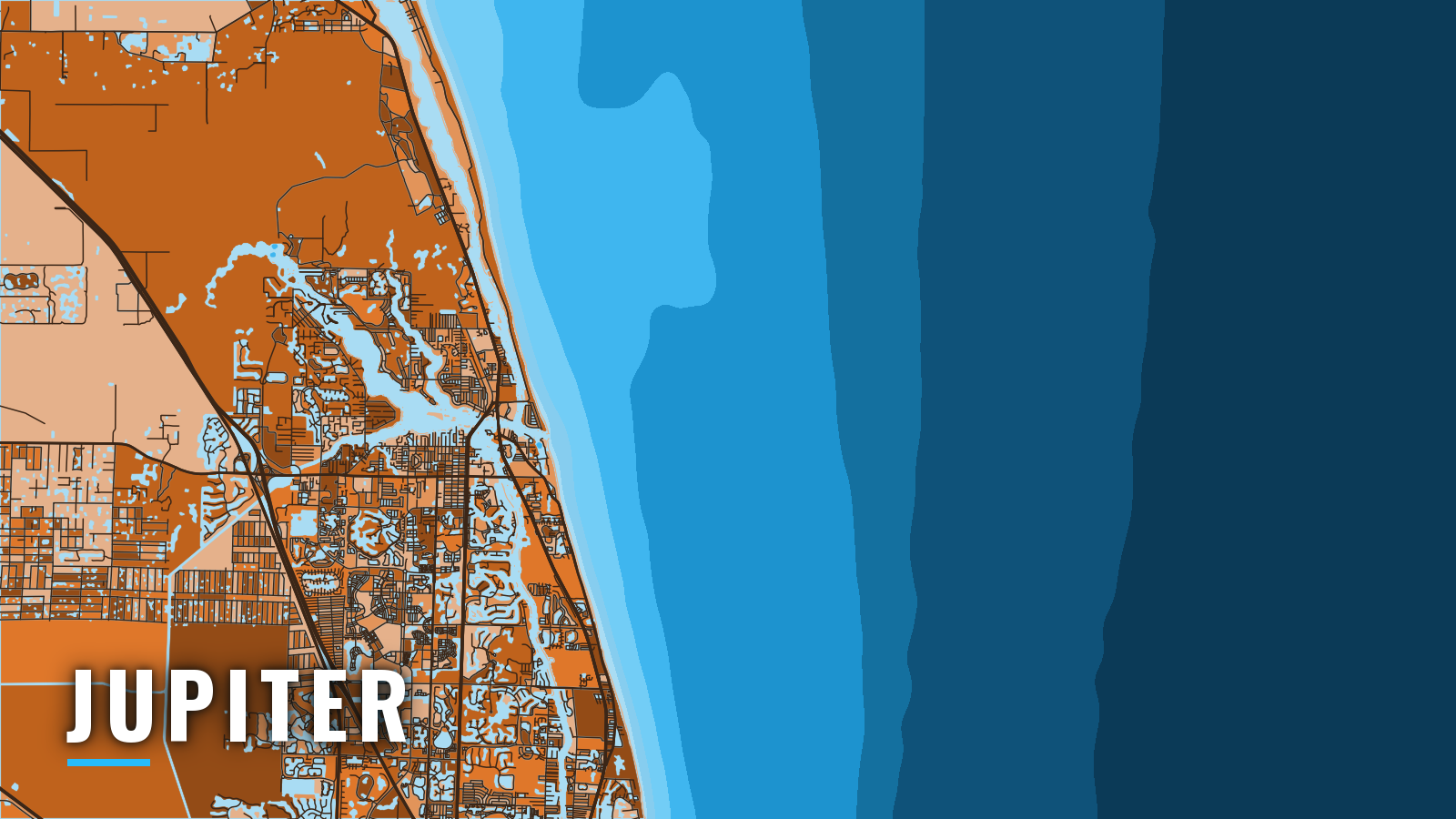
Jupiter Inlet opens to the Atlantic through a jettied cut. The Intracoastal Waterway is 0.5 mile inside the entrance, and the Gulf Stream runs close offshore. The inlet connects Jupiter Sound, the Loxahatchee River and Lake Worth Creek to the ocean. Local operators describe starting to fish within about 2 to 3 miles of the inlet, which makes Jupiter one of the shortest runs to the Stream on the coast of Florida and across the Atlantic Southeast.
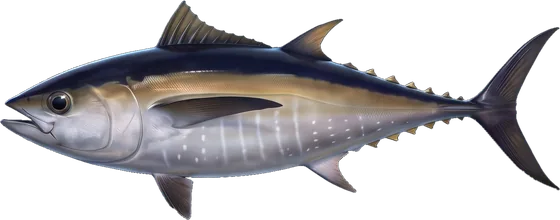
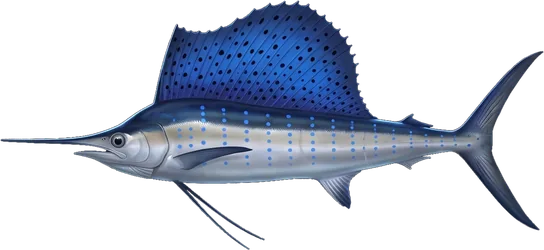
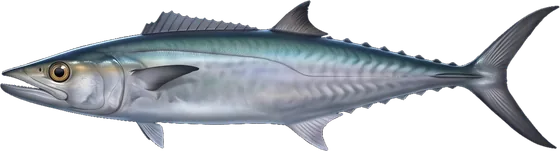
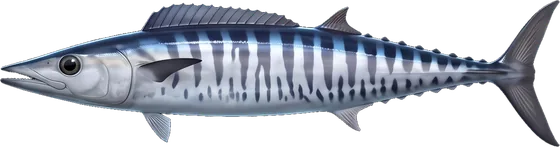
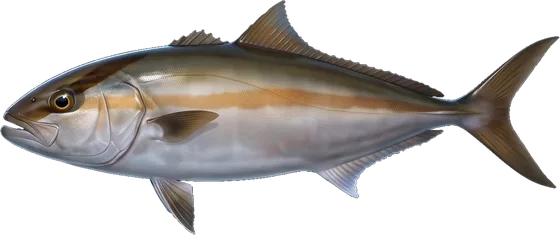
Offshore fishing runs year-round, with the species shifting by season. The usual targets are sailfish, wahoo, kingfish (king mackerel) and blackfin tuna. The sections below cover where to launch, how the bar tends to behave, the fallback inlet, and what each season brings.
Access and navigation
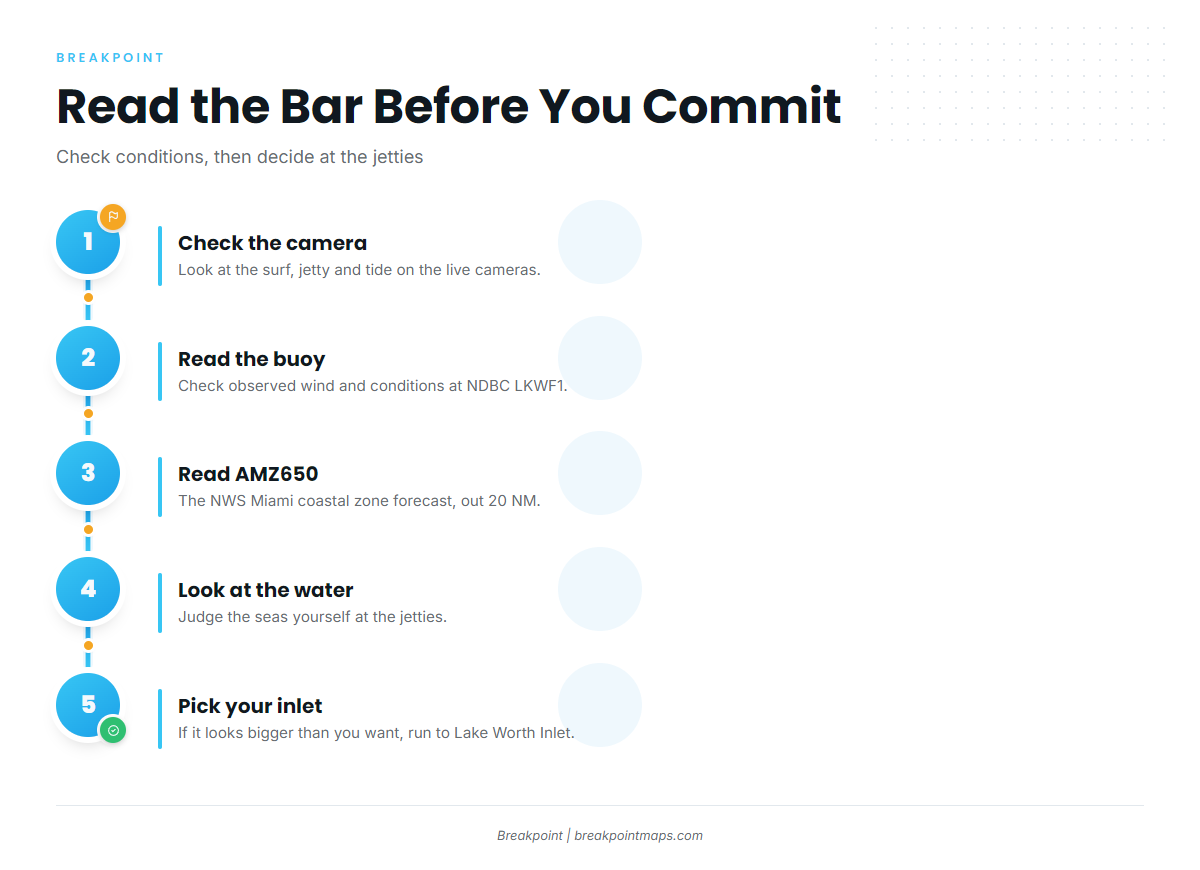
This section lists where to launch, which sources to check before committing to the inlet, and how the entrance and approaches tend to behave.
Ramps
- Burt Reynolds Park – Palm Beach County ramps, Jupiter
- Waterway Park – Palm Beach County ramps, Jupiter
- Bert Winters Park – county ramp, Juno Beach
- Juno Park – county ramp, Juno Beach
Marinas
- Jupiter Inlet Marinaat U-Tiki Beach, fuel listed
- Castaways Marinaat Square Grouper, fuel listed
- Jupiter Pointe Club & Marinafuel and boat storage listed
Reading conditions
- NWS Miami marine forecast AMZ650the NWS Miami coastal zone, Jupiter Inlet to Deerfield Beach, out 20 NM
- NDBC LKWF1 Lake Worth Pierobserved wind and conditions to the south
- Jupiter Inlet live camerassurf, jetty and tide chart. Private camera, not a navigation aid.
- U.S. Coast Pilot 4Chapter 10, inlet and approach notes
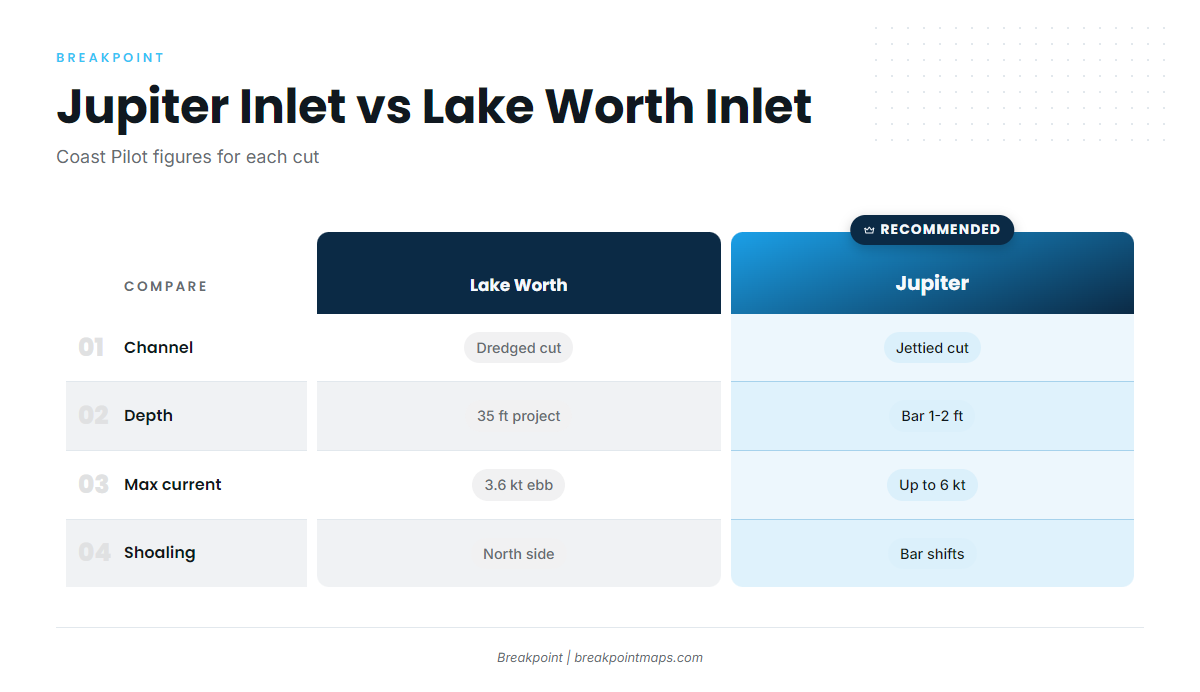
The Coast Pilot reports a shallow sandbar running south and east from the north jetty across the whole inlet, usually 1 to 2 feet under the surface. The openings through it shift with the weather and can be very shallow. A sandbar at the junction with the Intracoastal Waterway is reported to build up continuously.
Tidal currents in the inlet are reported to reach 6 knots, with eddies and turbulence near the south jetty. Breaking, confused seas frequently sit over the bars off the jetty mouth. Conditions are reported to be worst on an ebb tide with easterly winds, and in the winter months. Outgoing water running against an onshore wind can stand the seas up over a shallow bar, so the ebb often matters more than the wind number alone.
Because the openings shift with the weather, the chart and last month’s track may not match the water. Check the camera, the buoy and the forecast, then look at the bar yourself from the jetties before committing.
Nor’easters can bring gale to storm force winds, especially north of Jupiter Inlet, from October through March. Waves above 6 feet are reported 8 to 15 percent of the time along this coast in that window.
The alternative approach. Lake Worth Inlet (Palm Beach Inlet) lies 11 miles south of Jupiter Inlet Light and can be reached by the Intracoastal Waterway or along the coast. It is a dredged cut between two jetties, with a federal project depth of 35 feet in the entrance channel. Reported currents are 2.4 knots on the flood and 3.6 knots on the ebb. The north side of the channel tends to shoal along the north jetty.
On arrival at Jupiter Inlet, look at the water and read AMZ650. If the seas look bigger than you want, run to Lake Worth Inlet instead.
A Florida saltwater fishing license is required to fish, including catch and release. Anglers 16 and older harvesting snapper or grouper from a private vessel also need the free State Reef Fish Angler designation. Check the FWC recreational saltwater regulations and the Florida rules before fishing.
Fishing conditions
The Andrew "Red" Harris No Shoes Reef, at 55 feet, is a reachable first ground, with Jupiter Inlet Step Reef nearby. The main offshore ground is the Gulf Stream edge, which sits close to the beach and moves. OBS SST and Chlorophyll show where it sits on a given day. Chart layers are not for navigation.
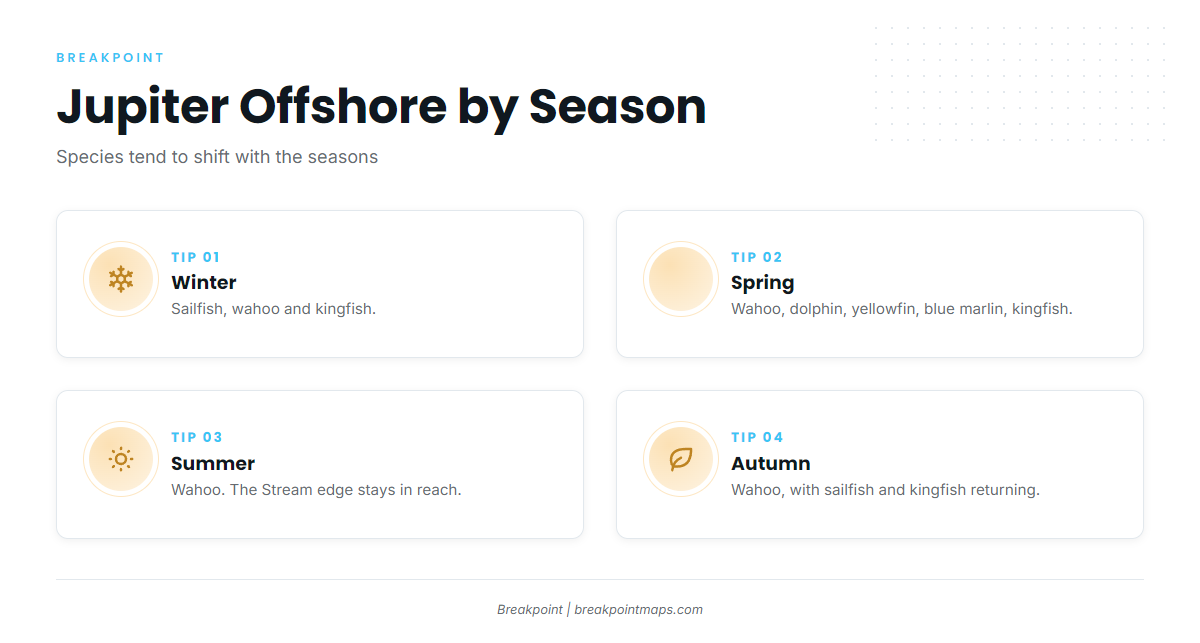
Winter
Sailfish, wahoo and kingfish are the winter targets. The winter sailfish run is when kite fishing is most useful, and the sailfish on the Atlantic Southeast guide covers the run in detail. Weather windows tend to be tighter from October through March.
Spring
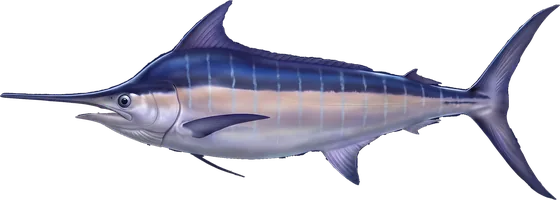
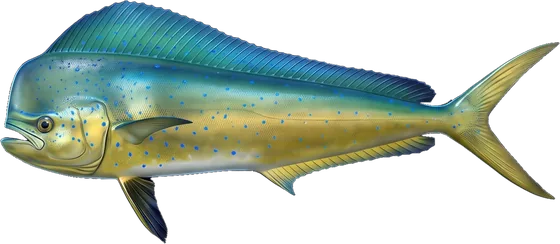
Wahoo, dolphin (mahi-mahi), yellowfin tuna, blue marlin and kingfish all show in spring, the widest mix of the year. Dolphin tend to be the main draw for skippers running their own boats.
Summer
Wahoo is the summer species. The Stream stays close, so the edge remains in reach. The wahoo off the Atlantic Southeast guide covers the pattern.
Autumn
Wahoo carry autumn, with sailfish and kingfish returning. The kingfish on the Atlantic Southeast guide covers their return to the beach.