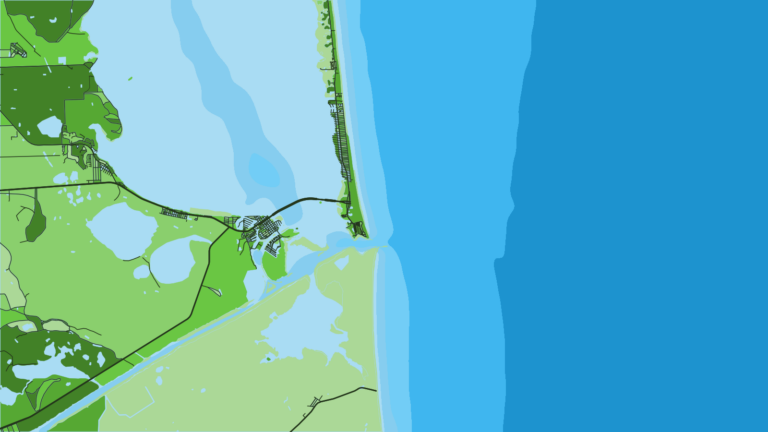



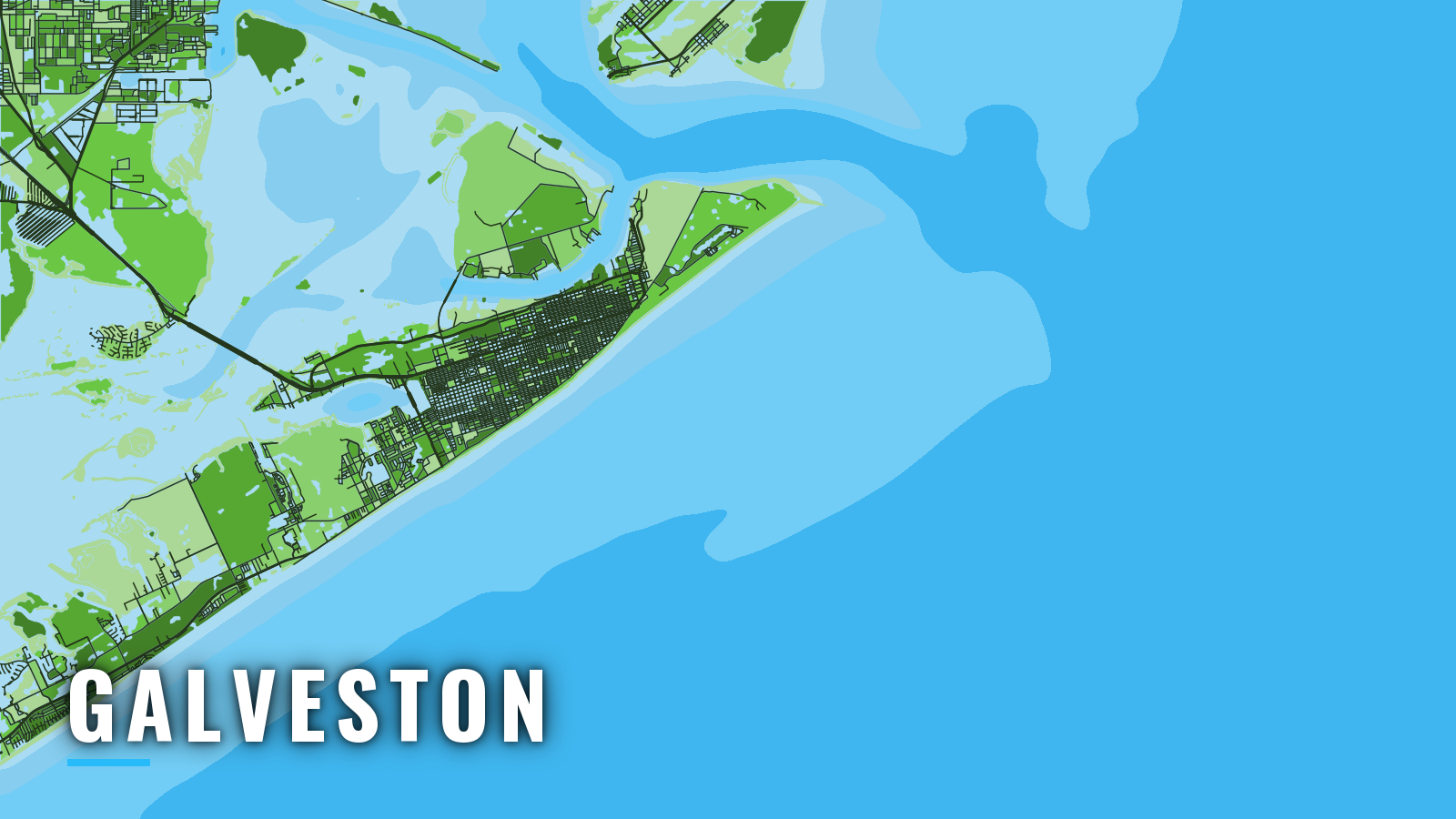

About Galveston
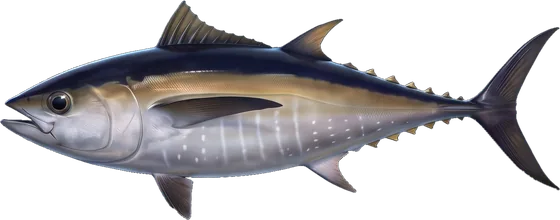
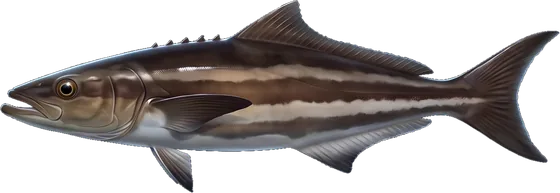
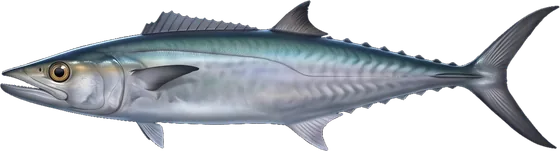
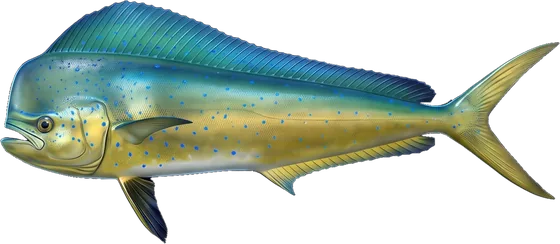
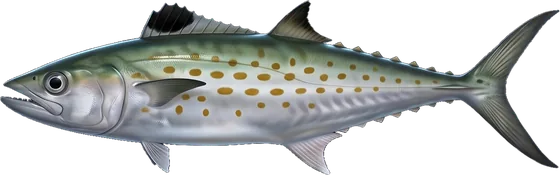
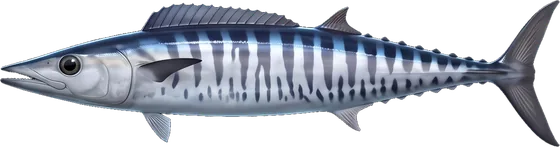
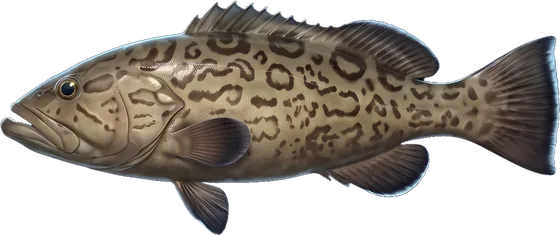
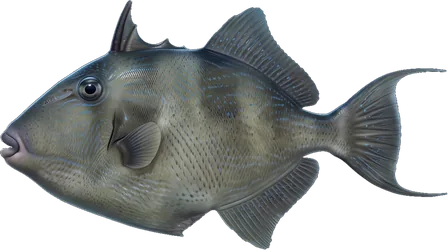
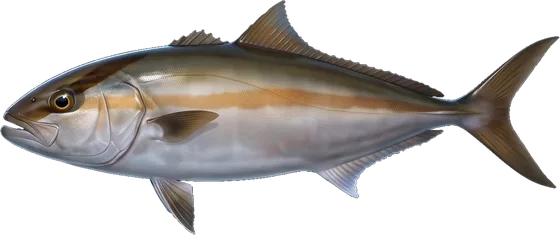
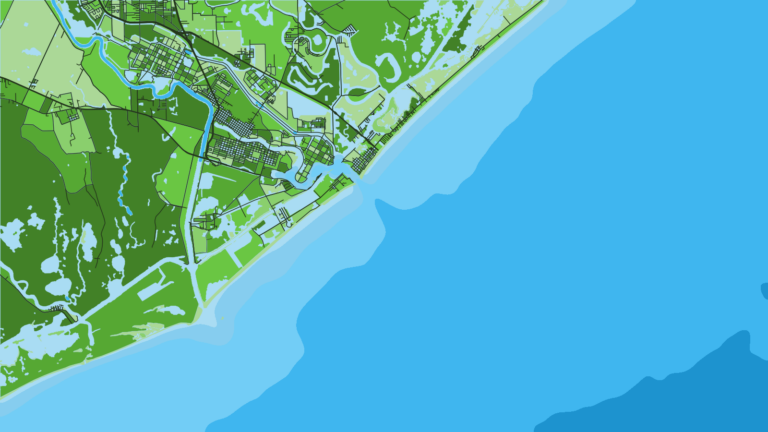
Galveston sits at the east end of Galveston Island, where two stone jetties lead offshore from the Gulf of Mexico into Bolivar Roads and Galveston Channel. The port fishes year-round. The main offshore push runs from spring through autumn, and in winter wahoo draw boats past the nearshore water. Anglers target red snapper, king mackerel, cobia, amberjack, mahi, tuna and wahoo.
Texas rules, licensing and the 9-nautical-mile state/federal line are on our Texas page. TPWD requires a Texas fishing license with a saltwater endorsement, so check the TPWD license and endorsement rules before fishing.
Access and navigation
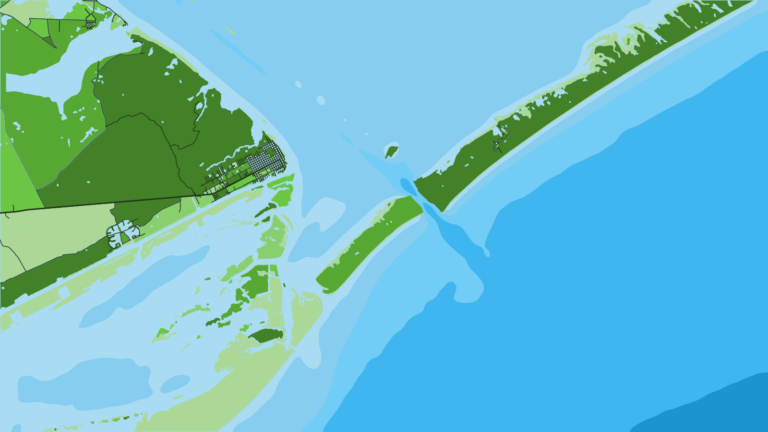
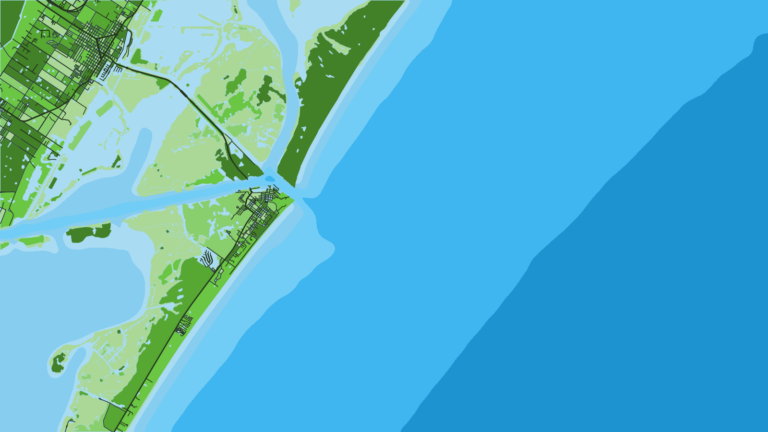
Most offshore runs from Galveston start on Galveston Channel and leave through the jettied Galveston Bay Entrance.
- Galveston Yacht Marina – public launch, slips and fuel on Galveston Channel
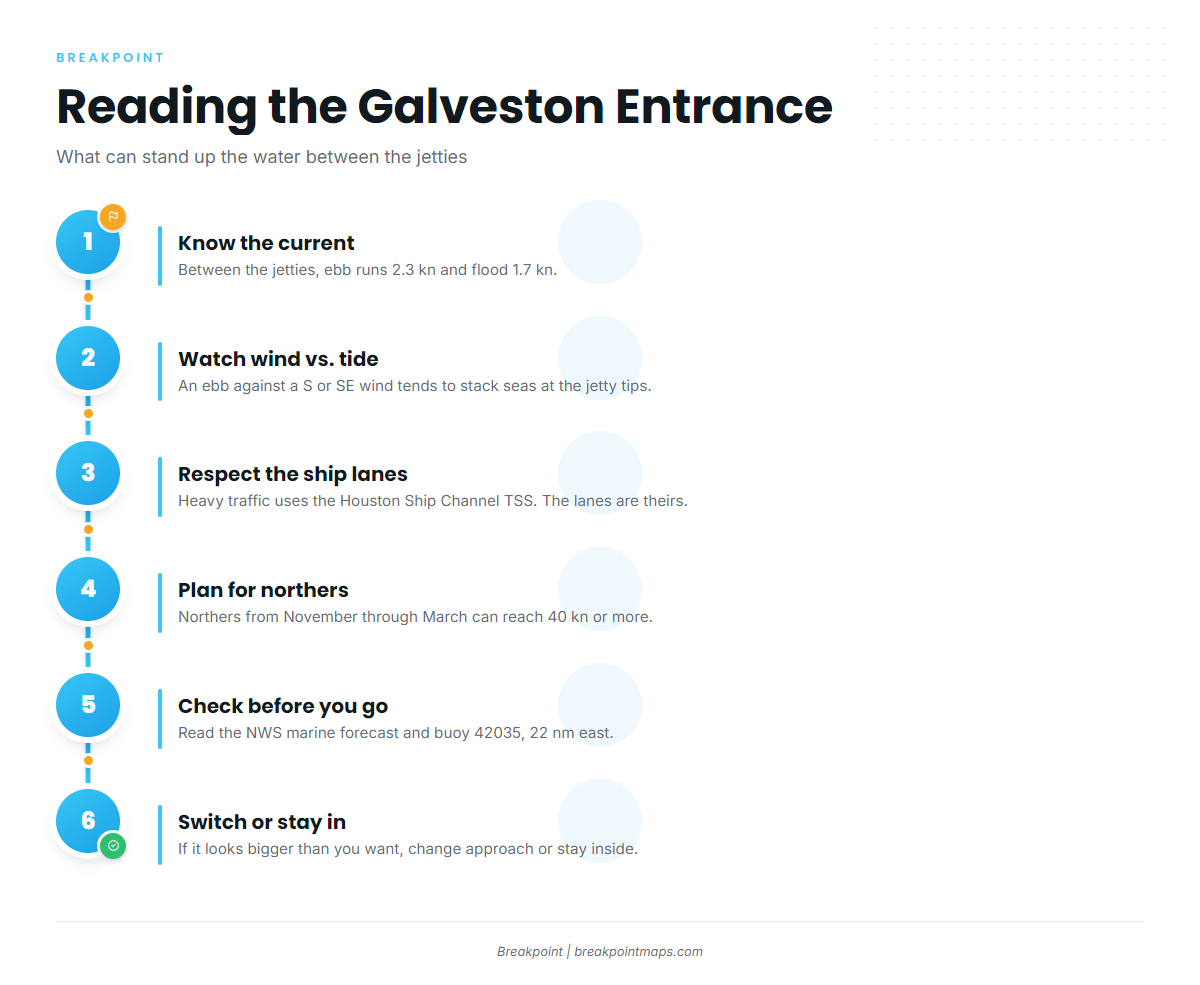
Between the jetties, the ebb runs about 2.3 kn at strength and the flood about 1.7 kn. Outside the jetties, current often exceeds 1 kn and can set in any direction. When an ebb runs against a south or southeast wind, the entrance can stand up, because that combination stacks the seas at the jetty tips. E/SE winds can hold a flood for a day or more, and W/NW winds can hold the ebb for a similar period, so after a wind shift the current may run longer than the tide table suggests. These figures come from the NOAA Coast Pilot 5 chapter.
The approach is a Traffic Separation Scheme for the Houston Ship Channel, with inbound and outbound lanes, a separation zone and two precautionary areas. Traffic is heavy, and bow wakes from tankers and other large ships can throw heavy breakers in the channel from Bolivar Roads toward Morgans Point. Small boats should stay clear of the lanes.
Unmarked wrecks lie in the approaches, a spoil bank lies south of the channel just outside the jetties, and many wrecks lie in the shoal water off Bolivar Peninsula. From November through March, northers can reach 40 kn or more. They blow offshore, but strong, gusty onshore winds often come first and build heavy seas, so you might leave with a following sea and return into the norther. Waves of 12 ft or more occur 1 to 2% of the time in that period. A norther can also lower Galveston Bay by as much as 3 ft, which can matter at shallow ramps and berths.
San Luis Pass is an unmarked pass into West Bay, 27 miles SW of the entrance. It is often shallow and changeable, and it suits only boaters who know it.
Before leaving, look at the water and check the Houston/Galveston marine forecast and buoy 42035 observations. Buoy 42035 sits 22 nm east of Galveston, so it may not reflect conditions at the jetty tips. If the water looks bigger than you want, switch approaches or stay inside.
Fishing conditions
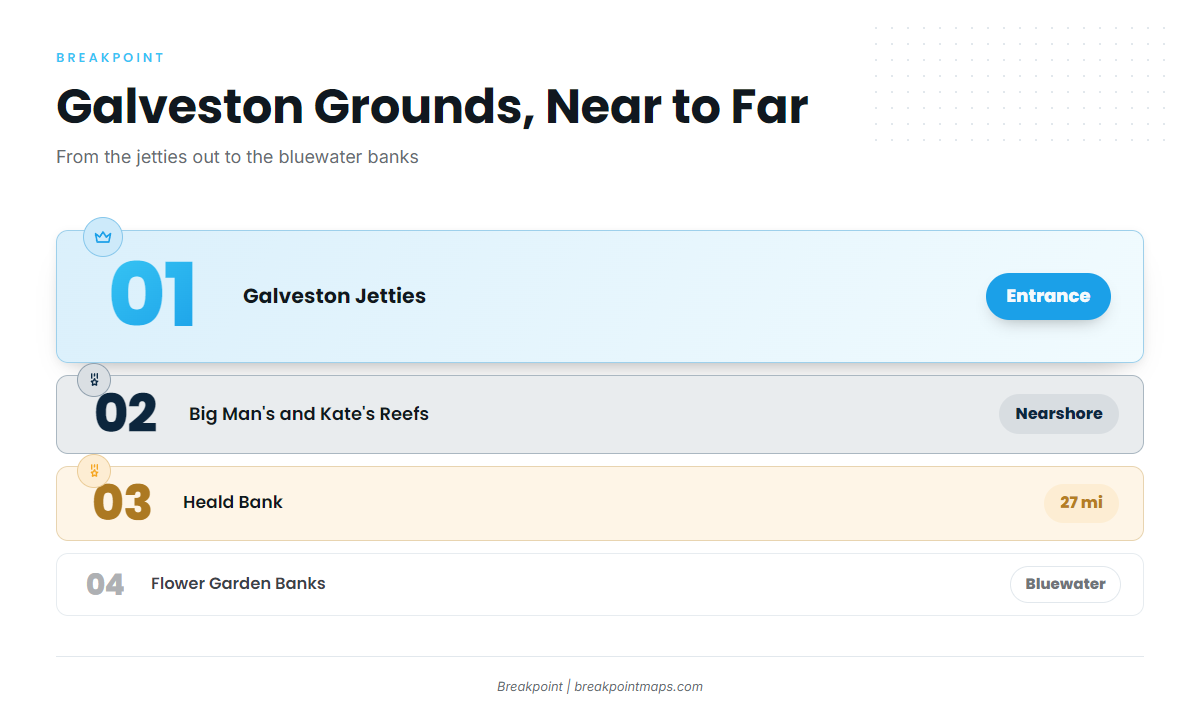
Offshore from Galveston, the grounds run from the jetties and nearshore reefs out to Heald Bank and the Flower Garden Banks. The water holds red snapper, king mackerel, cobia, amberjack, mahi, tuna and wahoo through the year, with the mix shifting by season.
- Galveston Jetties: Structure right at the entrance. The inshore species that work it are sheepshead, black drum and redfish.
- Big Man’s Nearshore Reef and Kate’s Nearshore Reef: Part of the CCA nearshore reefing sites on the upper Texas coast, within reach of trailerable boats.
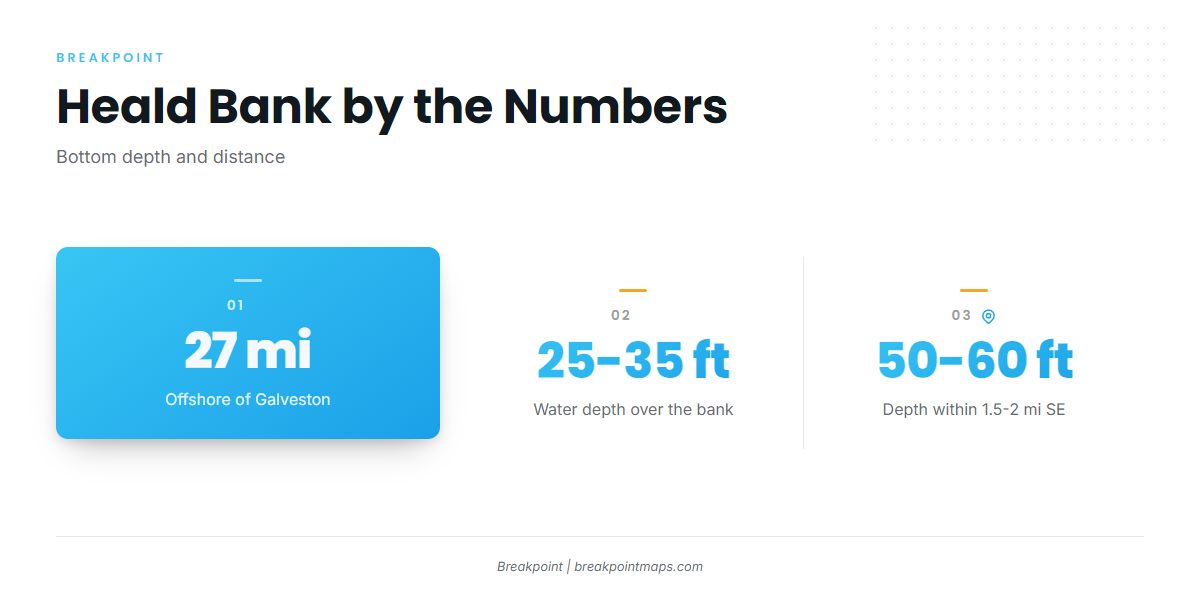
- Heald Bank: About 27 miles offshore, with 25 to 35 ft over it and 50 to 60 ft within 1.5 to 2 miles to the SE. Anglers look for structure fish along its edges.
- Flower Garden Banks National Marine Sanctuary: The long-range bluewater ground. It is a protected area with its own rules, so check them before fishing.
In Breakpoint, the OBS SST and Chlorophyll layers show where temperature and color edges sit, and Chart Contours shows the bottom around Heald Bank and the reefs. Chart layers are not for navigation.
Winter
In winter, wahoo are the main offshore target off Galveston. Northers tend to set the schedule, and weather windows are often the limiting factor, so use the pre-departure check above. Sheepshead and black drum hold at the jetties.
Spring
Spring tends to bring kingfish, cobia and amberjack onto the nearshore reefs and structure. Anglers look for cobia around that structure. Wahoo can still show offshore. Redfish and speckled trout work the jetties.
Summer
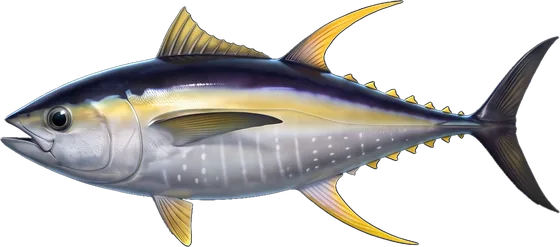
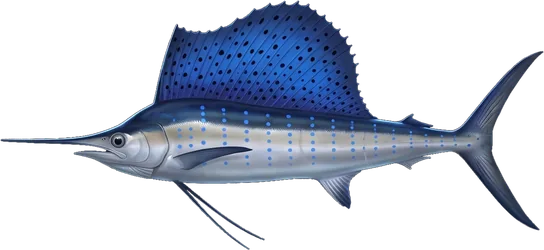
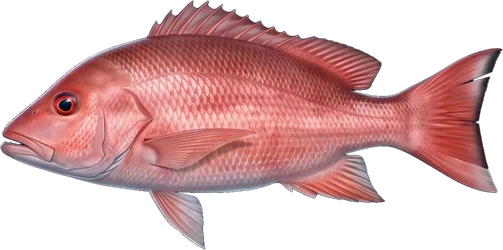
Summer is when red snapper, tuna and mahi draw the most boats offshore. TPWD and NOAA Fisheries set red snapper seasons, and the seasons change, so check them before you go. Mahi tend to hold in bluewater and around floating debris. Yellowfin tuna might show on the deeper offshore water. Amberjack stay on structure. Toward the Flower Garden Banks, bluewater sailfish can turn up.
Autumn
In autumn, kingfish tend to return to the nearshore structure off Galveston, and mahi and wahoo can still show offshore. Redfish and black drum work the jetties.