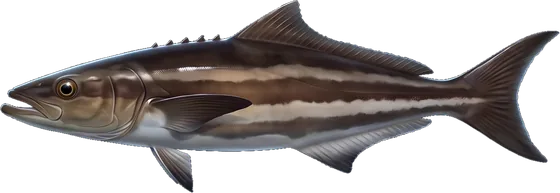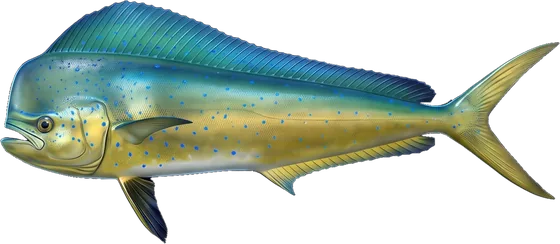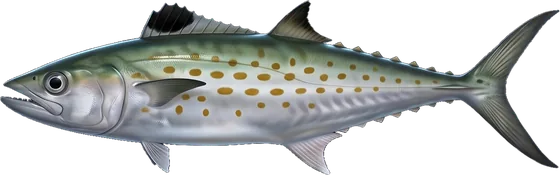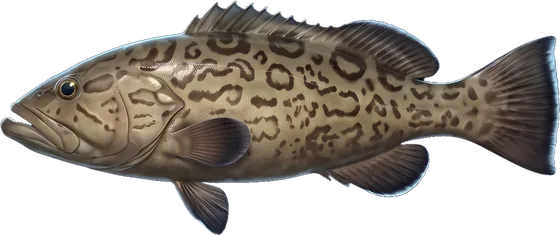




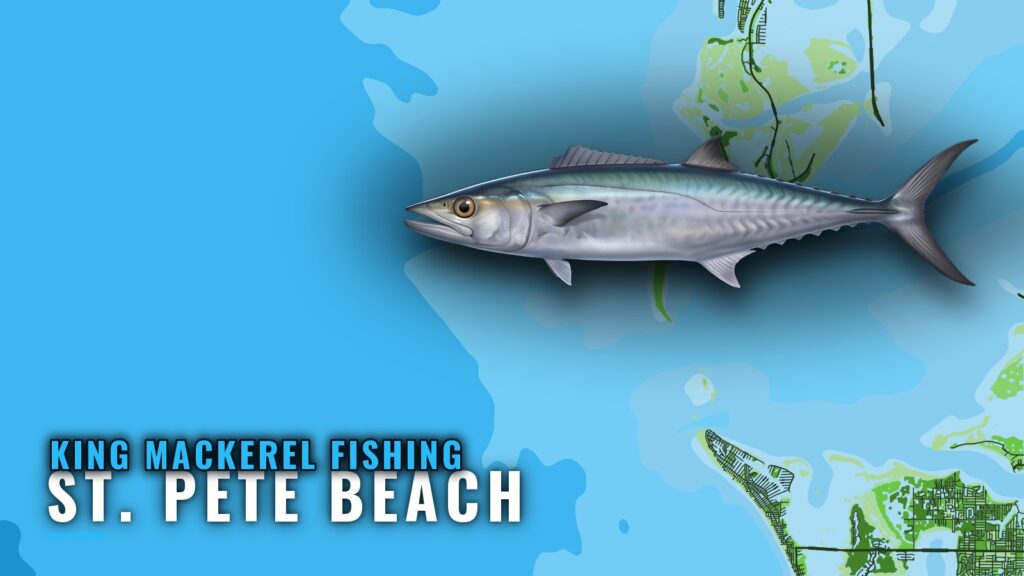
King mackerel fishing out of St. Pete Beach runs to Gulf reefs, wrecks and current edges off Pinellas County, reached through Pass-a-Grille Channel. The port has named reefs, a charter that runs kingfish trips, and a fall tournament hosted in a neighboring town. For the port itself, start with the St. Pete Beach port page. The species overview is in the king mackerel fishing guide. For the wider coast, see the king mackerel fishing in the Gulf of Mexico and the wider Gulf of Mexico guide.
When king mackerel are around St. Pete Beach
Spring and fall bring the strongest king mackerel migrations here, though no months are given for the port itself. Kings arrive offshore as the Gulf warms in spring and move through again in fall as the water cools. The fall king tournament is held in November, which puts the late-fall window on the calendar.
Where boats run
Boats leave through Pass-a-Grille Channel, which links Boca Ciega Bay to the Gulf at the south end of Long Key. Egmont Channel gives deeper water past Egmont Key, and it is the channel large ships use. North Channel is a dredged cut over the bar, but its controlling depth is about 3 feet to the Intracoastal channel, so a boat drawing more than a couple of feet might find it tight at low water. Bunces Pass is unmarked, and local knowledge is needed there.
An ebb running out of the bay against a fresh west or southwest wind might stack up steeper seas over the bar, so timing a return for the flood may help. Cold fronts bring winds above 20 knots and waves of 10 feet or more behind them, and sea fog is most common from December into early March. Check conditions yourself, and read the zone forecast before heading out.
Grounds and structure
The named grounds are St. Pete Beach Reef, King’s Reef, Egmont Key Reef and South County Reef. St. Pete Beach Reef is about 25 feet deep, with M60 tanks and concrete culverts in it, and a county reef guide puts it roughly 5 nautical miles from the Pass-a-Grille entrance marker. King’s Reef lies in the south Gulf, parallel to Tierra Verde and Fort De Soto Park, with no distance from the beach stated. Egmont Key Reef, listed at about 19 to 24 feet, is built from concrete bridge pilings and slabs, and no distance is given. South County Reef is about 50 feet deep and roughly 11 nautical miles out. None of these is individually documented as a king ground, so treat them as named starting points rather than confirmed spots.
How king mackerel are fished out of St. Pete Beach
Slow trolling live sardines, threadfin herring or blue runners is the core method, with the bait swimming naturally behind the boat over the reefs and edges. Kings cut ordinary leader, so the rig carries a wire stinger. Plugs, spoons and planers cover more water when you are searching. Drifting near reefs, wrecks and current edges with a bait fished loose is the other approach when the bait is holding.
Who fishes it
Reel Coquina Fishing Charters runs kingfish trips and works from St. Petersburg rather than the beach itself. The Fall King of the Beach Kingfish Tournament, run by Old Salts, is held in November in Madeira Beach, a neighboring town, and it lists king and Spanish mackerel as target species.
FAQ
Is St. Pete Beach a good king mackerel port?
Yes, with limits. The port has named reefs, a charter that runs kingfish trips, and a fall tournament. The season is a general Gulf statement, and none of the named reefs is confirmed as a king ground.
When do kings show up here?
Spring and fall bring the strongest migrations. The November tournament is the one dated event for kings.
What rig should I use?
A wire stinger is the key piece, because kings cut ordinary leader. Live sardines, threadfin herring or blue runners slow-trolled over the reefs are the standard bait.