



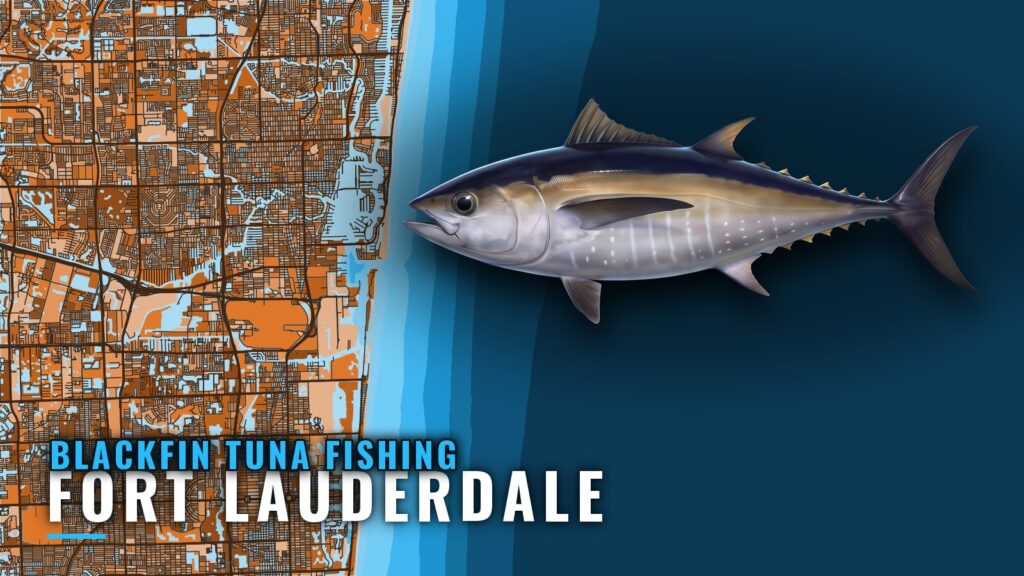
Blackfin tuna fishing out of Fort Lauderdale is thinly documented. The two older accounts put blackfin offshore and along the reefs, with no named blackfin ground and no charter tied to the species. For the port itself, start with the Fort Lauderdale port page. The species overview is in the blackfin tuna fishing guide. For the wider coast, see the blackfin tuna fishing in the Atlantic Southeast and the Atlantic Southeast offshore fishing guide.
When blackfin are around Fort Lauderdale
The documented months are February, from a charter account, and July, from a report of blackfin feeding along the reef. Neither is a full season. Regionally, along the Jupiter to Miami stretch the Gulf Stream runs close to the beach, so the run to blackfin water is short, and larger fish are commonly reported moving through in spring. Blackfin move into water above about 70°F in summer, so check the surface temperature before you run.
Where boats run
Port Everglades Inlet is a jettied deepwater entrance shared by Fort Lauderdale, Dania Beach and Hollywood, with the Intracoastal Waterway and marinas just inside it. Boats head out to the nearshore reef lines and the Gulf Stream edge. Large commercial vessels use the entrance, so monitor VHF channel 14 in port waters, and anchoring within about 0.8 mile of the entrance buoy is discouraged for small craft. Two submerged breakwaters extend almost 0.7 mile offshore on either side of the entrance and are unmarked. Current in the entrance channel runs across the narrow cut and has been reported as high as 5 knots. A Naval restricted area lies offshore to the south. Check conditions yourself, and plot the restricted limits before you leave.
Grounds and structure
No named reef or wreck is tied to blackfin in the documented accounts. The named grounds near the port are Sailfish Alley, a stretch one operator describes as one to one and a half miles offshore in 100 to 180 feet, and the 3rd Reef, where one operator says most boats have done well for general fishing. Neither is documented as a blackfin ground.
How blackfin are fished out of Fort Lauderdale
The one documented feeding pattern is blackfin working ballyhoo and sardines along the reefs, which points to bait-based approaches near reef structure. Kite fishing is a Southeast Florida method, with live baits held at the surface away from the boat. Small feathers, cedar plugs and small skirts trolled behind the boat, with bird-style teasers ahead, work when you are searching. Jigging is the fallback when fish mark deep or when chum runs short. Use light tackle with fluorocarbon leader, scale down the hooks for sharp-eyed fish, and use circle hooks on live bait.
Who fishes it
No charter is named here, because none is documented with a blackfin trip and its own website. No blackfin tournament is documented for the port.
FAQ
Is Fort Lauderdale a good blackfin port?
The evidence is thin. Two older accounts document blackfin offshore and along the reefs, but no named blackfin ground or charter is tied to the port. Expect to explore.
When are blackfin here?
February and July are the only documented months. Spring is when larger fish are commonly reported moving through the Jupiter to Miami stretch.
How do I tell blackfin from yellowfin?
Check the finlets. Blackfin finlets are dusky with no bright yellow, while yellowfin finlets are yellow. The two often school together, so check each fish before it goes in the box.
Is there a blackfin tournament here?
None is documented for the port.