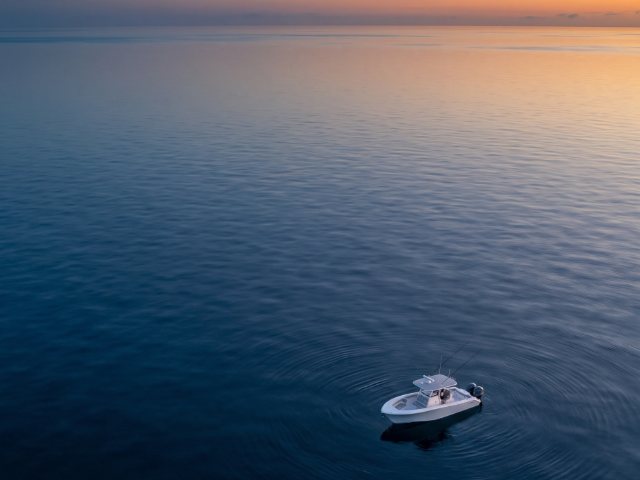
Winter
Offshore
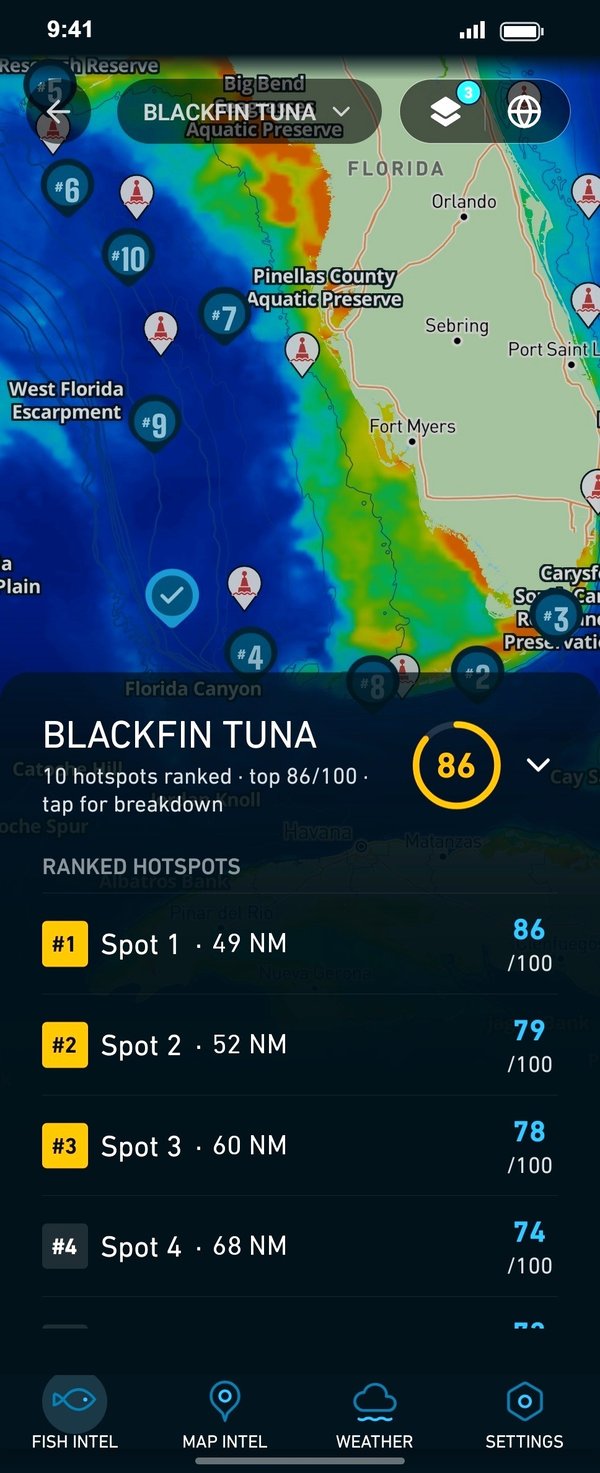
wahoo on the edge, blackfin tuna; federal shallow-water grouper closed January to April
Nearshore
black sea bass, vermilion snapper, triggerfish on reefs and live bottom




South Carolina offshore fishing runs from the North Carolina line to the Georgia line, with two sets of rules and a long run to blue water. This page covers where the structure is, what moves through each season, and which agency’s rules apply where. For other coasts, see the other states on the U.S. map.
 By Breakpoint Team
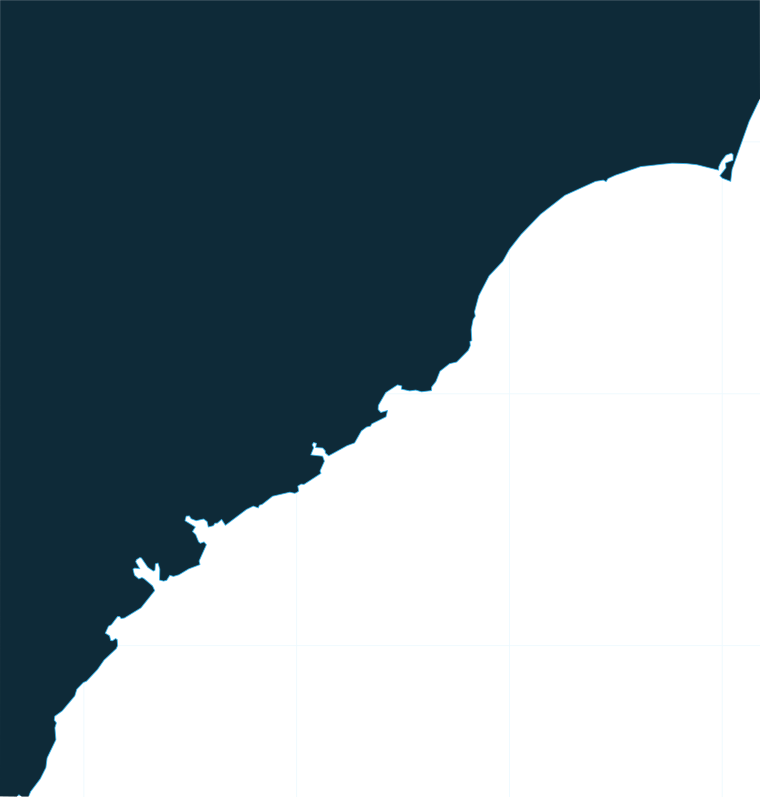
The coast
South Carolina’s shelf is wide and shallow, so the run to the Gulf Stream is long, and longer from the northern ports than from the southern ones.
The Gulf Stream edge is where blue water, temperature breaks and color changes line up. Wahoo, mahi, blackfin tuna and billfish set up there.
Between the beach and the Stream, structure does most of the work:
Bottom trips work the reefs, live bottom and ledges. Trolling trips work the edge and the color changes. A cloudy day can block an OBS SST pass, so a gap in the satellite picture means missing data rather than empty water.
Use Chart Contours to see ledges, OBS SST to find the Gulf Stream edge and Chlorophyll to spot color changes before the run. Chart layers are not for navigation.
Ports
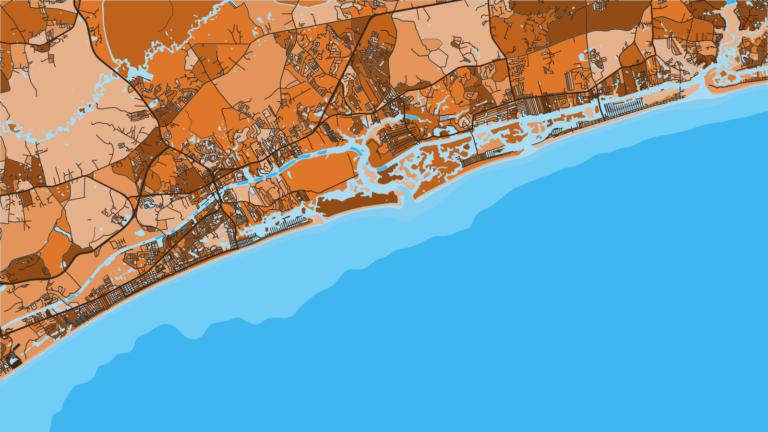
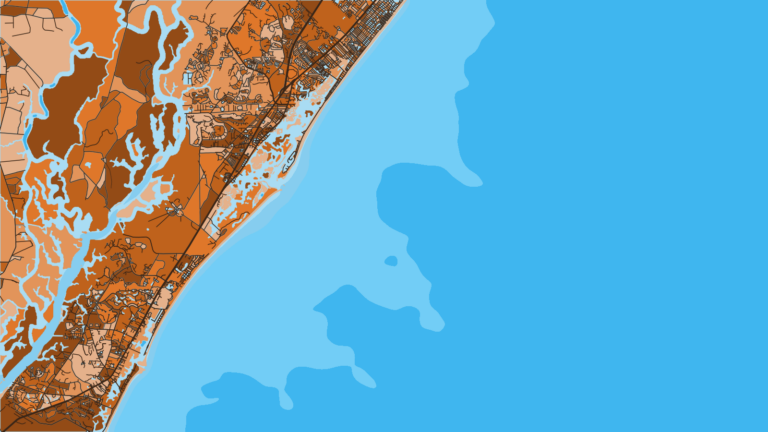
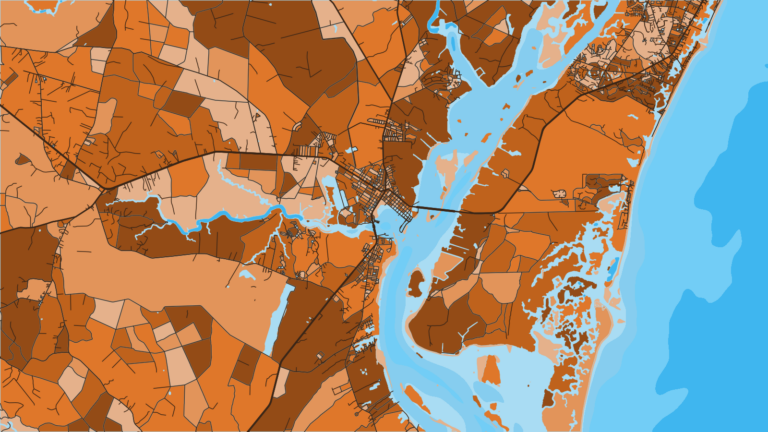
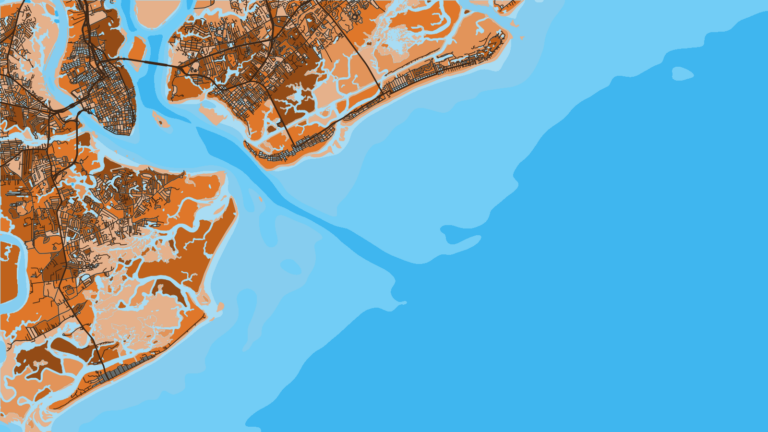
The coast breaks into five stretches, listed here north to south. Tap a number on the map, or a stretch below, to zoom in on its ports.
2 ports
Myrtle Beach is the visitor anchor for the Grand Strand, where charters and headboats work the reefs and live bottom.
1 port
Winyah Bay opens to the sea at Georgetown, which puts the shelf edge within reach of the town’s fleet.
2 ports
Charleston Harbor is the biggest offshore hub on the coast, and charters depart from Shem Creek among other docks.
1 port
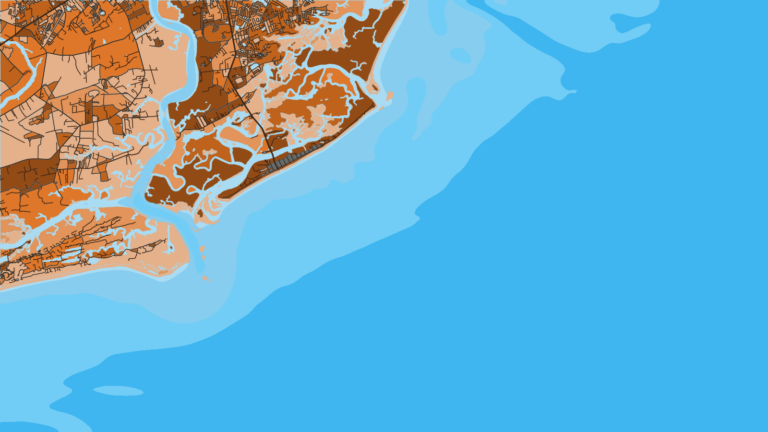
This is a quieter, lower-coast stretch backed by the ACE Basin estuary.
1 port
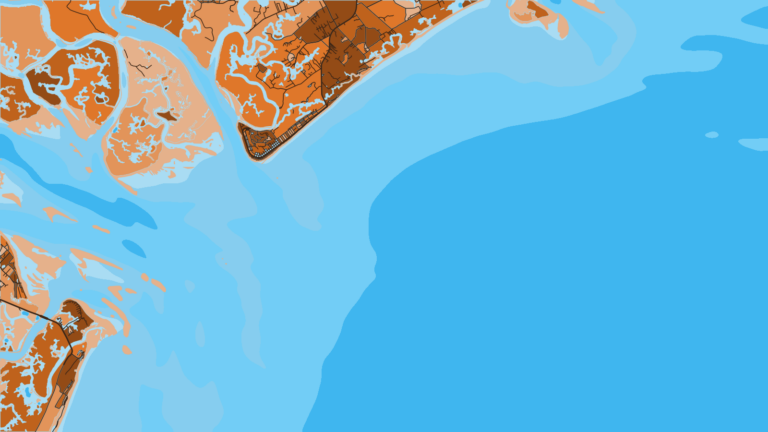
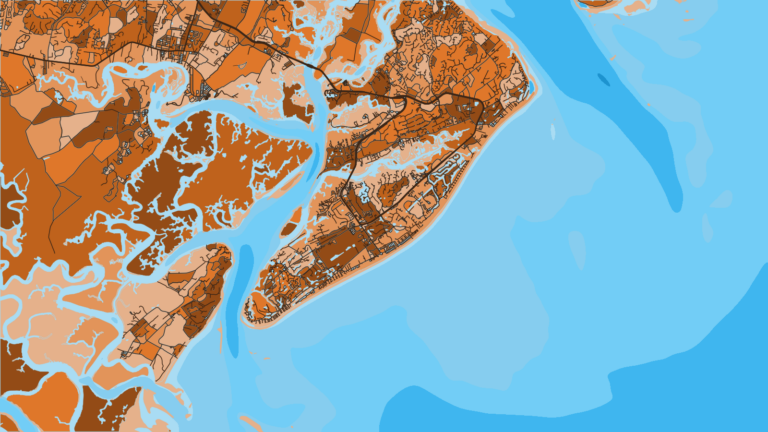
The southern stretch near the Georgia line is served by Port Royal and Beaufort as well as Hilton Head.
Seasons
What tends to be around each season. Open seasons are covered under Regulations.
Offshore
wahoo on the edge, blackfin tuna; federal shallow-water grouper closed January to April
Nearshore
black sea bass, vermilion snapper, triggerfish on reefs and live bottom
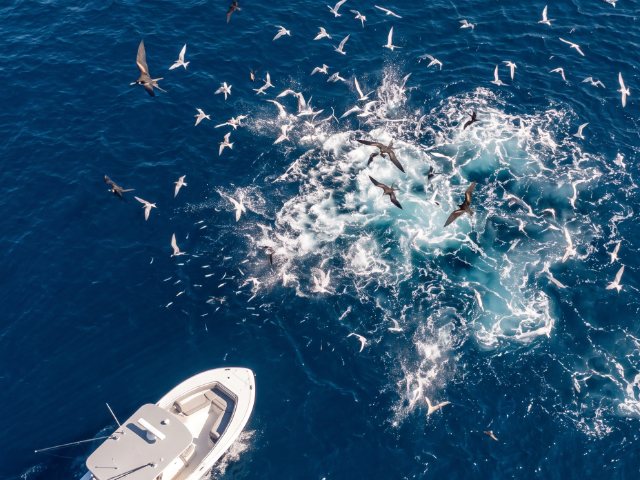
Offshore
mahi on the edge, billfish starting late; federal greater amberjack closed in April
Nearshore
cobia late in the season (state waters south of Jeremy Inlet close in May), king mackerel, Spanish mackerel
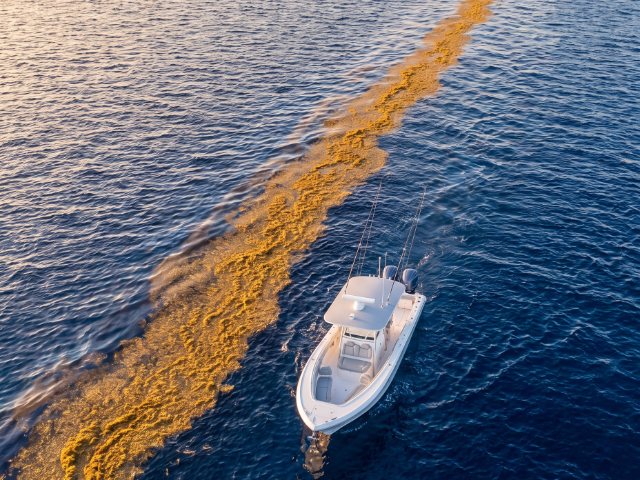
Offshore
billfish, mahi, blackfin tuna
Nearshore
king mackerel, Spanish mackerel, reef fish
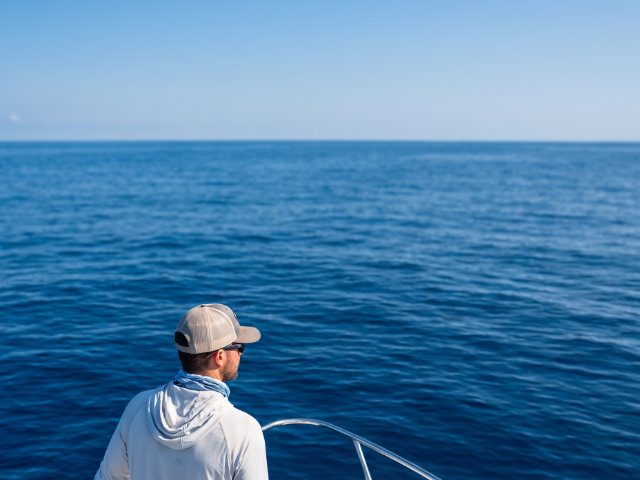
Offshore
wahoo as water cools, blackfin tuna
Nearshore
king mackerel, reef fish
The wider South Atlantic pattern explains how these runs set up along the whole coast.
Temperature breaks and color edges shift with wind and current. In Breakpoint, these three layers show those edges and the bottom structure near them.
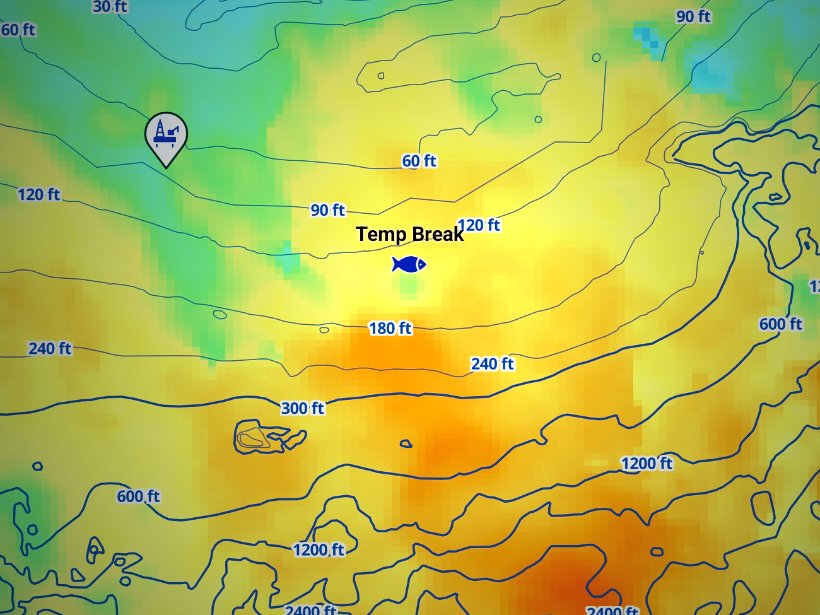
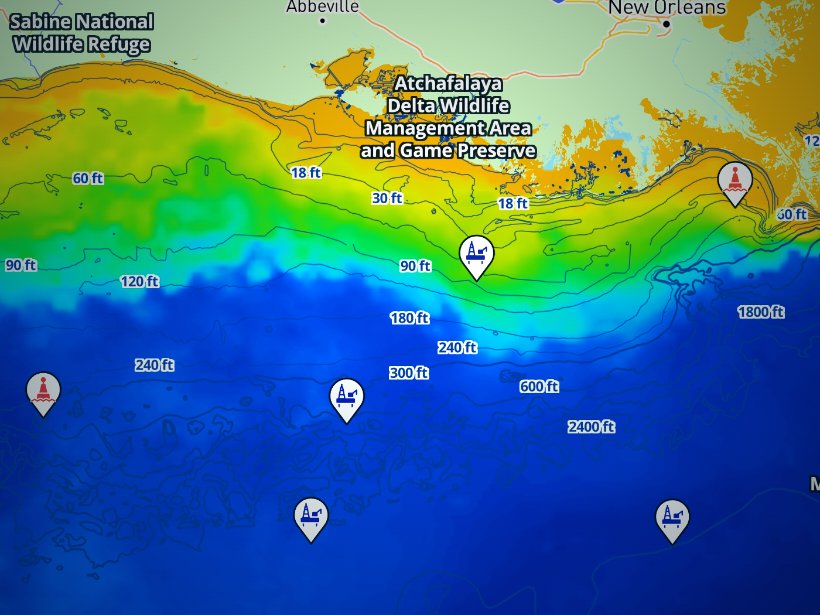
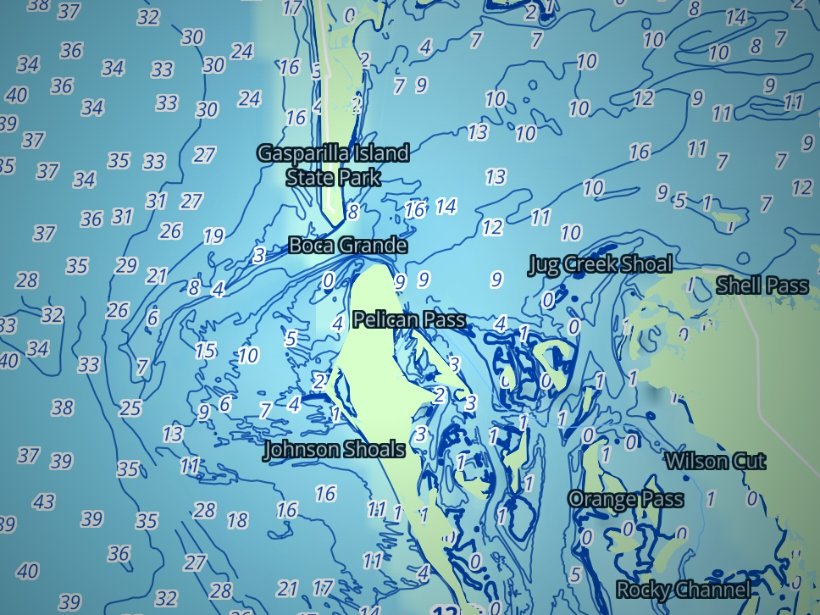
Clouds block satellite SST passes, so some days show gaps. Chart layers are not for navigation.
Charters and tournaments
Charters and headboats run from every stretch of the coast, and the Governor’s Cup is the state’s main billfish tournament series.
Headboats take bigger groups bottom fishing. Six-pack charters run nearshore, reef or Gulf Stream trips. A licensed charter or headboat covers your fishing license while you are under hire.
The SC Governor’s Cup Billfishing Series is run by SCDNR. It is a multi-leg series, with points awarded for releasing blue marlin, white marlin, spearfish and sailfish. The Edisto Invitational is one leg. The official Governor’s Cup schedule page lists host ports and dates.
Regulations
Start with the South Carolina regulations page, then read the agency’s own book before you go.
Inside 3 miles, SCDNR’s rules apply. Past 3 miles, NOAA’s do. SCDNR sets the rules in state waters, and the South Atlantic Fishery Management Council (SAFMC) and NOAA Fisheries set them in federal waters.
| Water | Range | Rules set by |
|---|---|---|
| State waters | 0 to 3 mi | SCDNR |
| Federal waters | 3 to 200 mi | SAFMC and NOAA |
Most offshore bottom fishing happens beyond 3 miles, so federal rules govern most snapper-grouper trips. One exception matters: a for-hire boat with a federal snapper-grouper permit follows federal closures even inside 3 miles. The full state rulebook is the SCDNR saltwater fishing regulations.
Anyone 16 and older who harvests marine resources needs a South Carolina saltwater recreational fishing license. You do not need one on a licensed charter or headboat while under hire, or on a licensed public fishing pier. You can buy a license through GoOutdoorsSC.
Resident fees:
Nonresident fees:
When you fish for or keep snapper-grouper species, carry:
The federal snapper-grouper gear rule has the full text. In federal waters, shallow-water grouper are closed January to April and greater amberjack is closed in April. Some closures end when a quota is reached, so check NOAA South Atlantic seasonal closures for the current dates.
The rules split three ways. State law allows harvest in state waters under its own limits. Federal waters are closed except for a short season NOAA announces each year. A federally permitted for-hire boat follows the federal rules everywhere. SCDNR also runs its own Red Snapper Project with terms set each year. Check NOAA and the SCDNR Red Snapper Project before you plan a trip, and see the South Carolina regulations page for the state-by-state breakdown.
The dividing line is 32°31.0′ N, at Jeremy Inlet on Edisto Island.
Cobia is a state game fish and cannot be sold. The published limits are in the South Carolina finfish limits table.
Some SCDNR artificial reefs are federal special management zones. There, harvest of snapper-grouper and coastal migratory pelagic species is held to the recreational bag limit, and some zones allow only handheld hook and line and spearfishing gear.
In these zones and areas, snapper-grouper gear must be stowed. Trolling for pelagic species is allowed. See the SAFMC managed areas list for the boundaries.
You need a federal Highly Migratory Species (HMS) permit to fish for tuna, billfish, swordfish and sharks in federal waters. The same permit is needed to possess these species in state waters, except sharks. NOAA’s HMS permit site handles applications. In South Carolina, billfish cannot be bought, traded or sold, no matter where they were caught.
Check SCDNR before fishing.
The South Carolina Department of Natural Resources (SCDNR), Marine Resources Division, manages state waters out to 3 miles; federal waters run from 3 to 200 miles. State law makes the federal snapper-grouper seasons, sizes and limits apply in state waters, with its own rules for black sea bass and red snapper.
The species-by-species size, bag and season rules are on the South Carolina fishing regulations page. Official source: SCDNR saltwater regulations.
FAQ
Official answers come from the state wildlife agency and NOAA Fisheries. Check them before you go.
No. A licensed charter or headboat covers you while you are under hire. On your own boat, anyone 16 and older needs the South Carolina saltwater recreational fishing license.
State waters end at 3 miles. Beyond that, the South Atlantic Fishery Management Council and NOAA Fisheries set the rules. A federally permitted for-hire boat follows federal closures inside 3 miles too.
It depends on where you fish and what boat you are on. State waters, federal waters and federally permitted for-hire boats each follow different rules, and the federal season is announced yearly. Check SCDNR and NOAA, and see the South Carolina regulations page.
You need a federal Highly Migratory Species permit to fish for tuna, billfish, swordfish and sharks in federal waters. The same permit applies to possessing them in state waters, except sharks. South Carolina also bans the sale of billfish.
It depends on the target. Wahoo and blackfin tuna run in the cooler months, mahi shows up in spring, and billfish arrive in late spring and summer. The season table above breaks it out by offshore and nearshore.
The series runs at multiple ports along the coast, and the Edisto Invitational is one leg. Check the official Governor’s Cup schedule for host ports and dates.
No. Snapper-grouper gear must be stowed in these areas. Trolling for pelagic species is allowed.
Ranked hotspots, live ocean layers and offline maps.
Open Breakpoint