



About San Diego
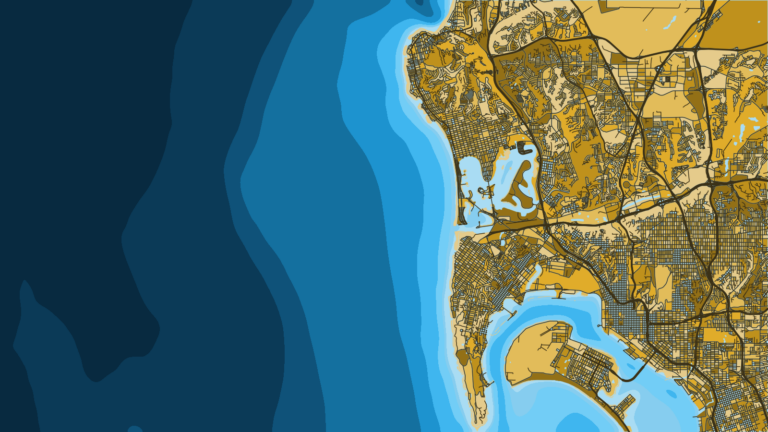
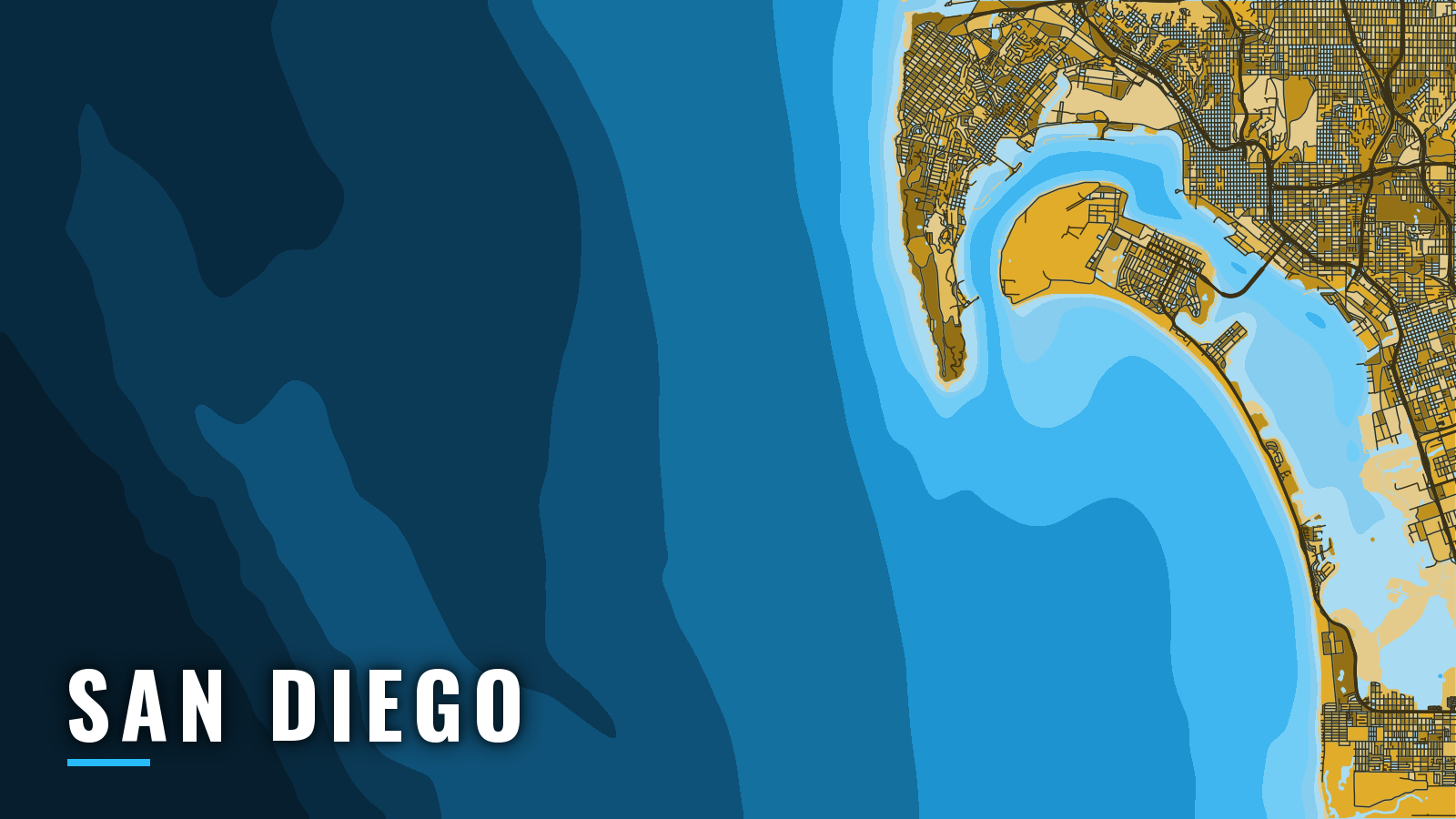
San Diego Bay is a crescent-shaped harbor that reaches the Pacific through one dredged entrance between Point Loma and Zuñiga Point on North Island. The entrance opens to the Gulf of Santa Catalina. Ramps and marinas on the bay are a short run from the Point Loma kelp beds, the nearshore banks and the Coronado Islands, all inside the Southern California Bight.
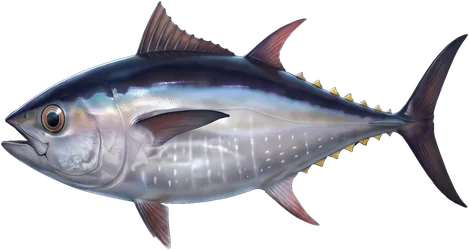
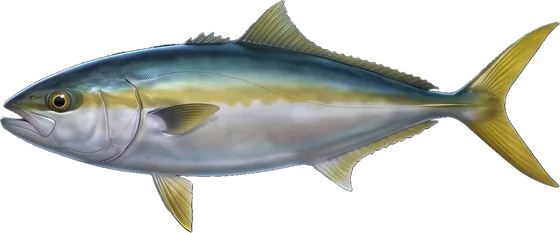
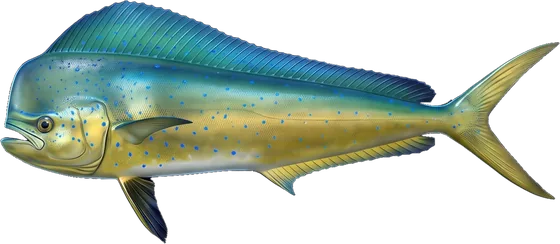
Offshore fishing out of San Diego runs year-round. Cooler months favor yellowtail, rockfish and white seabass, and warm months bring tuna and dorado. Anglers target bluefin tuna, yellowtail, yellowfin tuna, dorado, white seabass, rockfish and calico bass, and runs vary from year to year. CDFW requires a sport fishing license and an Ocean Enhancement Validation south of Point Arguello. Our page on California fishing rules covers the rest; check it before you fish.
Access and navigation
The Port of San Diego lists no cost to launch at its ramps. The four ramps below share one Port page, while each marina has its own site.
Public ramps
- Shelter Island Boat Launch – Port of San Diego ramp on Shelter Island, the closest of the bay ramps to the entrance.
- Chula Vista Boat Launch (J Street Marina Park) – South Bay ramp with the longest bay transit to the entrance.
- National City Boat Launch (Pepper Park) – South Bay ramp in National City.
- Glorietta Bay Boat Launch – Coronado ramp, operated by the City of Coronado.
Marinas
- Harbor Island West MarinaHarbor Island marina with fuel listed.
- Kona Kai MarinaShelter Island marina.
- Shelter Island Marina at Island PalmsShelter Island marina.
The entrance
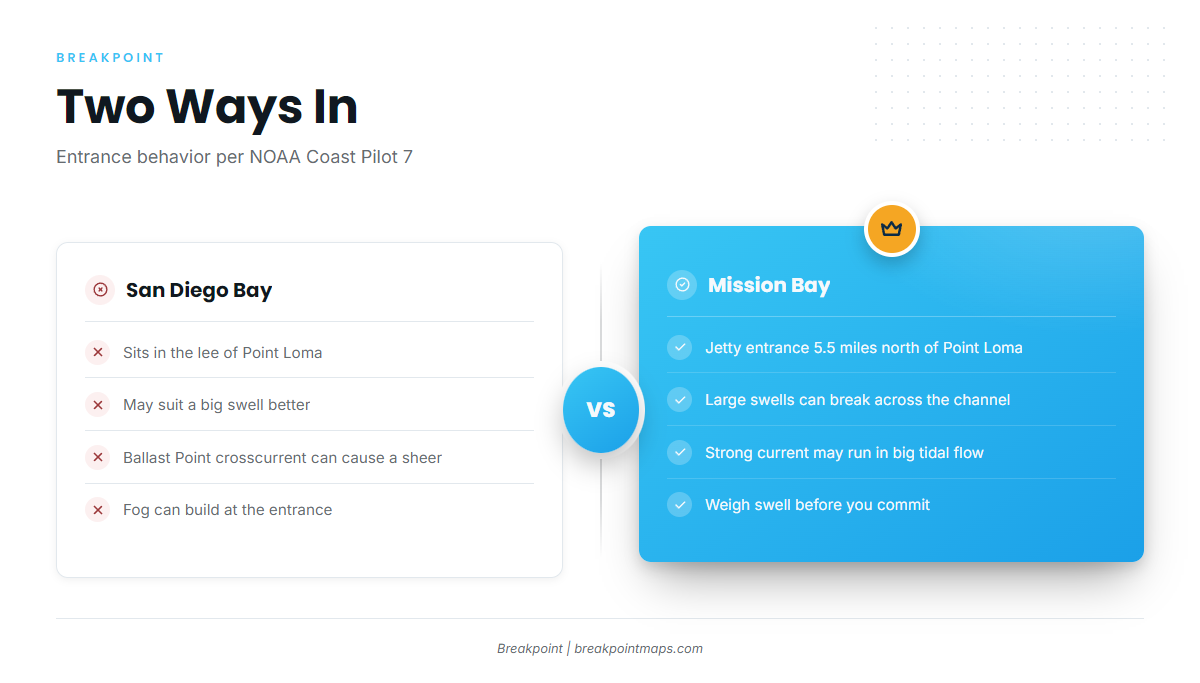
This section draws on NOAA Coast Pilot 7, Chapter 4. Currents near the entrance usually run 0.5 to 5 knots, depending on the stage of the tide, and they follow the channels. On the ebb there tends to be a slight set toward Zuñiga Shoal, south of the jetty end. A crosscurrent deflected off Ballast Point can cause a sudden sheer.
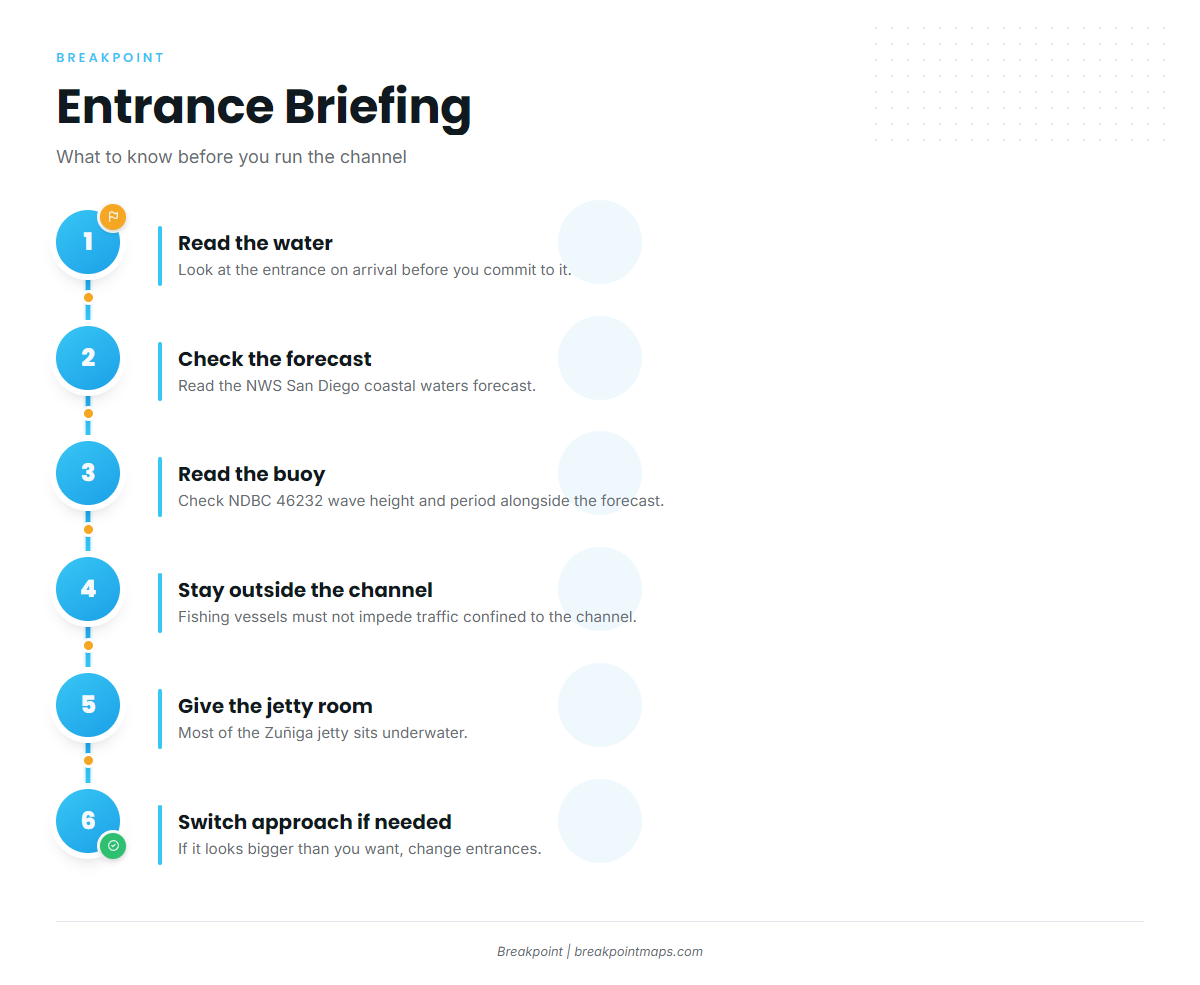
A submerged jetty runs 1 mile south from Zuñiga Point along Zuñiga Shoal. Along its outer two-thirds, only small sections show at high water, and lights and a sound signal mark the seaward end. A second submerged jetty extends about 220 yards west from Zuñiga Point. Most of both jetties sit underwater, so give the jetty line plenty of room.
The ship channels are designated narrow channels. Vessels under 20 meters (65.6 feet) and vessels engaged in fishing must not impede a vessel that can only navigate safely within the channel. The bay holds a major Navy base plus cruise and cargo terminals, so stay outside the channel and keep well clear of large traffic.
Visibility can drop below 0.5 mile on about 3 to 7 days a month from September through April, and December is the foggiest month. Fog tends to be worst late at night and in early morning, and it is heavier at the entrance than in the north bay. In December the Point Loma sound signal runs about 20 percent of the time, compared with 10 percent at Ballast Point.
Alternative approach
Mission Bay has its own jetty entrance, 5.5 miles north of Point Loma. Large swells from almost any direction can break completely across its entrance channel, and an extremely strong current might run in the channel during unusually large tidal flow. On a big swell, the San Diego Bay entrance in the lee of Point Loma may be the better choice. Along the Gulf of Santa Catalina, swells of 6 feet or more occur about 2 to 5 percent of the time, and winter swells occasionally exceed 9 feet.
Before you commit
Look at the water on arrival, and read the NWS San Diego coastal waters forecast alongside the wave height and period at the Point Loma South buoy, NDBC 46232. If the entrance looks bigger than you want, switch approaches.
Fishing conditions
San Diego offshore grounds run from the kelp off Point Loma out to banks far offshore. Species move with water temperature, and runs vary year to year. Before you leave the dock, check the OBS SST break against Chart Contours over the banks, with Chlorophyll as a supporting layer. Chart layers are not for navigation.
The named grounds, from inshore to offshore:
- Point Loma kelp beds – calico bass, yellowtail and white seabass tend to hold here.
- La Jolla Canyon – deep water close to shore.
- Nine Mile Bank – the nearest major bank.
- 425 Bank – offshore bank.
- Coronado Islands – Mexican waters, where a Mexican fishing permit is required. Check with Mexico’s fisheries authority, CONAPESCA, before you go. For more, see yellowtail at the Coronado Islands.
- Tanner Bank – distant offshore bank.
- Cortez Bank – distant offshore bank.
- San Clemente Island – distant offshore ground.
Winter
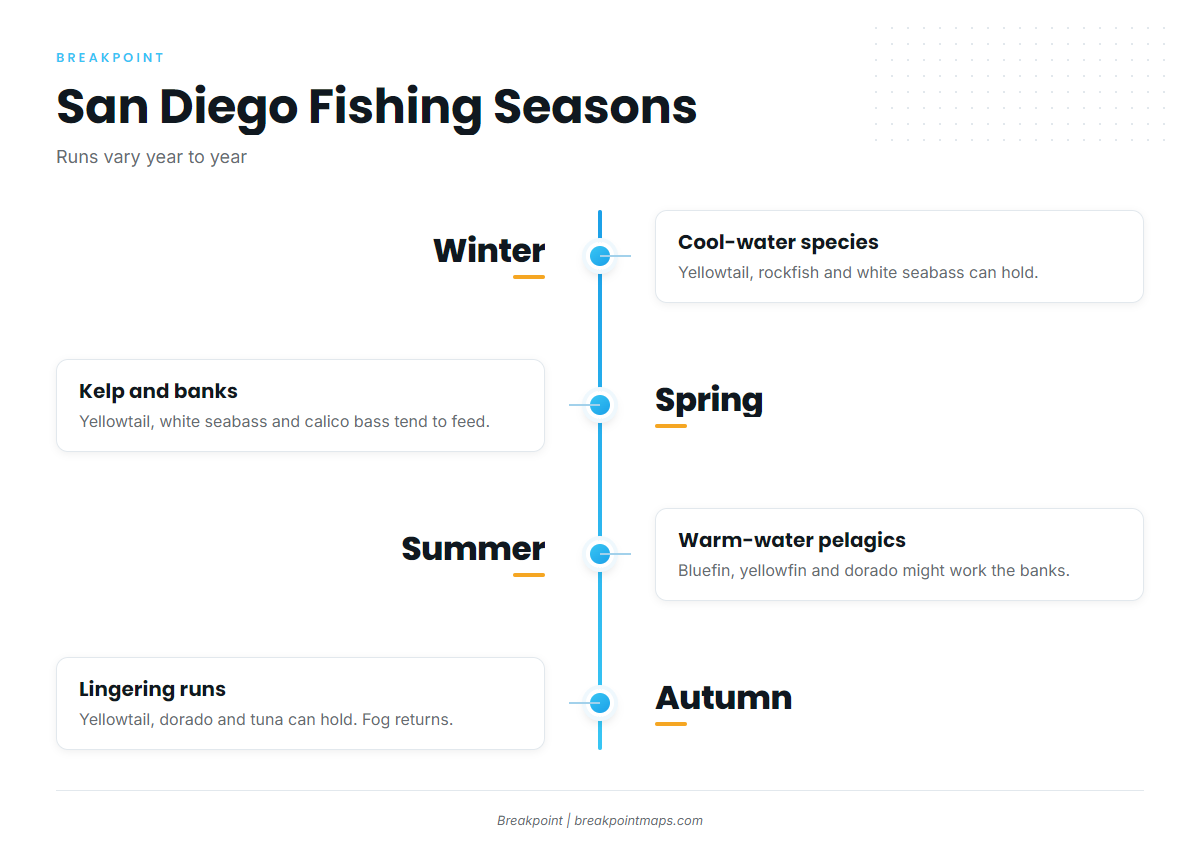
Yellowtail, rockfish and white seabass lead the winter list, with sand bass, sheephead, sculpin and barracuda in the mix. Groundfish rules change by season, so check CDFW before you target rockfish. December is the foggiest month at the entrance, and west swells tend to build from November through April.
Spring
Yellowtail, white seabass and calico bass lead the spring list, along with barracuda, bonito, sand bass and rockfish. Timing varies, so watch where yellowtail move onto the kelp and banks as the water warms. Sheephead and sculpin remain in the inshore mix.
Summer
Summer brings the warm-water pelagics: bluefin tuna, yellowfin tuna and dorado, plus albacore and bigeye tuna. Yellowtail, barracuda, bonito and calico bass fish inshore. Offshore bluefin might work the banks when the water suits them. SST breaks tend to show where the pelagics hold, so read OBS SST before you pick a bank.
Autumn
Yellowtail, dorado and tuna can hold into autumn, along with white seabass, calico bass, barracuda and bonito. Bluefin tactics might still apply if bluefin linger. Fog days begin again in September.